Why price wars jeopardise growth prospects
Beijing – The China Motorcycle Industry Association (CMIA) released a statement on Monday urging domestic manufacturers to halt aggressive price cuts that are eroding profit margins and destabilising export markets. The appeal comes as Chinese firms dominate global motorcycle shipments, with the sector accounting for roughly 40 % of worldwide sales in 2023.
Industry leaders say the price competition stems from oversupply and a rush to capture overseas demand for electric off‑road models. CMIA officials warn that relentless discounting threatens the sector’s ability to invest in new technology and maintain quality standards. „We must shift focus from short‑term gains to long‑term sustainability,” said Liu Cheng, CMIA chairman, during a press briefing in Beijing.
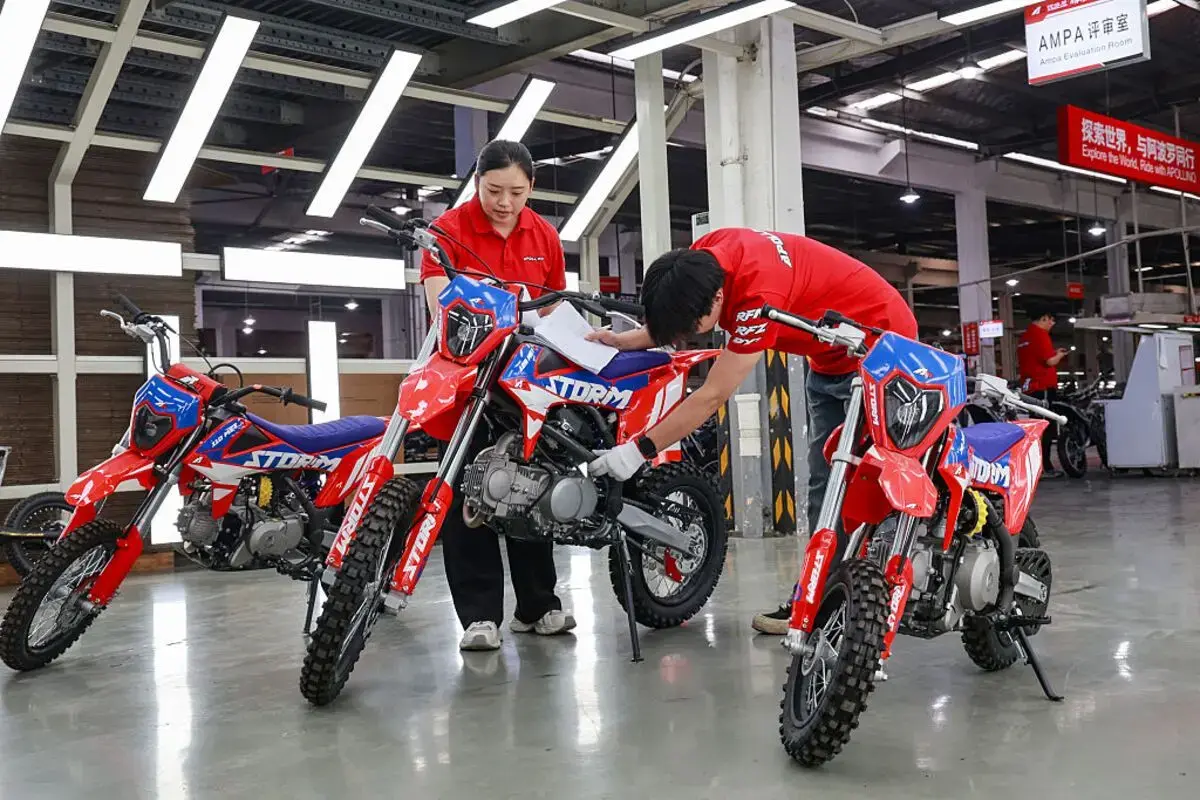
Analysts point to a sharp decline in average export margins, which fell from 12 % in 2022 to just 5 % this year. The squeeze has forced some manufacturers to cut research and development budgets, slowing progress on battery efficiency and emissions‑friendly designs. Smaller firms, lacking deep pockets, are especially vulnerable and risk exiting the market altogether. The association’s report highlights that overcapacity in Zhejiang’s Jinhua region, where factories churn out electric off‑road bikes for overseas buyers, fuels the downward pricing spiral.
Can Chinese manufacturers find a sustainable pricing model?
Liu added that unchecked discounting could damage China’s reputation for quality, making foreign buyers wary of long‑term contracts. „If we compete solely on price, we lose the trust that has built our export success,” he said. The CMIA proposes a coordinated approach, encouraging firms to adopt tiered pricing strategies and to focus on value‑added services such as after‑sales support and warranty extensions.
The association suggests several steps to restore balance. First, it recommends a voluntary price‑floor agreement among major exporters to prevent undercutting. Second, it urges companies to diversify product lines, blending high‑margin premium models with affordable options. Third, the CMIA calls for greater collaboration with overseas distributors to tailor offerings to regional preferences, rather than relying on blanket discounts.
Experts believe these measures could stabilize the market and preserve profit margins. „A coordinated response can curb the race to the bottom and open space for innovation,” said Wang Mei, a market analyst at Shanghai Research Institute. If manufacturers adopt the proposed framework, the sector could regain its competitive edge and continue to dominate global motorcycle exports.
The outcome of the CMIA’s appeal will shape the industry’s trajectory for years to come. A successful shift away from price wars could boost investment in electric technology, secure jobs in key manufacturing hubs, and reinforce China’s standing as a reliable supplier. Conversely, failure to act may lead to deeper margin erosion and a loss of market share to emerging competitors.
Frequently Asked Questions
What triggered the recent price wars in China’s motorcycle sector? A surplus of production capacity, combined with intense competition for overseas demand—especially for electric off‑road bikes—has driven firms to slash prices to win orders.
How will a price‑floor agreement affect exporters? It would set a minimum selling price, preventing harmful undercutting while allowing companies to maintain healthier profit margins and invest in product development.
Will consumers benefit from the proposed changes? Consumers may see better‑quality products and improved after‑sales service, though short‑term price discounts could become less common as firms focus on long‑term value.