Chinese EVs Set New Standards for Affordability and Range
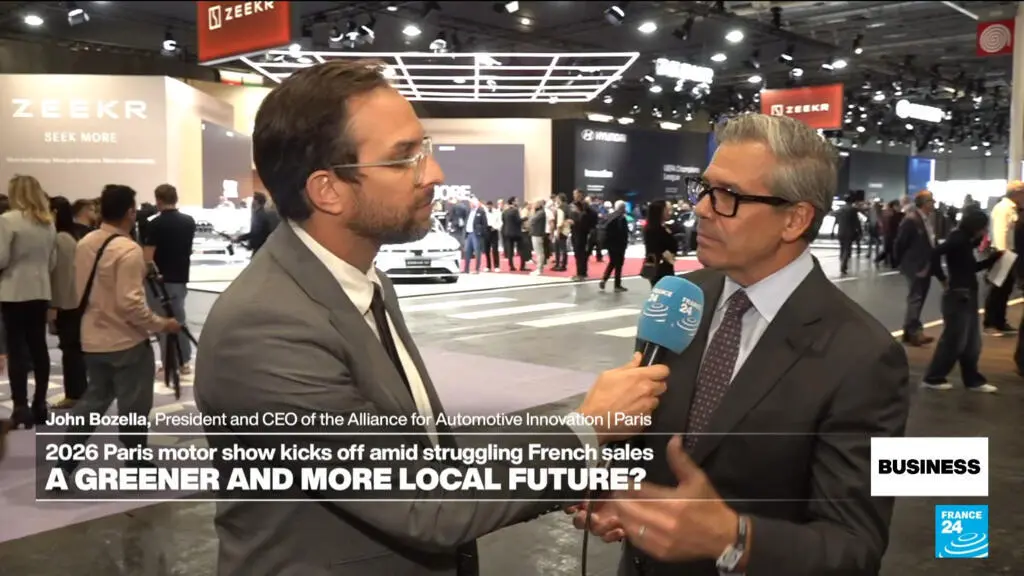
The 2026 Paris Motor Show opened on Tuesday with more than 200 automotive brands showcasing their latest models and technologies. Among the exhibitors were major Western manufacturers such as Mercedes‑Benz, BMW, and Audi, all of whom revealed new electric and hybrid vehicles. Chinese companies, including BYD, NIO, and Xpeng, also displayed a wide array of electric cars, sparking intense debate over market dominance.
Western automakers are confronting a steep challenge from Chinese competitors who have rapidly expanded their global footprint. Chinese firms have invested heavily in electric vehicle (EV) technology and have established production facilities across Europe. Their vehicles often feature competitive pricing and advanced battery management systems, attracting buyers who are increasingly focused on sustainability and cost efficiency.
Chinese manufacturers have positioned themselves as leaders in affordability. BYD’s latest sedan offers a range of 600 kilometers on a single charge, while its price remains 20% lower than comparable European models. NIO’s flagship SUV boasts a battery‑swap system that allows drivers to change a depleted pack in under five minutes, a feature still rare among Western brands. These innovations have forced European companies to accelerate their own development of fast‑charging infrastructure and battery recycling programs.
Are Western Automakers Ready to Counter the Surge?
Industry analysts note that the Chinese focus on mass production has allowed them to reduce manufacturing costs. By leveraging economies of scale and local supply chains, Chinese firms can offer high‑performance vehicles at lower prices. This strategy has already begun to erode market share in key European markets, where consumers are drawn to the combination of affordability and cutting‑edge technology.
European manufacturers are responding by doubling down on electric mobility. Mercedes‑Benz unveiled a new EQC variant with a 700‑kilometer range, while Audi announced a partnership with a German battery supplier to secure long‑term supply. However, critics argue that these steps may not be enough to match the speed and scale of Chinese production. Some experts suggest that Western firms need to adopt more flexible manufacturing models and increase investment in research and development to stay competitive.
The Paris show also highlighted the growing importance of software and connectivity. Chinese brands have integrated advanced AI‑driven infotainment systems and autonomous driving features into their vehicles. In contrast, many European models still rely on legacy software platforms, which could delay the rollout of comparable services. The gap in digital capabilities may further widen consumer preference for Chinese EVs, especially among younger buyers who prioritize connectivity.
The long‑term impact on the industry could be significant. If Chinese automakers continue to expand their presence in Europe, Western firms may face shrinking margins and a need to rethink their product strategies. Some European companies are already exploring joint ventures with Chinese partners to gain access to battery technology and manufacturing expertise. Whether these collaborations will level the playing field remains to be seen.
Frequently Asked Questions
Q1: Why are Chinese EVs cheaper than European models? A1: Chinese manufacturers benefit from large‑scale production, lower labor costs, and strong government subsidies, allowing them to reduce overall manufacturing expenses.
Q2: How are European automakers adapting to the competition? A2: They are investing in battery technology, expanding charging networks, and partnering with local suppliers to accelerate the development of high‑range electric vehicles.
Q3: What could the future of the European automotive market look like? A3: The market may shift toward a more balanced mix of domestic and international brands, with increased collaboration and a greater emphasis on software and connectivity to meet evolving consumer expectations.