AI‑Powered Infrastructure: A New Construction Frontier
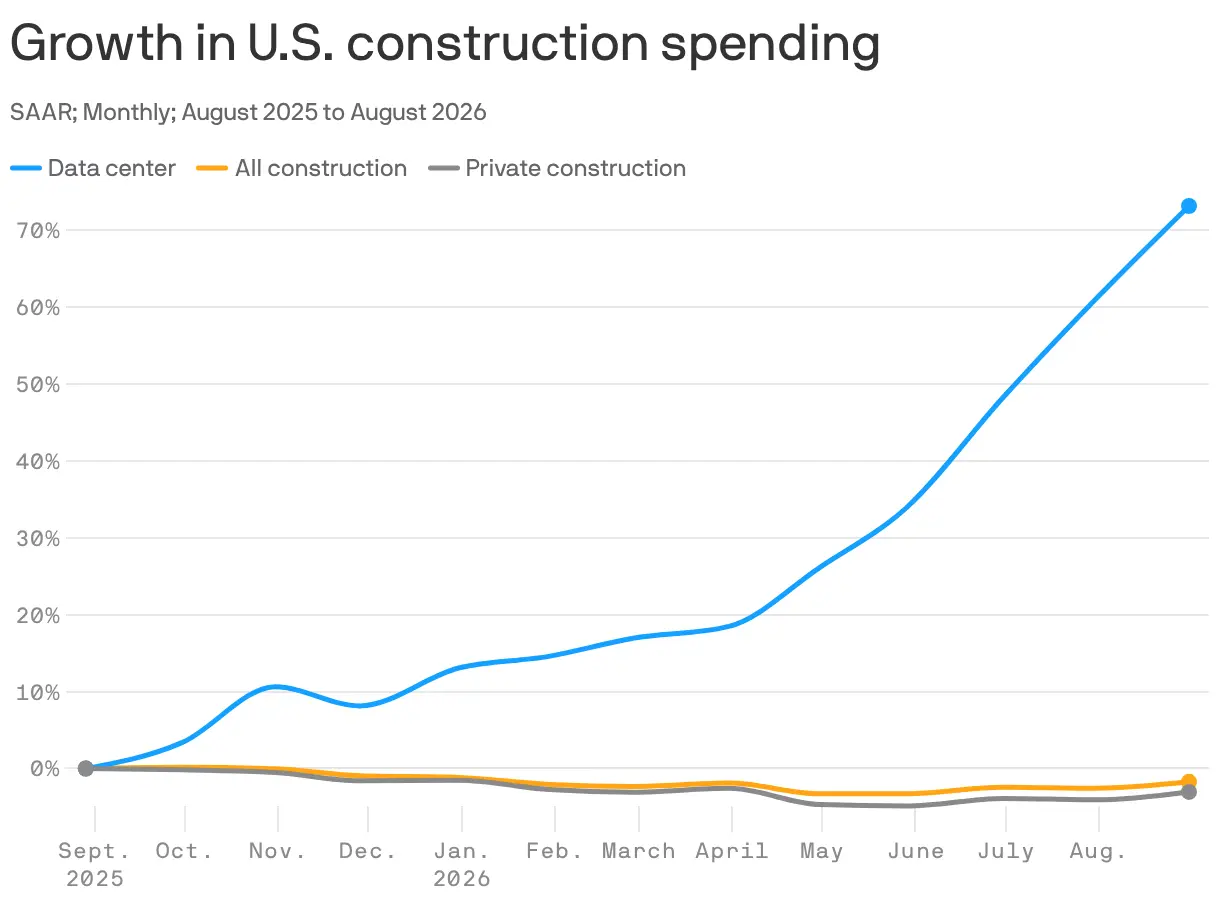
The U. S. Bureau of Labor Statistics and FactSet have released new data indicating that the construction of data centers is growing faster than other sectors of the economy. The trend, highlighted in a chart by Axios, shows a surge in investment across the country, with construction costs covering labor, materials, contractor profits, engineering, and overhead, but excluding the purchase of servers and other hardware.
The rise in data‑center construction reflects the expanding demand for cloud services, online streaming, and artificial‑intelligence workloads. Companies are building larger facilities to house the servers that power AI models, which require significant cooling and power infrastructure. As a result, construction firms are seeing a new source of revenue, while the broader economy experiences a shift toward high‑tech infrastructure.
What Happens When the Economy Shifts Toward AI‑Driven Construction?
The chart from Axios reveals that data‑center construction spending has outpaced that of traditional commercial and residential projects over the past five years. FactSet data shows that the average cost per square foot for a new data center is higher than for typical office buildings, largely due to specialized cooling systems and redundant power supplies. Contractors are also investing in advanced automation tools to speed up construction and reduce labor costs.
Industry analysts note that the growth in data‑center construction is not limited to large tech firms. Small and medium‑sized enterprises are also building private clouds to secure sensitive data, driving demand for modular data‑center units. This modular approach allows rapid deployment and scalability, appealing to companies that need to expand quickly without committing to large, permanent structures.
Frequently Asked Questions
The acceleration of data‑center construction has several economic implications. First, it creates jobs in specialized construction roles, such as electrical engineers and HVAC technicians trained to work with high‑density power systems. Second, it boosts the supply chain for materials like copper, fiber optics, and high‑efficiency cooling equipment. Finally, the increased demand for data‑center infrastructure contributes to higher overall construction spending, which can stimulate related industries such as real‑estate development and municipal services.
However, the focus on AI‑driven projects may also strain traditional construction labor markets. As contractors prioritize data‑center projects, there could be a shortage of skilled workers for residential and commercial builds. Policymakers may need to consider training programs that bridge the skill gap between conventional construction and the specialized needs of data‑center projects.