Oil Price Volatility and Monetary Policy
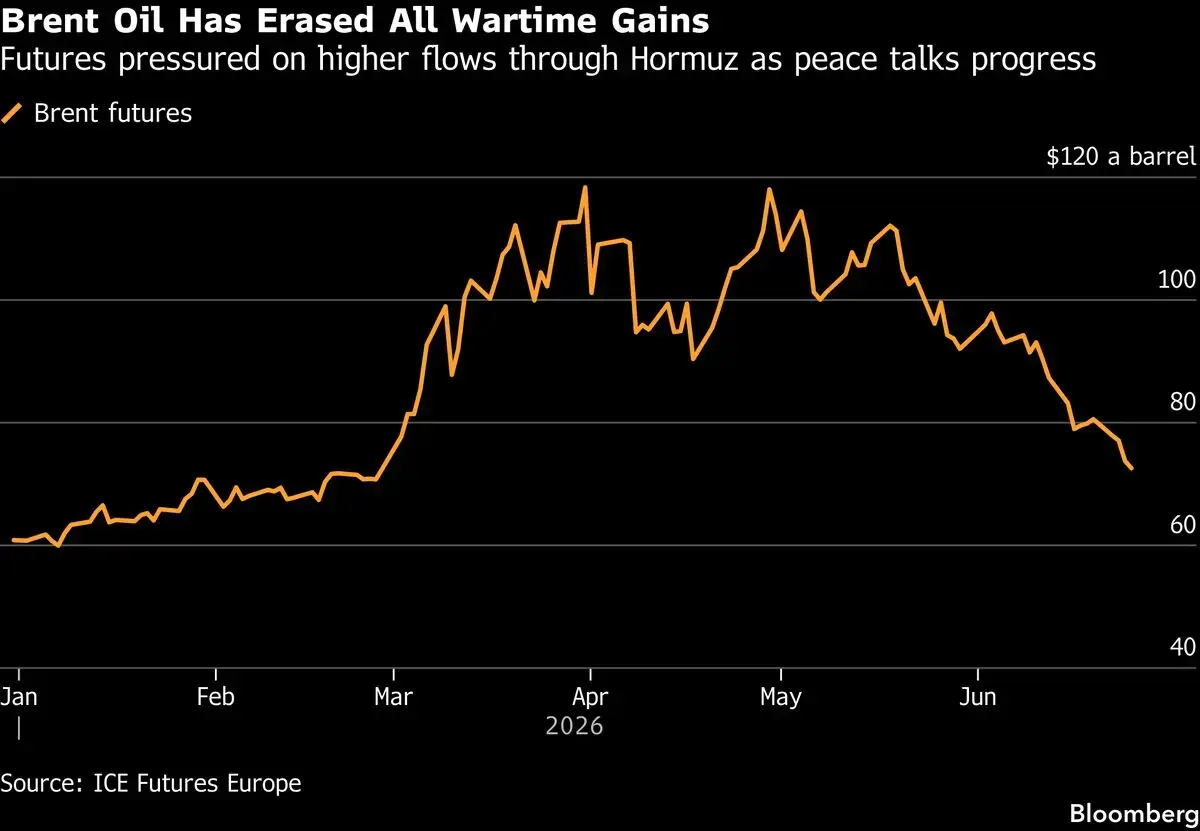
The European Central Bank's rate hike forecasts have been revised downward as oil prices return to pre-war levels. This development comes amid progress in Middle East peace talks. The sudden drop in oil prices has significant implications for monetary policy.
The ECB's rate hike predictions were initially driven by high energy costs. However, with oil prices now stabilizing, the bank has adjusted its expectations. The change in oil prices is largely attributed to the easing of geopolitical tensions.
The recent fluctuations in oil prices have been closely watched by the ECB. A sharp increase in oil prices can lead to higher inflation, prompting the bank to raise interest rates. Conversely, a decrease in oil prices can reduce inflationary pressures, allowing for a more dovish monetary policy.
Will the ECB Maintain its Dovish Stance?
The ECB's decision to scale back rate hike predictions is a response to the changing economic landscape. With oil prices now back to pre-war levels, the bank is reassessing its monetary policy stance.
The ECB's revised rate hike forecasts have sparked debate about the bank's future monetary policy decisions. As the economic situation continues to evolve, the ECB will need to carefully balance its goals of controlling inflation and supporting economic growth.
The consequences of the ECB's decision will be closely watched by investors and economists. A more dovish monetary policy could lead to increased economic activity, but may also raise concerns about inflation.
Frequently Asked Questions
What triggered the ECB's revision of rate hike forecasts? The ECB revised its rate hike forecasts in response to the sudden drop in oil prices. This change was driven by progress in Middle East peace talks.
How will the ECB's decision affect interest rates? The ECB's decision to scale back rate hike predictions may lead to lower interest rates. This could have a positive impact on borrowing costs for consumers and businesses.
What are the implications for economic growth? A more dovish monetary policy could support economic growth by making borrowing cheaper. However, the ECB will need to carefully monitor inflationary pressures to avoid overheating the economy.