Given that emissions from land use changes (such as deforestation) will increase slightly this year
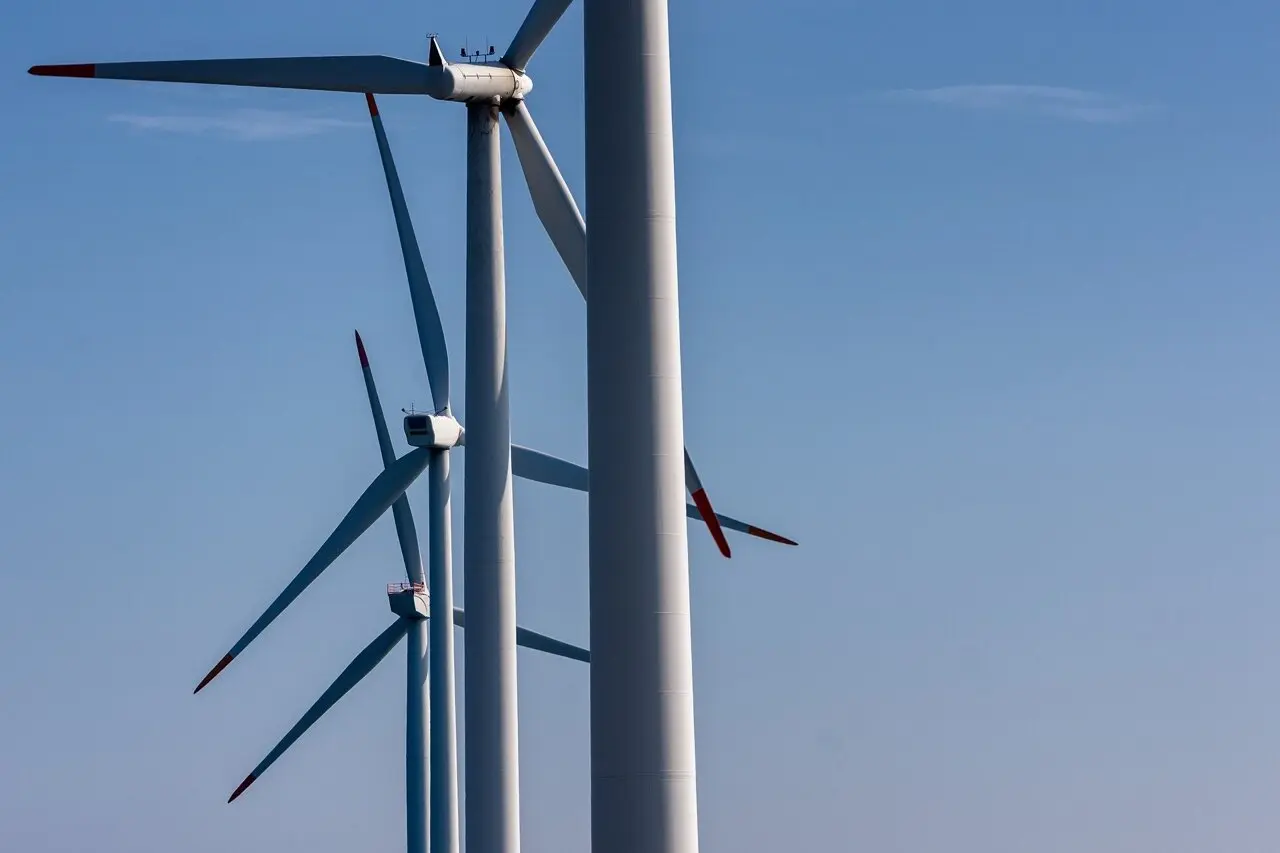
Global carbon emissions from fossil fuels are projected to decline by 0.4% in 2026 - driven by the expansion of solar and wind power and the conflict with Iran - according to new research by the Global Carbon Project. The 2026 edition (21st annual report) is published in Earth System Science Data. The global carbon budget for 2026 projects 38.2 billion tonnes of fossil carbon dioxide (CO2) emissions this year. It is estimated that oil emissions will drop by 1.9 percent - probably a short-term response to the energy shock triggered by the conflict with Iran. While global energy demand continues to grow, two-thirds of the increase is met by increasing solar and wind energy and electric vehicles. However, the report finds that clean energy growth is not yet fast enough for a sustainable reduction in global CO2 emissions from fossil fuels.
Given that emissions from land use changes (such as deforestation) will increase slightly this year, it is estimated that total CO2 emissions will be 43.3 billion metric tonnes in 2026, compared to 42.8 billion metric tonnes last year. The remainder of the carbon budget (the amount of CO2 that can be emitted before warming reaches 1.5 °C above pre-industrial levels) is now 150 billion metric tons, equivalent to less than four years of emissions at the current rate. Since CO2 is still accumulating rapidly in the atmosphere, the dangerous effects of climate change continue to increase. El Niño threatens natural carbon sinks The report also assesses natural „sinking”(absorption of CO2 by land and ocean). It finds that the bottom of the terrain has returned to previous levels after a severe weakening during the 2023-24 El Niño weather model.
However, the strong 2026 El Niño is predicted to have a significant impact in the coming year
However, the strong 2026 El Niño is predicted to have a significant impact in the coming year. The research team included the University of Exeter, the University of East Anglia (UEA), the CICERO Centre for International Climate Research, the Ludwig-Maximilian University of Munich (LMU), the Alfred-Wegener-Institut and more than 90 other institutions around the world. „A decrease in CO2 emissions from fossil fuels is encouraging, but a decrease driven in part by geopolitical shocks is not a sustainable climate solution”, said Professor Pierre Friedlingstein, director of the Office for the Global Carbon Budget at the University of Exeter, who led the study. „The long-term answer remains the rapid deployment of clean energy technologies. While renewable energy and electric vehicles are increasingly offsetting increasing energy demand, further acceleration is needed if global emissions are to peak and enter a sustainable decline”.
Professor Corinne Le Quéré, research professor at the Royal Society's School of Environmental Sciences in the UAE, said: „Clean technologies are making a real difference in reducing global emissions. Solar and wind power and electric vehicles are expanding rapidly, led by China. Countries on every continent are cutting their emissions while growing their economies. Further acceleration could change global emissions within a few years”. Glen Peters, a research professor at the CICERO Center for International Climate Research, said: „A one-year reduction in emissions is not a peak unless it is driven by structural change. Accelerated development of solar, wind, batteries and electric vehicles reduces emissions in dozens of countries and slows emissions growth in many other countries, but changes are not enough to block a global emissions peak”.
Professor Julia Pongratz, from LMU's Department of Geography, said: „In addition to reducing emissions, we need to scale up CO2 emissions to achieve greenhouse gas neutrality. Forestry and reforestation already remove substantial amounts of CO2, but these gains are even more than offset by emissions from deforestation, and the removal of the new carbon remains very limited. We must act now on all these fronts”. Other key findings of the 2026 global carbon budget include: - It is estimated that China's emissions in 2026 will decline by 0,9%, after two years of low-emission growth. In addition to a sharp drop in oil emissions, coal emissions have increased slightly (0.3%) and electricity production from renewable sources continues to grow strongly. - While China produces 32% of global fossil emissions, it is also the most active country in implementing clean technologies and increasing carbon reduction.