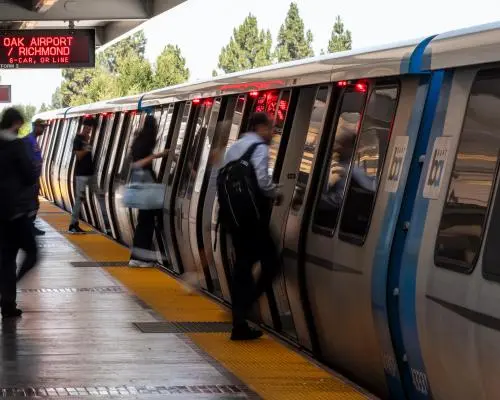
Funding Gap Fuels Service Uncertainty
The Bay Area’s BART system, once hailed as a sustainable transit marvel, is now confronting a severe budget shortfall. Ridership has fallen sharply over the past decade, leaving the network with a $2.2 billion deficit and looming cuts that could cripple service across the region by 2025.
Plunged into fiscal distress after years of declining passenger numbers, BART’s revenue gap has forced officials to consider fare hikes, service reductions, and layoffs. Analysts point to remote‑work trends, rising car ownership, and delayed federal funding as key drivers of the downturn. The agency’s operating costs have risen faster than inflation, while maintenance backlogs threaten safety and reliability. Without an infusion of capital, the system risks entering a „death spiral” where fewer riders lead to fewer resources, prompting even lower ridership.
BART’s board met last week to discuss emergency measures. „We are at a crossroads,” said board chair Maria Torres. „Either we find new revenue streams or we watch the network deteriorate.” Proposals on the table include a 15 percent fare increase, a regional sales tax, and a public‑private partnership to fund critical upgrades.
Can a Regional Tax Rescue BART or Will Service Cuts Persist?
Recent data show weekday boardings have dropped 22 percent since 2019, while operating expenses have climbed 9 percent. The agency’s cash reserves, once a safety net, are now projected to be exhausted by the end of the fiscal year. Maintenance crews have already delayed track repairs on several lines, causing intermittent delays that further discourage riders.
Local lawmakers are debating a ballot measure that would levy a modest sales tax dedicated to transit. Proponents argue the tax would secure long‑term funding for infrastructure and prevent service cuts that affect low‑income commuters. Opponents warn of the economic burden on residents already facing high living costs.
If the tax fails, BART may have to cut weekend service on three major lines and reduce frequency during peak hours. Such cuts could disproportionately impact workers in the tech sector who rely on the system to avoid congested highways. Transportation experts caution that reduced service could accelerate the ridership decline, creating a feedback loop that deepens the financial crisis.
The stakes extend beyond commuting. BART’s extensive network supports regional air quality goals by reducing car emissions. A weakened system could push more drivers onto congested freeways, undermining climate targets and increasing traffic fatalities.
Frequently Asked Questions
What is the size of BART’s current budget shortfall? The agency faces an estimated $2.2 billion deficit for the next fiscal year, driven by falling fare revenue and rising operational costs.
How would a regional sales tax be implemented? The proposed measure would add a 0.5 percent sales tax across nine counties, with revenues earmarked exclusively for BART maintenance and expansion projects.
What are the immediate impacts if service cuts proceed? Riders could see weekend trains run every 30 minutes instead of every 15, and some lines may operate only during peak periods, forcing commuters to seek alternative, often costlier, transportation options.