Digital Infrastructure Vulnerability and Supply Chain Shock
In a world where technology permeates every aspect of existence, digital tools let us manage life with a simple tap. On the flip side, a single copper wire can turn a calm day into total chaos. Last week, millions of global Microsoft users lost access to its online office services. Thousands of travelers were stranded after a technical fault hit the country's air traffic control system. Now, major bank customers face difficulties accessing their online accounts.
Danielle Lemons, Vice President of Operations at Nashville-based IT firm DirecTech Connect, told The Independent that people should be „concerned enough to make plans, not to panic.”„The real lesson is how many separate services silently depend on the same few providers. When one collapses, email, file sharing, authentication, and even phone systems can fail simultaneously because they were all built on the same base,”Lemons explained.
Gabrielle Hempel, Security Operations Strategist at Colorado-based cybersecurity firm Exabeam, stated that recent outages are „a stark reminder that our understanding of technological risk must evolve with the systems we build.”„We have specialized in discussing cybersecurity in terms of attackers, vulnerabilities, and data breaches, but that is only part of the risk landscape. Bad changes, failed dependencies, and aging infrastructure can cause disruptions on the same scale,”Hempel added.
Fran Villalba Segarra, founder and CEO of Spanish cybersecurity firm INTERNXT, warned about society's growing dependence on technology. „The real cause for concern is not a single major threat, but the underlying reality that our digital economy has become so hyper-connected that isolated bugs, database corruption, or routing errors now trigger immediate, visible disruptions affecting millions of lives. We live in an era of increased digital fragility, where the frequency of these failures simply reflects how much modern society relies on complex, constantly updated codebases,”the expert said.
Gabrielle Hempel, Security Operations Strategist at Colorado-based
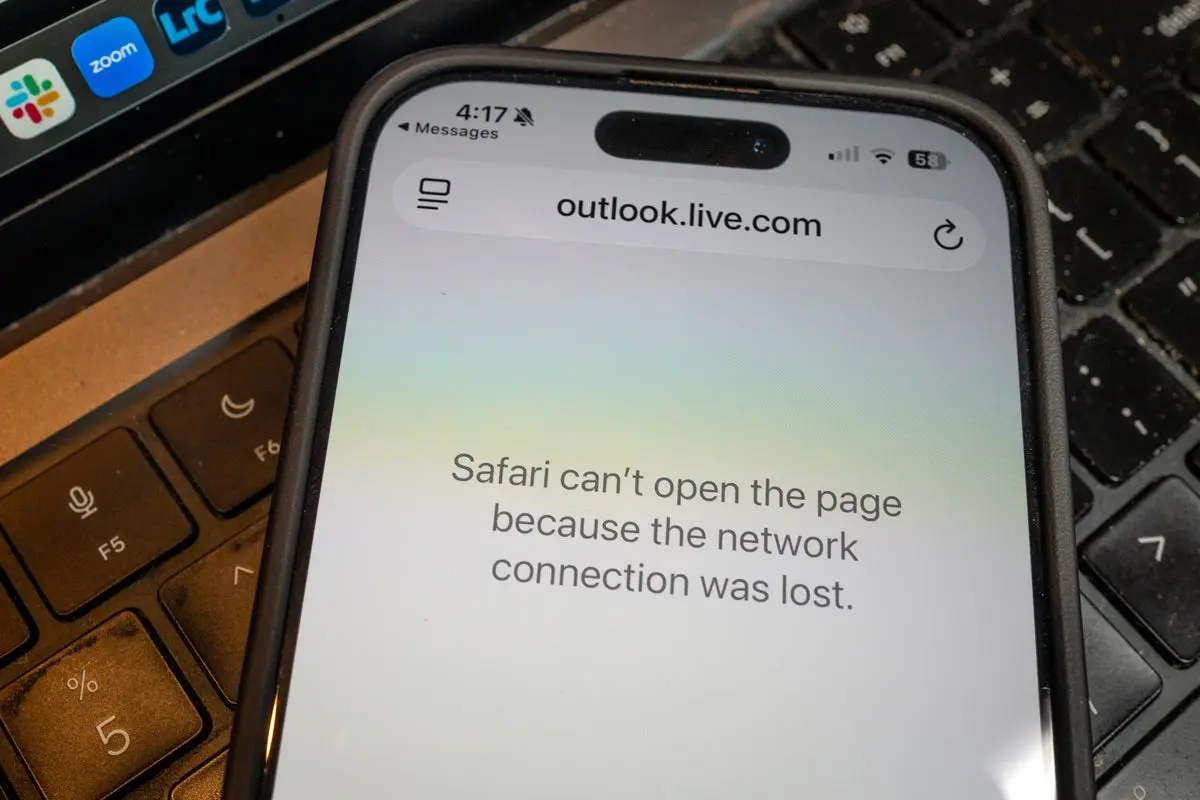
The Microsoft outage began mid-workday on Thursday, when millions checked emails via Outlook and held virtual meetings on Teams. While some joked about the situation, posting videos on social media celebrating an unexpected work break, the incident demonstrated how much companies, governments, and public services depend on this technology. Microsoft apologized for the disruption and reassured users, clarifying the issue was not linked to cyberattacks or AI agents. „The incident was caused by an issue that arose during a previous network capacity update, which surfaced after a recent network change. We have resolved the underlying problem and continue to restore services for remaining customers and regions,”the company wrote on X on Friday. Microsoft services were fully restored on Saturday.
Sharon Martin, Head of Internal Innovation at Maryland-based cybersecurity firm Huntress, told The Independent: „When massive organizations rely on the same few providers, an outage becomes more than one company's problem.”„Microsoft was down for a day last week, and businesses worldwide had to find workarounds just to get work done,”Martin continued. „It's like a city having only one bridge. You don't see it as a major problem until roadworks begin, and then nobody can get out. It's not the city's fault; it's just that there's no easy detour.”Airlines, already affected by the Microsoft outage, were then instructed by the Federal Aviation Administration (FAA) to ground all flights after a problem emerged due to a contractor replacing old copper wire with fiber optic cable at a radio installation in El Dorado, Arkansas.
Nick Reese, Professor at the Center for Global Business at New York University, who previously served as Director of Emerging Technology Policy at the Department of Homeland Security, told The Independent: „The FAA grounding all US flights is an extremely rare measure, taken last week due to a system failure. While many were quick to blame a cyberattack or an AI-triggered event, the real lesson here is about resilience.”„Our flight system is one of many fragile systems we rely on for critical services. Aging infrastructure that should have been replaced years ago makes our system increasingly fragile each day. This fragility exposes us to a host of potential problems, from intrinsic system weaknesses to future attacks,”Reese said.
The expert warned that the failure „showed hostile actors how easily they could create a massive effect in the US affecting people worldwide,”adding: „This event should be a wake-up call to build resilience and replace aging systems, even if it costs a lot of money.”The national flight ground stop lasted over four hours on Friday. More than 7,000 flights were affected.