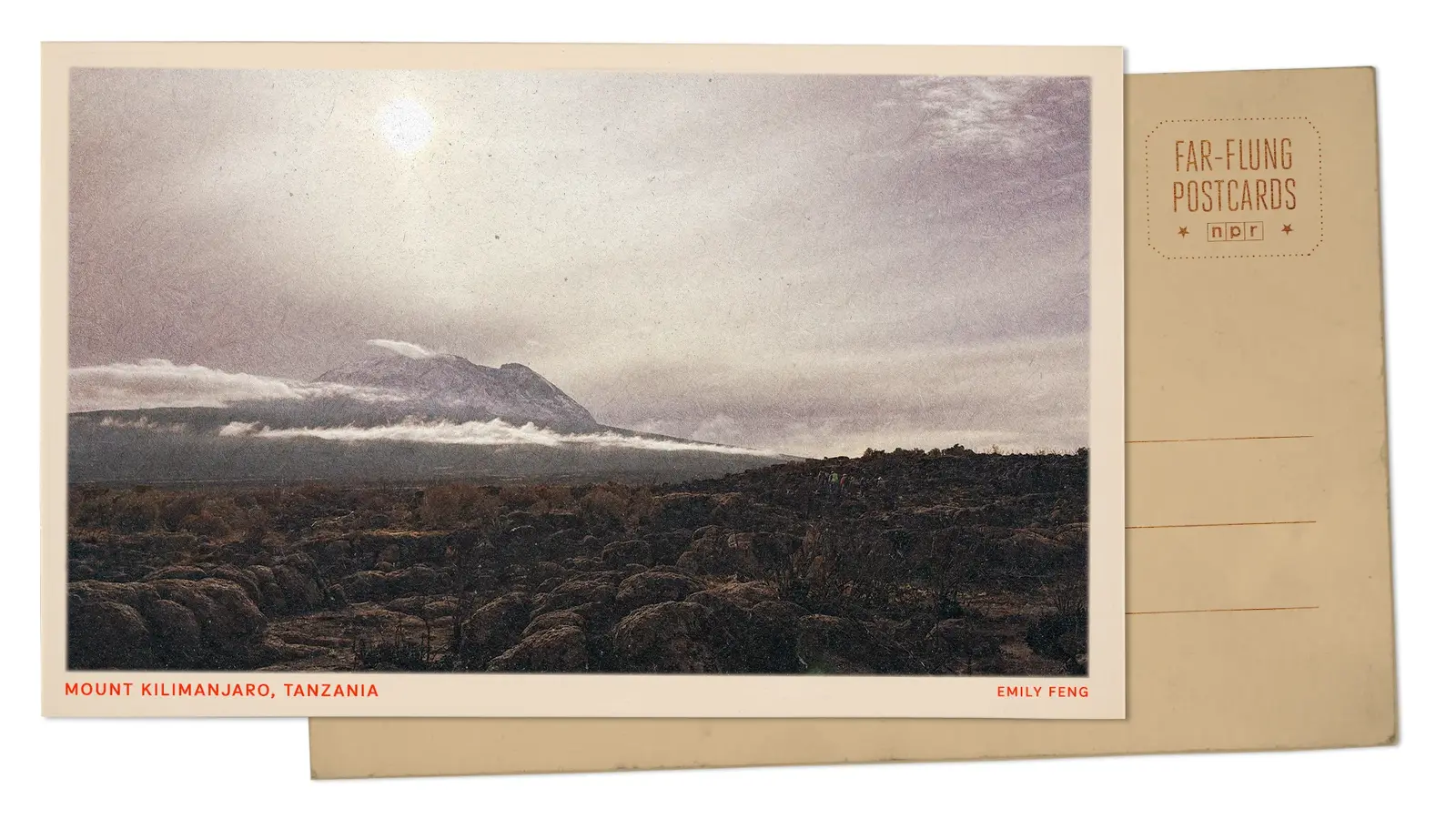
When the first light of dawn dawn
A greeting from the top of Kilimanjaro, the highest point in Africa, which reveals itself in all its sea
When the first light of dawn dawn dawned over our camp, we saw for the first time the entire top of the mountain, which usually hides behind the clouds. Climbing high mountains like Kilimanjaro is a lesson in extreme contrasts: the scorching sun that freezes you during the day, being near the equator, while the nights quickly descend below zero degrees. Snow remains constant in view, passing through wetland and alpine landscapes, recently burned by a forest fire three weeks earlier. And always calling is the peak, in view, but never seemingly closer; high altitude means those who climb must walk slowly, otherwise they risk exhaustion and altitude sickness.
Together with a group of friends and fellow hikers
Together with a group of friends and fellow hikers, we spent the days in high altitude camps to adapt before our final summit effort, on the second night before our last night on the mountain. We haunted the thick snow beneath the stars, climbed over the edge of a giant volcanic crater, and leaned on snow deposits that had become a true blizzard, to reach the summit in the early hours of the morning.
I was standing on a peak that I had only looked at from a distance for the past week, but I saw only white: all snow and ice, the absence of life, and the intensified colors of my low oxygen levels. A few days later, after I got off the plane and decompressed myself, preparing to fly home, I took one last look at the mountain. In the evening light, the clouds parted for a few minutes and the mountain revealed itself before disappearing again in the dark of night, as elusive as ever.