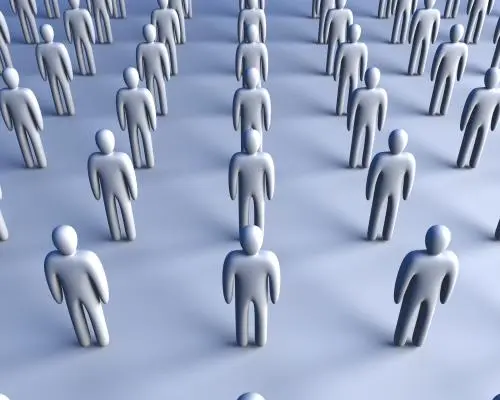
There's something strange in their faces, with their foreheads as smooth as a screen, their lips and cheeks crying
By 5:00 p.m. on a Friday, the headache and dry eyes had really settled. Maybe it's a long day in front of the four screens as you channel the white noise through a large pair of tapes to cancel your co-workers' calls. Or maybe it's the almost chemical washing of the white fluorescent lights shining from the low ceiling of your open office, or the feeling of closure when you look out the window at the reflective walls of other towers. To lift your spirits, you decide to spend a weekend at an Airbnb on the beach. But the city isn't what you remember as a child. The farmland was converted into identical housing estates, shared by highway shopping centres with the same Guzman, Woolies, Chemist Warehouse, Dan Murphy and Priceline shopping centres as all other shopping centres. They're not the only things that are the same.
The cars in the parking lot are mostly white or gray, and when they come out of them, people are in shorts or almost identical shirts. Airbnb is as described in the photographs (minimalist, elegant lavender in the bathroom, soft Anko furniture), but there's something disgusting about it. Like cars, the interior is gray and white, and smells like surface cleaning. It's a house devoid of color, personality and character. The beach itself is still beautiful, but coming out of the ocean you can't remember where you left your towel. Every inch of sand is occupied with the same cool cabin tents, making the visual landscape agitated and disorienting, as if you hit your head and you see double. At the cafe you meet some people from school you haven't seen in years. You can't put your finger on it, but it looks different, kind of weird.
There's something strange in their faces, with their foreheads as smooth as a screen, their lips and cheeks crying. Looking around — with everyone wearing the same sports uniform, looking at each other on the same screens, drinking the same coffee, you're wondering when all this happened? Where's all the beauty gone? It's hard to believe we're lucky enough to be born on a blue, wet, flower-covered planet. And that on this planet everyone is a completely unique individual, all of us 8.3 billion, with our specific way of expressing ourselves, our unique faces and bodies, our idiosyncrasies, our desires, our aversions and our tastes. Because now we're stuck in a sea of equality.
The Greeks had a concept that linked beauty, kindness, and truth together as kalos kagathos
Whether it's the design of our offices, the interiors of our homes (major paint brands like Dulux and Sherwin-Williams say that gray is a color that is most sought after and used frequently, and the Financial Times reports that gray is chosen because it can lead to better resale value) or the cars we drive. Modern life is getting tedier, uglier, more uniform, and much less pleasant to look at. But there are signs of resistance — one of the most fascinating is the discussions about the necessity of beauty. The left is waking up again to the fact that the struggle for better material conditions for all people extends to what was previously considered frivolous or optional. But beauty — and the height of beauty — is essential to the prosperity project. This is an old ideal, and its suppression by the powerful is just as old.
The Greeks had a concept that linked beauty, kindness, and truth together as kalos kagathos, literally beautiful and good. In The Symposium, Socrates describes beauty as attracting the soul to truth, justice, and divinity. The ugly in this frame was not only unpleasant, it was a form of moral disorder. Throughout history there have been times when beauty has been lifted and suppressed. And in times of suppression, movements like the Arts and Crafts movement of the 1860s emerged that aimed to restore the dignity of working people by bringing beautiful objects into their homes, like wallpaper, textiles and furniture.
We live in an era where originality and beauty have been suppressed, where everything has become so frictionless and optimized (like grey houses optimized for resale, not to live in) that concerted efforts have to be made to return to beauty and individuality, even if it has no explicit market value. The turning point for me is