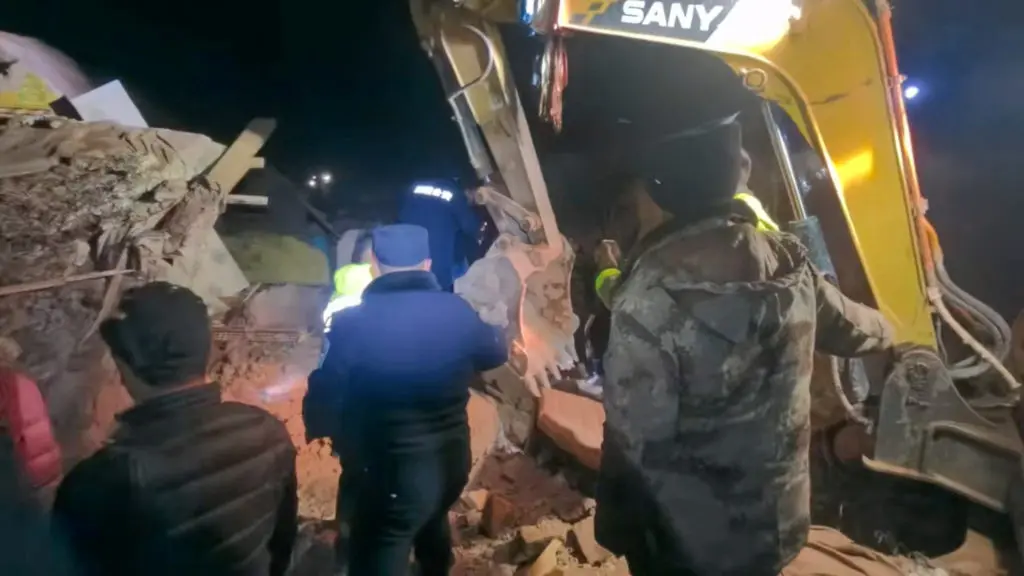
Challenging Terrain Slows Recovery Efforts
Rescue teams scoured a remote area in China’s Tibet region on Friday following a powerful magnitude 7 earthquake. The tremor struck the rugged terrain, trapping many residents under collapsed structures. Emergency workers faced difficult conditions while searching for survivors in the affected zones. Initial reports indicated significant damage to local buildings and infrastructure.
The seismic event caused widespread destruction across the valley. Authorities mobilized quickly to reach the isolated communities. Heavy machinery assisted in clearing debris from the main access roads. Medical personnel established field hospitals to treat the injured. The remote location complicated the logistics of the rescue operation significantly.
Access to the epicenter remained the primary hurdle for emergency services. Steep slopes and narrow mountain passes limited vehicle movement. Helicopters provided aerial support but struggled with low visibility. Rescue dogs helped locate trapped individuals beneath rubble piles. Local volunteers joined professional teams to assist in manual digging efforts. The cold weather added another layer of difficulty for exhausted workers.
How Many People Were Injured?
Officials confirmed that several villages suffered the most severe structural failures. Many homes were constructed with traditional materials that crumbled easily. Families reported hearing loud cracks before the ground shook violently. Some residents managed to escape through windows or back doors. Others remained pinned inside their living rooms or bedrooms. Communication lines stayed down for hours, delaying official casualty counts.
Early estimates suggested dozens of people required immediate medical attention. Hospitals in nearby prefectures received a steady stream of patients. Doctors treated fractures, lacerations, and respiratory issues from dust inhalation. The total number of missing persons continued to rise as searches expanded. Search teams worked around the clock to maximize survival chances. Every minute counted for those trapped in unstable ruins.
The government deployed additional resources to support the ongoing response. National disaster relief funds were released to cover immediate needs. Temporary shelters were set up for displaced families. Food and water supplies reached the hardest-hit areas by late afternoon. Coordination between local and provincial authorities improved response times.
The coming days will determine the scale of the long-term recovery. Engineers will assess the stability of remaining structures. Planners must decide which villages need full reconstruction. Insurance claims will begin processing once documentation is complete. The region aims to rebuild with stronger seismic standards. Community resilience will be tested as normal life slowly resumes.
Frequently Asked Questions
What was the magnitude of the earthquake? The earthquake registered a magnitude of 7 on the Richter scale. It struck the remote Tibet region of China on a Friday morning.
How are rescuers accessing the remote area? Teams use a combination of helicopters and heavy machinery to navigate steep terrain. They clear debris from narrow mountain passes to reach trapped residents.
What is the current status of the victims? Dozens of injured people have been transported to nearby field hospitals. Search operations continue for missing individuals trapped under collapsed buildings.