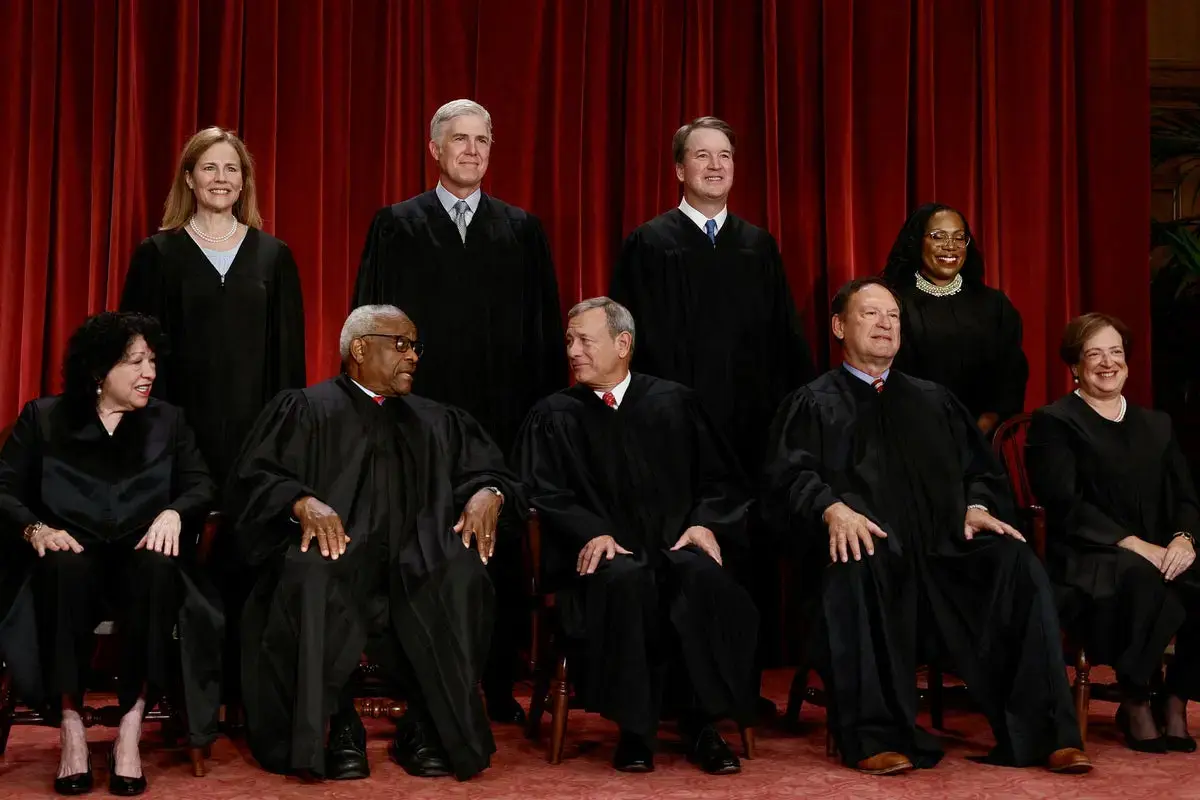
A Court Divided by Core Beliefs
The United States Supreme Court, shaped by appointments during the Trump administration, recently concluded a term marked by profound divisions. Justices voted along ideological lines in nearly 25% of the cases they heard. This trend highlights a deeply polarized court, reflecting broader political divides across the nation.
This level of ideological split is unusually high. It suggests a court struggling to find common ground on significant legal questions. The ideological composition, with a conservative majority, often dictates outcomes in closely watched cases.
How Does This Affect Future Legal Rulings?
The data reveals a consistent pattern. Conservative justices frequently voted together, opposing their liberal colleagues. This alignment was evident in many high-profile decisions. Such a clear ideological divide can undermine public confidence in the court's impartiality.
Each justice's judicial philosophy plays a crucial role. Originalist and textualist interpretations often clash with more living constitutionalist views. These differing approaches lead to predictable splits on major issues. The court's decisions impact everything from civil rights to environmental regulations.
# What does ideological linesmean in this context?
The current ideological makeup will likely influence future legal battles. Landmark precedents could be revisited or overturned. This creates uncertainty for various legal and social issues. The court's direction will continue to be a focal point in national discourse.
# Why is this level of division significant?
The deep divisions also mean that many significant cases are decided by narrow majorities. This can lead to less stable legal precedents. Future challenges to these rulings are almost guaranteed. The court's role as a final arbiter of law becomes more contentious.
It means justices voted based on their conservative or liberal judicial philosophies. Conservative justices typically sided together, opposing the liberal justices.
# How does the court's composition contribute to these divisions?
Such deep division suggests a lack of consensus on fundamental legal principles. It can make the court appear more political and less a neutral arbiter of law.
The court's current composition includes a conservative supermajority. This balance often leads to predictable outcomes in ideologically charged cases, with the conservative bloc frequently prevailing.