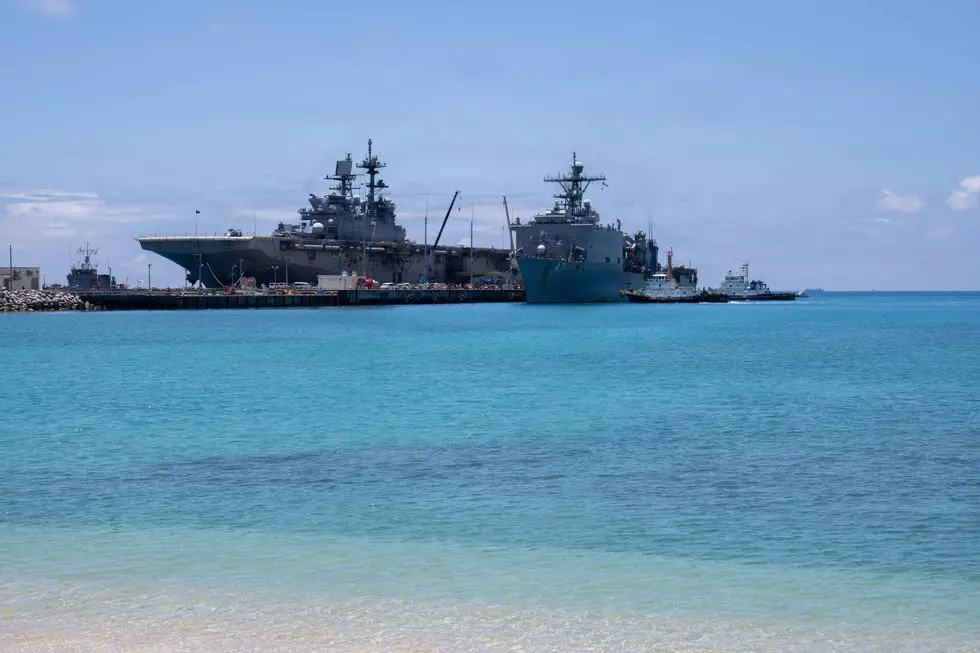
Why Kadena Became the New Home
Late last month, Japan’s Ministry of Defense announced that a U. S. ground‑based missile system called Typhon, capable of launching Tomahawk cruise missiles, will not be shipped back to the United States after completing a training deployment. Instead, the system will stay at Kadena Air Base on Okinawa for an undetermined period.
The decision follows a joint exercise that brought the Typhon platform to Japanese soil for the first time. Officials said the move reflects logistical challenges and the need to maintain a ready deterrent posture in the region. While the system was originally slated for a brief stay, the ministry now plans to keep it in place, citing „operational considerations” and the strategic importance of the location. The Typhon’s presence underscores the expanding role of U. S. conventional strike capabilities in East Asia, especially as tensions rise over Taiwan and the South China Sea.
Kadena Air Base, the largest U. S. military installation in the Pacific, offers extensive infrastructure for storing and maintaining advanced weaponry. Defense officials noted that the base’s existing logistics network can support the Typhon’s complex support requirements, from power supply to secure communications. The decision also aligns with a broader U. S. strategy to forward‑deploy assets closer to potential flashpoints, reducing response times. Japanese authorities emphasized that the temporary storage will not alter the island’s overall force posture, but it does add a high‑precision strike capability to the existing defense mix.
Could This Signal a Longer U. S. Military Footprint in Okinawa?
Analysts question whether the „temporary” storage might become semi‑permanent. The Typhon’s ability to fire Tomahawk missiles—long‑range, low‑observable weapons—means it could serve as a deterrent against regional adversaries. Some experts argue that keeping the system in Okinawa could signal a shift toward a more robust conventional deterrent, complementing existing missile defense assets. Others warn that the move might provoke local opposition, given Okinawa’s history of hosting U. S. forces and the island’s sensitivity to additional military equipment.
The lingering presence of Typhon may influence future U. S.–Japan security cooperation. If the system remains beyond the initial timeframe, it could prompt revisions to basing agreements and affect local political dynamics. For now, both governments maintain that the arrangement is provisional, pending further assessment of regional security needs.
Frequently Asked Questions
What is the Typhon system? Typhon is a mobile, ground‑based launcher designed to fire Tomahawk cruise missiles, providing long‑range precision strike capability.
Why won’t the system be returned to the United States? Japanese officials cited logistical and operational reasons, noting that Kadena Air Base can adequately store and support the system for the time being.
How might this affect Okinawa’s residents? The deployment adds a high‑tech weapon to the island, potentially raising safety concerns among locals, though officials assure that security measures remain stringent.