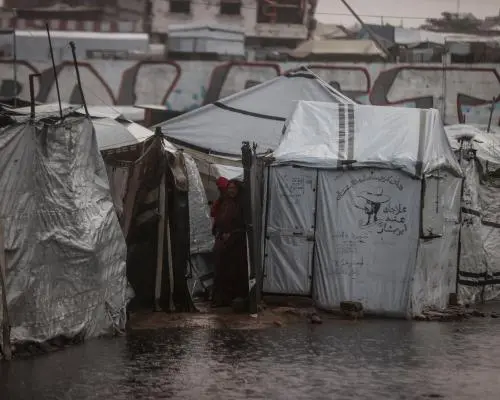
Local aid workers report that many tents have been damaged or destroyed, forcing families to abandon their belongings
In the early hours of a wet, windy night, a sandbank collapsed just yards from a makeshift tent in Gaza, killing four residents and leaving Abdul Karim al‑Sahhar, 30, in shock. The incident occurred amid worsening floods that have already strained life in the region’s tent camps. The collapse came as a stark reminder of the fragile living conditions in Gaza’s refugee camps, where residents rely on temporary shelters that are vulnerable to weather. Flooding has worsened over the past weeks, forcing families to seek higher ground and making basic necessities scarce. Al‑Sahhar’s account highlights the psychological toll of such disasters, describing his legs as „frozen from the shock” and recounting the sight of his mother buried beneath the rubble. The Rising Tide of Flooding Floodwater has inundated several camps, turning already cramped spaces into hazardous zones.
Local aid workers report that many tents have been damaged or destroyed, forcing families to abandon their belongings. The lack of proper drainage and the low elevation of the camps exacerbate the problem. In addition, the ongoing blockade limits the import of building materials, preventing the construction of more durable shelters. Residents describe a sense of helplessness as they watch their homes erode. „We have no choice but to move,” says a mother who lost her son in the collapse. „The water keeps coming, and we have nowhere to go.” The floods also disrupt access to clean water and sanitation, heightening the risk of disease. Can Relief Efforts Break the Cycle? What can be done to protect Gaza’s most vulnerable? International organizations have called for immediate flood mitigation measures, such as sandbagging and the construction of levees. However, funding remains limited, and political obstacles delay the deployment of aid.
Local NGOs are working to distribute emergency supplies, but shortages persist
Local NGOs are working to distribute emergency supplies, but shortages persist. The question remains whether these short‑term fixes will suffice. „We need a long‑term plan,” argues a community leader. „Without proper infrastructure, we will face the same disaster every year.” The ongoing conflict and economic blockade have left Gaza’s infrastructure in a state of disrepair. The lack of reliable electricity and water supply compounds the impact of natural disasters. As winter approaches, the risk of another catastrophic flood rises, threatening lives and livelihoods. Frequently Asked Questions Q1: How many people have been affected by the recent floods? A1: Reports indicate that several thousand residents in Gaza’s tent camps have been displaced or suffered property damage due to flooding. Q2: What immediate actions are being taken to prevent further collapses? A2: Aid agencies are deploying sandbags and constructing temporary barriers, but the scale of the problem requires larger infrastructure projects.
Q3: Are there any long‑term solutions being considered? A3: International donors are discussing the construction of permanent shelters and improved drainage systems, but political hurdles have delayed concrete plans.