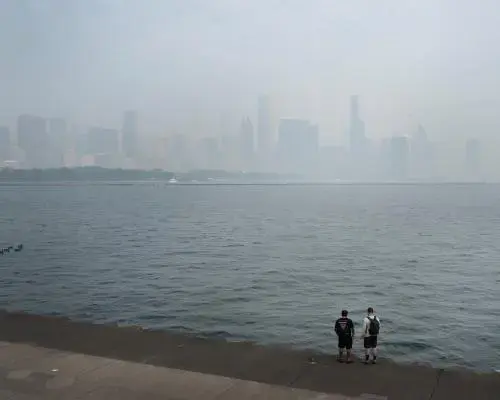
A Hazy Reality Across the Continent
Smoke from hundreds of Canadian wildfires continues to blanket vast areas of North America. This has led to dangerous air quality for tens of millions of people. Outdoor events are being canceled, businesses are facing disruptions, and vulnerable residents are advised to stay inside.
Officials warn that these unhealthy conditions are expected to last. Air quality alerts have been issued across many regions. The smoke plume has traveled thousands of miles, impacting daily life.
The persistent smoke has created a sense of despair and resignation among residents. Many are expressing deep concern for their health and the environment. The skies have turned an eerie orange or gray, a stark visual reminder of the ongoing crisis. Visibility is severely reduced in many affected areas.
How Are Communities Coping with the Smoke?
People are reporting burning eyes, scratchy throats, and difficulty breathing. Those with respiratory conditions are particularly at risk. Hospitals are preparing for a potential increase in related health issues.
Communities are responding by closing schools and postponing sports events. Public health advisories are urging everyone to limit outdoor exposure. Many are wearing N95 masks when venturing outside. Air purifiers are selling out in affected cities.
Businesses are also feeling the pinch, with fewer customers venturing out. Construction projects are being halted due to safety concerns. The economic impact is growing alongside the health concerns.
The long-term effects of prolonged smoke exposure are a major worry. Experts are studying the particulate matter in the air. This situation highlights the increasing challenge of climate-driven events.
Frequently Asked Questions
What are the immediate health risks of wildfire smoke? Immediate health risks include respiratory problems like coughing, wheezing, and shortness of breath. It can also irritate eyes, nose, and throat. People with existing heart or lung conditions are at higher risk.
How far has the smoke traveled? The smoke has traveled thousands of miles from its origin in Canada. It has affected air quality across a significant portion of the United States and Canada, reaching as far south as the southeastern U. S.
What precautions should people take during these conditions? People should stay indoors with windows and doors closed. If going outside is unavoidable, wear an N95 mask. Avoid strenuous outdoor activities and use air purifiers if available.