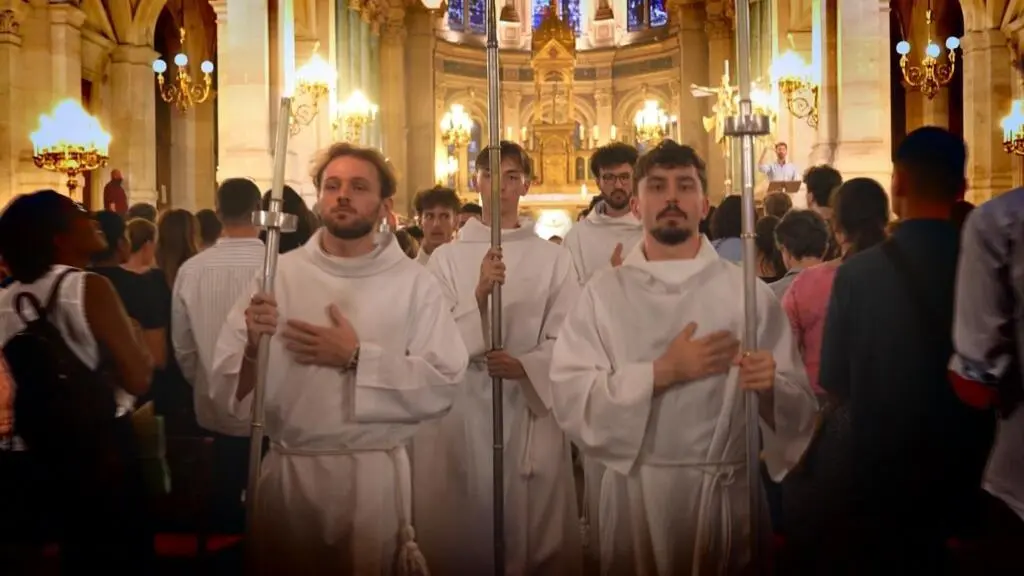
What draws young people to traditional rituals?
As France prepares for Pope Leo XIV's visit, a notable shift is emerging among young adults who are increasingly embracing Catholic traditions. Recent surveys indicate a rise in religious practice among those aged 18 to 25, contrasting with decades of secular decline. This trend is visible in growing attendance at Mass and participation in parish activities across cities like Paris, Lyon, and Marseille.
The revival reflects a search for meaning in a fast-changing world. Many young Catholics cite a desire for community, moral clarity, and spiritual depth amid social fragmentation. Unlike older generations who often associate religion with obligation, Gen Z approaches faith as a personal choice, often discovering it through social media, peer groups, or contemplative retreats. Some describe feeling alienated by consumerism and political polarization, finding in Catholicism a sense of stability and shared values.
How does this trend challenge France's secular identity?
Interest in Latin Mass, Eucharistic adoration, and sacramental preparation has surged among university students. Chaplaincies report waiting lists for confirmation classes, and monasteries note increased inquiries from young adults seeking spiritual direction. A 2023 study by the French Bishops' Conference found that 38% of Catholics under 30 attend Mass weekly, up from 29% five years ago. Participants often emphasize the beauty of liturgy and the continuity of tradition as key attractions, not merely nostalgia.
France's strict laïcité policy, which separates religion from public life, faces new questions as young believers express their faith more openly. While some worry about rising religious influence in education or politics, others see the movement as a private, peaceful reengagement with heritage. Clergy note that most young Catholics avoid public proselytizing, focusing instead on personal growth and service. The phenomenon coincides with broader European patterns, where youth in Germany, Spain, and Italy also show renewed interest in Christianity.
Is this trend limited to urban areas? No, growth is observed in both cities and rural regions, though urban centers show higher visibility due to youth populations and accessible parishes.
Frequently Asked Questions
Are converts coming from non-religious backgrounds? Yes, a significant number identify as formerly agnostic or atheist, describing a gradual journey toward faith rather than sudden conversion.
Does the Church adapt its message for younger audiences? Many parishes use digital platforms for catechesis and offer modernized youth ministries, while maintaining core doctrines unchanged.