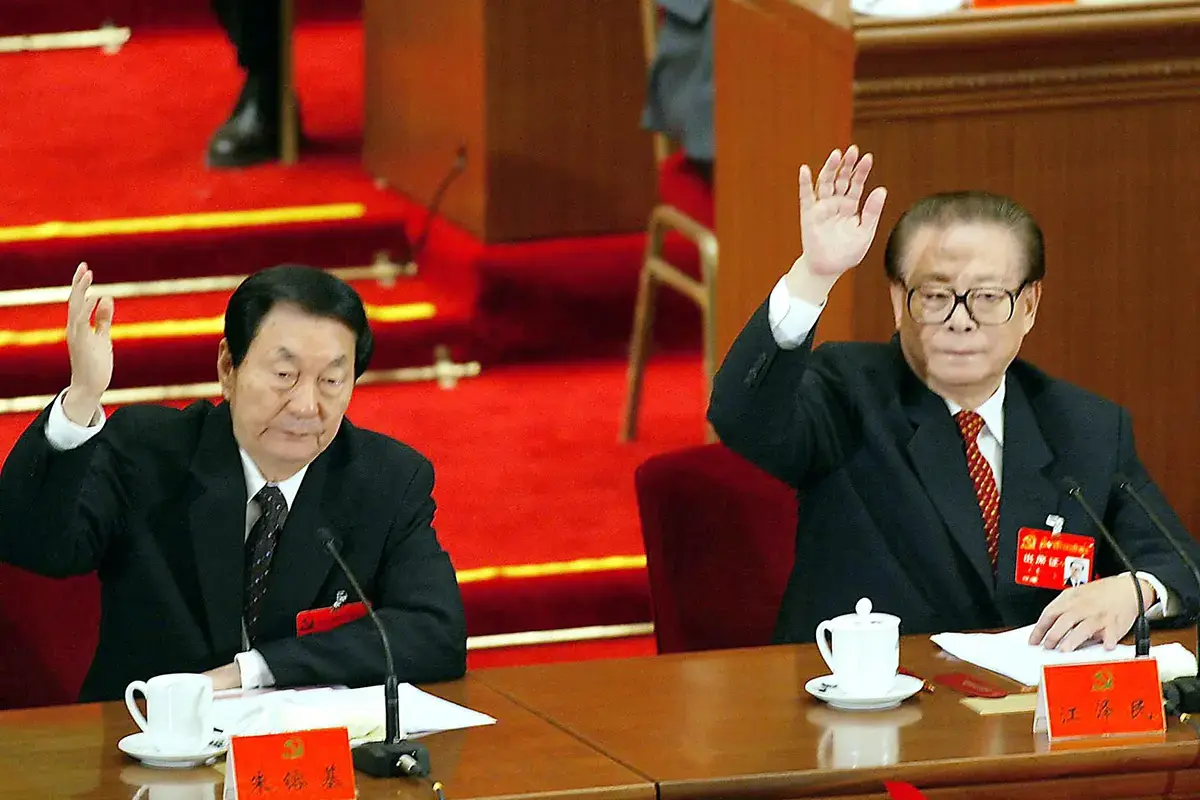
The Legacy of Zhu Rongji in Modern China
On August 17, China will commemorate the centenary of Jiang Zemin's birth. This occasion comes shortly after the death of Zhu Rongji, a pivotal figure in China's economic transformation. Zhu, who served as Premier from 1998 to 2003, played a crucial role in implementing market reforms that propelled China's rapid economic growth.
Zhu's leadership marked a significant shift in China's approach to governance. Under his guidance, the country embraced policies that encouraged foreign investment and privatization, which were instrumental in integrating China into the global economy. His tenure is often viewed as a golden age of reform, characterized by a focus on economic development rather than strict political control. However, since Xi Jinping assumed power, there has been a noticeable shift towards prioritizing state security and political stability over further economic liberalization.
Zhu Rongji is remembered for his pragmatic approach to governance. He advocated for bold economic policies while also addressing social issues, such as poverty and unemployment. His efforts led to significant improvements in living standards for many Chinese citizens. Zhu's reformist agenda was largely supported by Jiang Zemin, who prioritized economic growth during his presidency. Together, they navigated China through a transformative period that laid the groundwork for its current status as a global economic powerhouse.
Is China's Reform Era Truly Over?
However, the recent political climate under Xi Jinping suggests a departure from Zhu's legacy. Xi has emphasized the importance of party control and national security, often at the expense of economic reform. This shift indicates a preference for stability over change, raising concerns about the future trajectory of China's economy. Analysts argue that this could stifle innovation and deter foreign investment, which are crucial for sustaining growth.
The passing of Zhu Rongji raises questions about the future of reform in China. With Xi Jinping consolidating power, many wonder if the country will revert to a more authoritarian model that prioritizes control over economic flexibility. The current leadership's focus on ideological purity and state dominance may hinder the kind of adaptive governance that Zhu championed.
The implications of this shift are significant. As China faces economic challenges, including a slowing growth rate and rising debt levels, the need for reform is more urgent than ever. However, the reluctance to embrace change could lead to stagnation, impacting not just China but the global economy as well.
In conclusion, Zhu Rongji's death marks a poignant moment in China's history. It signifies the end of an era characterized by rapid reform and economic expansion. As the nation navigates its future under Xi Jinping's leadership, the balance between control and reform will be critical in determining its path forward.
Frequently Asked Questions
What were Zhu Rongji's main contributions to China's economy? Zhu Rongji implemented significant market reforms that encouraged foreign investment and privatization, which were crucial for China's economic growth during the late 1990s and early 2000s.
How has Xi Jinping's leadership differed from Zhu's? Xi Jinping has focused more on state security and political stability, often prioritizing party control over economic reforms, contrasting with Zhu's emphasis on liberalization and growth.
What might be the future of economic reform in China? The future of economic reform in China is uncertain. With the current leadership's focus on control, there is concern that necessary reforms may be neglected, potentially leading to economic stagnation.