The Danger of Complacency and False Security
Democratic momentum swept through traditionally safe Republican districts, triggering celebrations worldwide. Defeats for Trump’s allies in Serbia and Brazil added to the global cheer. This was not just a routine electoral setback. It was a profound rejection of Trump's second term and the phenomenon known as Trumpism. The 16% swing toward Democrats in the popular vote for the House surpassed the 11.2% shift seen in November 1974 after Richard Nixon's disgraceful exit.
Trump spent months trying to undermine the electoral process. He used aggressive gerrymandering and laid the groundwork to falsely claim the vote was rigged. His efforts failed because the democratic system proved resilient and the American public demanded a voice. Globally, many hope this moment signals the end of the authoritarian nationalist populist machine. Viktor Orbán fell in April, but Trump's humiliation matters more. Backed by US power, Trump served as the international engine of illiberalism for a decade. That engine is now sputtering and barely functioning.
The risk now is that opponents of nationalist populism will view Tuesday's success as a reason to relax. This mirrors the mistake Trump made in November 2024. He misinterpreted his victory over Kamala Harris not as a public outcry against surging grocery and fuel prices, but as a permanent cultural shift. He saw it as a mandate to turn the US into an autocracy, gut government agencies, deploy masked operatives to harass citizens in the streets, start a disastrous war, and plaster the capital with monuments to his own vanity. An equivalent error today would be treating the midterms as the definitive end of the Trump threat. The danger of Trumpism will never truly disappear. What has happened once can happen again. If Trump was possible, another Trump is possible. Traditional allies in Britain, the European Union, and beyond must learn this lesson.
A Wounded President on the Global Stage
Even under a rational leader, American reliability as an ally can no longer be taken for granted.
Western nations must plan for their own defense. Nationalist populism has taken a heavy hit and bears the blame for these defeats. Trump’s struggles may convince voters in France and Germany to reject Marine Le Pen or the Alternative for Germany. Still, we cannot rely on this trend alone. Did Trump fail because populist politicians are doomed to fail, or because he made foolish and avoidable mistakes? His attack on Iran shattered his core promise to end wars rather than start them, while worsening inflation. Yet, it is hard to speak of inevitable failure when a leader who provoked the violent January 6, 2021 insurrection was re-elected four years later. He faced humiliation, yet voters previously rewarded him with victory.
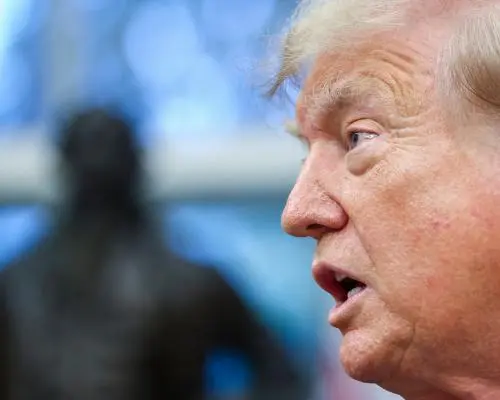
It is far too early to relegate Trump to the past tense. He has lost control of both the House and the Senate, but a weakened president is not necessarily a domesticated one. As one veteran Washington expert noted, a cornered Trump can become dangerous. On the global stage, he retains immense power over foreign policy and possesses a double motive to act. First, he wants a legacy to soften the blow of his historic defeat. Second, he desperately craves attention. Ceding the spotlight to Democrats will infuriate him. He might bow to demands from JD Vance—whose recent post on X nearly split the vice president from his boss—and seek to end the war with Iran, even through capitulation. Alternatively, he could double down and push aggressively for regime change.