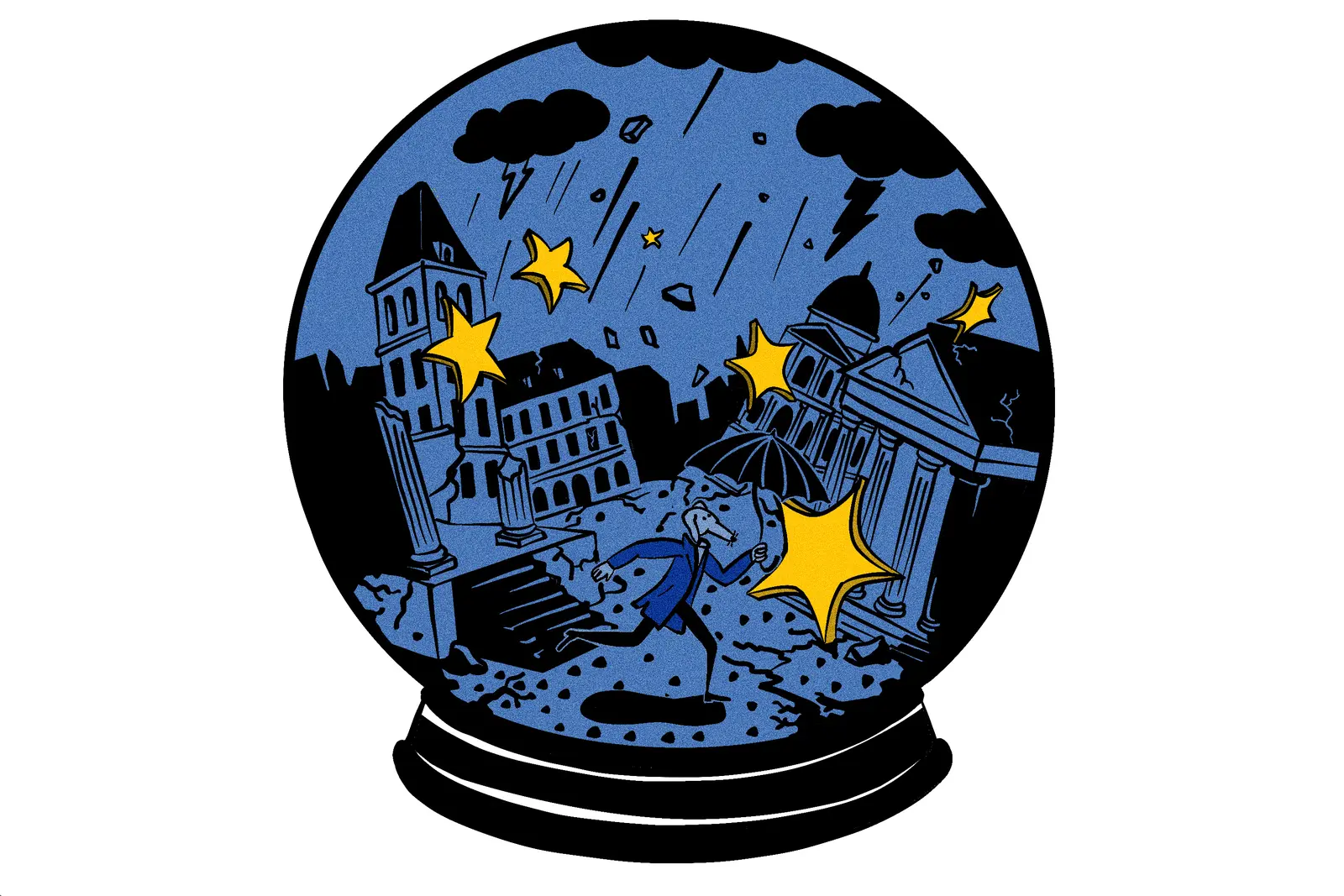
Brussels Faces Unprecedented Political Storm
Brussels is at the heart of a political storm unlike any in recent EU history. The turmoil stems from the budget crisis, financial aid for Ukraine, and geopolitical pressure from the United States and China. The biggest risk, however, is the paralysis of decision‑making caused by internal conflicts among member states that account for about 60% of the bloc’s GDP and population. Cyprus President Nikos Christodoulides told POLITICO during last week’s European Council meeting that everyone understood the need for a political agreement by year‑end. Yet Spain’s elections make that target impossible. Next year will also bring elections in France and Italy, further complicating the bloc’s situation.
Major Economies Enter Electoral Turmoil
The EU faces an unprecedented dilemma: its four largest economies are all in electoral or political turmoil, which could paralyze the EU’s ability to reach any agreement. Spain will vote next month, with the centre‑right and far‑right poised to seize power. France will change its president in April, with polls favoring Marine Le Pen. Germany’s Alternative for Germany (AfD) is gaining popularity, threatening Chancellor Friedrich Merz’s mandate. Italy’s long‑running government under Prime Minister Giorgia Meloni heads toward elections in 2027.
Consequences Already Visible
At the last EU summit, leaders failed to advance the €2‑trillion budget and engaged in an unexpectedly heated dispute over energy policy. The summit’s conclusions omitted any mention of reaching a consensus on the budget by year‑end, with member states resisting the European Council President Antonio Costa’s push for a deadline at the end of 2026. If November and December meetings fail to produce an agreement, negotiations will extend into 2027, when electoral battles will be even more visible and governments more reluctant to compromise.
Paralysis Threatening Brussels
The paralysis Brussels fears is already visible. Instead of concluding major agreements, leaders used the gathering to strengthen positions and seek tactical advantages. Six diplomats and officials told POLITICO that pessimism was palpable. „Next year will be worse,” said a senior EU diplomat. „It’s true because of the election calendar… next year will be much harder in member states and the European Parliament,” said Carla Tavares, senior MEP from the Socialists and Democrats and co‑chair of budget negotiations.
Internal Problems at a Critical Moment
The bloc’s internal problems arrive at a difficult time. From the erosion of the trans‑Atlantic alliance by former US President Donald Trump’s actions to an ever‑growing trade deficit with China, the EU faces geopolitical and economic pressures on multiple fronts. Belgian Prime Minister Bart De Wever told reporters at a nighttime press conference: „They are looking for our division. They want our division,” referring to states in the east and west of Brussels. „And they, of course, have points where they can hurt us.” Former Lithuanian foreign minister Gabrielius Landsbergis was more direct: „We are now under attack from three directions: the US, Russia, and China.”
Washington Challenges Long‑Standing Alliances
Washington questions the old alliances that have supported European security for generations. Moscow runs a shadow war across European territory, from cyber attacks and sabotage to a drone strike at Leipzig airport, for which Berlin blamed the Kremlin. Beijing tightens control over critical supply chains and floods European markets with cheap exports.
Ukraine Remains Central
Ukraine’s situation remains central. The country faces a $30‑35 billion budget deficit next year, according to the IMF, while Russia attacks energy infrastructure before a harsh winter. This occurs even though the EU already gave €90 billion to Ukraine last year. Landsbergis described the coming months as „extremely serious” for Kyiv. „Everything falls on the shoulders of Europeans,” he said. Ukrainian President Volodymyr Zelenskyy set a grim tone at the last summit, saying that if Ukraine falls, 20 million Ukrainians will flood the EU. „Russia is killing us,” he said. „They won’t stop.”
Possible Solutions and Obstacles
A solution to Ukraine’s financing problems could be Russia’s €200 billion assets frozen in Euroclear. But there are no signs the EU can find common ground on this front, with Belgium exercising a veto against using the assets to help Ukraine, still refusing to relent. „Nothing has changed,” said Swedish Prime Minister Ulf Kristersson after leaving the summit early last week. Other solutions, such as issuing more common debt, will require complex compromises at a time when Brussels has less room to maneuver.
Beyond Budget and Individual Policy Files
EU problems go beyond the budget or individual policy files. With the political futures of several powerful European leaders at stake, Brussels risks losing stable alliances and national grids that were necessary to mediate compromises. „We now have a Europe without an obvious leader,” argued another EU diplomat. „Commission President Ursula von der Leyen is strong. But we have no Merkel or Mitterrand.”
Macron’s Constitutional Limits
French President Emmanuel Macron cannot constitutionally serve a third consecutive term and will need to find a new location in Paris after leaving the Élysée Palace in April.