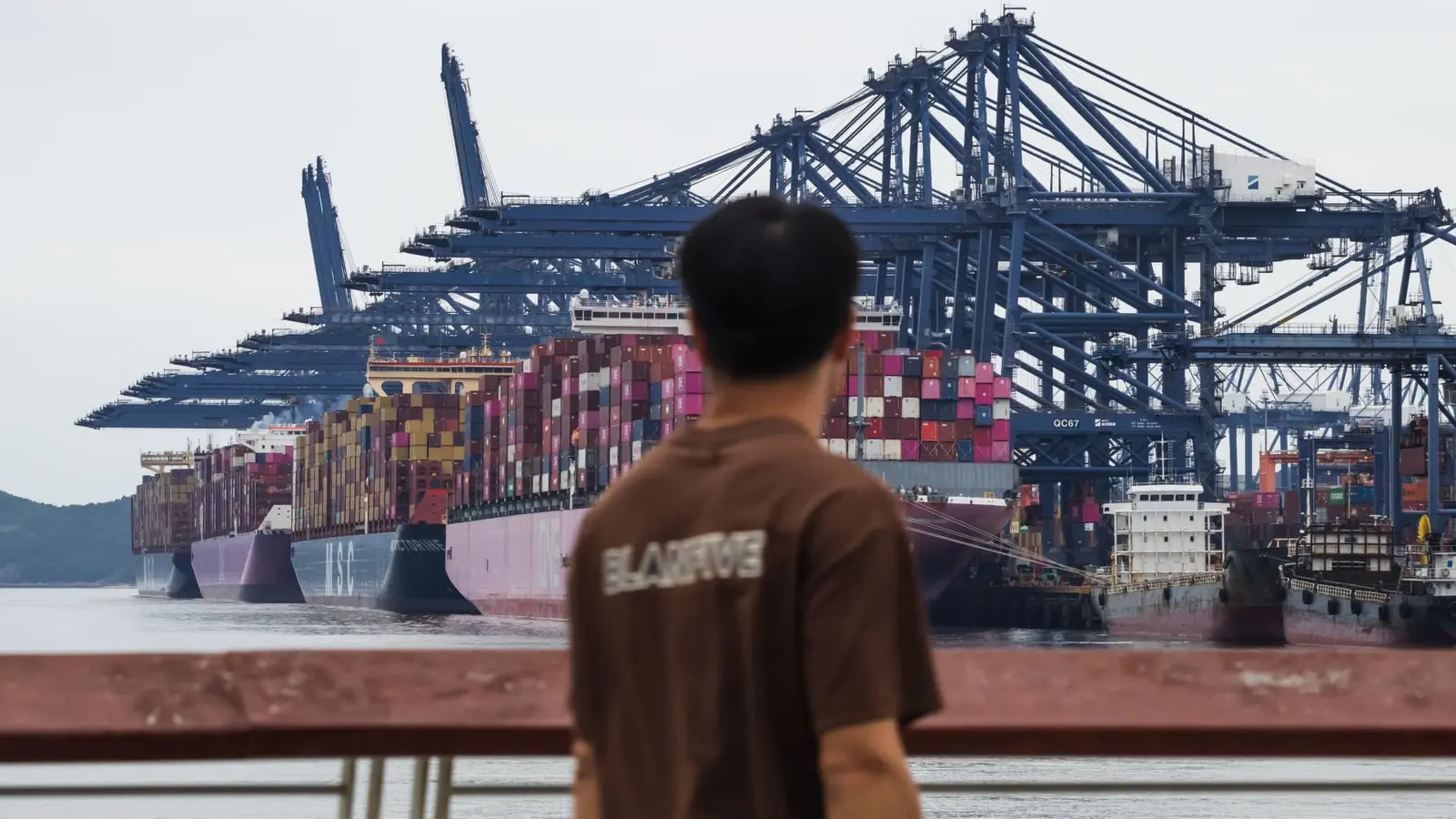
Demand for Chinese Exports?
American businesses significantly increased orders for Chinese goods in the weeks leading up to the September 2026 summit between President Donald Trump and President Xi Jinping, according to a private survey released on Friday. The rebound in export demand came as companies sought to secure supplies ahead of potential trade policy shifts, with manufacturers across multiple sectors reporting stronger-than-expected purchasing activity from U. S. buyers. The survey, conducted by an independent trade analytics firm, revealed that order volumes from U. S. importers rose sharply in August and early September, reversing a months-long decline tied to earlier tariff uncertainties. Electronics, machinery, and consumer goods categories led the uptick, with several suppliers noting that clients were placing larger, earlier orders to avoid possible disruptions. Analysts described the surge as unexpectedgiven the subdued trade flows observed throughout much of 2026. What Drove the Sudden Increase in U. S.
Demand for Chinese Exports? Industry sources indicated that U. S. retailers and distributors were accelerating procurement cycles in anticipation of the high-level summit, where trade relations between the two nations were expected to be a central topic. Many firms feared that even temporary disruptions or new restrictions could follow the meeting, prompting a precautionary buildup of inventory. One supplier in Guangdong province told the survey team that U. S. clients had increased purchase volumes by nearly 40% compared to July levels for certain product lines. How Are Chinese Manufacturers Responding to the Renewed Order Flow? Factories in key export hubs such as Shenzhen and Shanghai reported operating at higher capacity utilization rates, with some adding temporary shifts to meet the influx of requests.
While the uptick provided short-term relief for producers facing earlier slowdowns
While the uptick provided short-term relief for producers facing earlier slowdowns, executives cautioned against interpreting it as a long-term trend, emphasizing that sustained demand would depend on the outcome of bilateral talks and any resulting policy adjustments. Several noted that pricing pressures remained intense, limiting profit gains despite higher volumes. Will This Export Surge Last Beyond the Summit Period? The longevity of the renewed U. S. appetite for Chinese goods hinges largely on whether the Trump-Xi summit yields a stable or predictable trade framework. If talks result in de-escalation or clear guidelines, importers may continue current ordering patterns. However, if tensions rise or new barriers emerge, the recent spike could prove temporary, leading to another sharp pullback. Economists warn that without structural improvements in trade relations, such fluctuations are likely to recur ahead of future diplomatic events. Frequently Asked Questions What caused the unexpected rise in U.
S. orders for Chinese products before the summit? U. S. businesses increased purchases ahead of the Trump-Xi meeting to hedge against potential trade disruptions, fearing that the summit could lead to new restrictions or supply chain uncertainties. Which product categories saw the strongest growth in orders from the U. S.? Electronics, machinery, and consumer goods led the rebound in export demand, with suppliers reporting significantly higher volumes in these sectors compared to earlier months. Is the increase in Chinese exports to the U. S. expected to continue after the summit? The sustainability of the export rise depends on the summit’s outcome; stable trade relations could support continued demand, while renewed tensions might trigger a rapid reversal in orders.