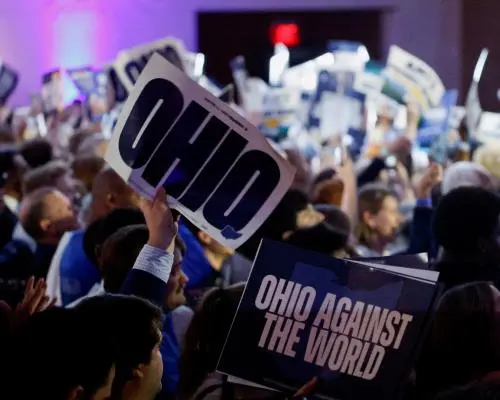
County officials reported that community meetings and grassroots canvassing played a crucial role in mobilizing voters
The Mahoning Valley, once a steel‑industry powerhouse, has returned to Democratic control after decades of political shift. In the latest state elections, voters in northeastern Ohio overwhelmingly chose Democratic candidates for key offices, signaling a resurgence of labor‑oriented politics in the region. The Mahoning Valley, home to Youngstown and surrounding towns, was historically a Democratic bastion due to its unionized workforce. The decline of steel manufacturing in the 1970s, however, led to job losses, population decline, and a gradual shift toward Republican representation. Recent elections reversed this trend, with Democrats winning majorities in local and state races. Labor Legacy Drives Voter Turnout Voter registration data show a 12% increase in Democratic turnout compared to the previous cycle. Former steelworkers and their families cited job security, healthcare, and infrastructure investment as key motivations. „We want a government that remembers the value of hard work,” said a local union representative.
County officials reported that community meetings and grassroots canvassing played a crucial role in mobilizing voters. Economic indicators reflect the region’s recovery: the unemployment rate fell from 9.5% to 6.8% over the past five years, and new manufacturing plants have begun operations. These developments have bolstered confidence in Democratic leadership, which has pledged to support small businesses and attract new industries. What Does This Mean for Ohio’s Political Landscape? The shift could alter the balance of power in the state legislature, where Democrats now hold a narrow majority. Policy priorities are expected to shift toward expanding public education, improving transportation infrastructure, and increasing funding for social services. The state’s budget will likely see higher allocations for workforce development programs. Opposition parties argue that the gains are temporary, citing economic volatility and the need for bipartisan solutions.
Nonetheless, the current administration plans to launch a statewide initiative to revitalize former industrial hubs, aiming to create 15,000 new jobs by 2030. Frequently Asked Questions Q: How did the steel industry’s decline affect political affiliations in the Mahoning Valley? A: The loss of manufacturing jobs weakened the traditional Democratic base, leading many voters to support Republican candidates who promised economic restructuring. Q: What are the main policy goals of the new Democratic leadership? A: They focus on job creation, healthcare access, infrastructure upgrades, and educational investment to rebuild the region’s economic foundation. Q: Will the shift in Ohio’s legislature impact statewide elections? A: A Democratic majority may influence redistricting, budget priorities, and the selection of candidates for statewide offices, potentially reshaping Ohio’s political future.