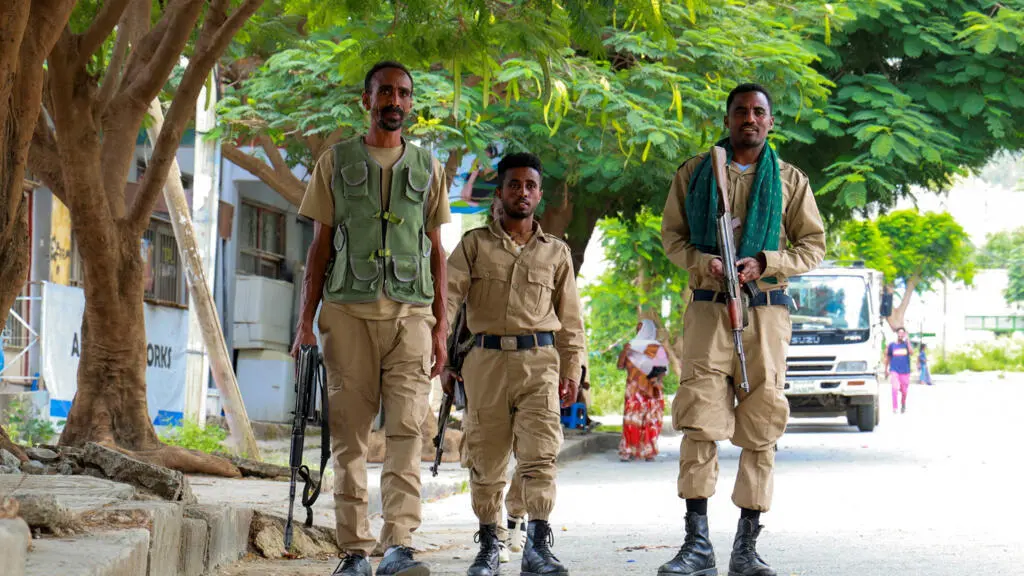
Ethiopia’s military has been called upon to support peacekeeping missions, stretching its resources
Ethiopia, a key player in the Horn of Africa, is confronting a potential return to civil war. The country’s fragile peace, achieved after years of internal strife, is now under pressure from rising tensions in neighboring states and lingering domestic grievances. Analysts warn that any flare‑up could destabilise the entire region. The conflict in Tigray ended in 2022, but the new government has struggled to integrate former combatants and address grievances. Meanwhile, the ongoing war in Sudan and border clashes with Eritrea have heightened security concerns. Ethiopia’s government has increased troop deployments along its borders and tightened control over media. Public protests over economic hardship and political repression have also intensified. Rising Tensions in the Horn of Africa Ethiopia’s northern border with Sudan has seen sporadic clashes between armed groups and government forces. These incidents have drawn international attention, as the Sudanese civil war threatens to spill over.
Ethiopia’s military has been called upon to support peacekeeping missions, stretching its resources. The situation is further complicated by the presence of armed militias in the Somali region, which have been active in cross‑border raids. In the capital, Addis Ababa, protests have erupted over rising food prices and unemployment. Protesters demand reforms and an end to corruption. The government has responded with a mix of concessions and crackdowns. Human rights organisations report increased police presence and arrests. Can the Region Survive a New Conflict? The question remains whether Ethiopia can maintain stability while dealing with external pressures. Experts argue that a coordinated diplomatic effort is essential. The African Union and the United Nations have urged dialogue between Ethiopia and its neighbors. However, trust deficits and competing interests make negotiations difficult. The economic impact is already visible. Foreign investment has slowed, and the Ethiopian currency has weakened.
The government’s plans to rebuild infrastructure are hampered by security concerns
The government’s plans to rebuild infrastructure are hampered by security concerns. If a new conflict erupts, the country could face a severe humanitarian crisis, with millions displaced. The consequences of a renewed civil war would be far‑reaching. Neighboring countries could experience refugee flows, while regional trade routes would be disrupted. The Horn of Africa would see a decline in economic growth and an increase in instability. Frequently Asked Questions What is the main cause of Ethiopia’s current instability? The main cause is a mix of unresolved ethnic tensions, economic hardship, and external conflicts in neighboring countries that threaten to spill over. How is the Ethiopian government responding to the protests? The government has increased security presence, made some political concessions, and arrested protest leaders to maintain order. What role does the international community play in preventing conflict?
International bodies like the African Union and the UN are urging dialogue and providing diplomatic support, but their influence is limited without local cooperation.