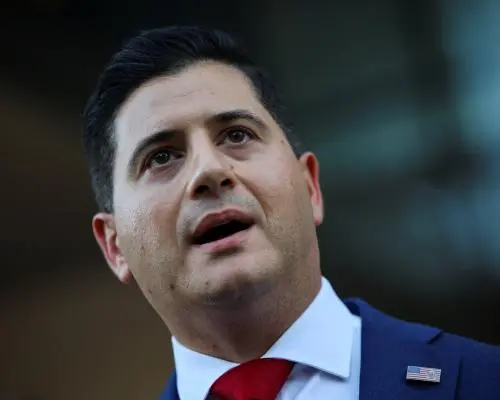
The Legal Basis for Disqualification
A federal judge in Southern California ruled that Bill Essayli, the U. S. Attorney for the district, was unlawfully serving in his role. The order disqualifies him from overseeing two active criminal prosecutions. The ruling does not take immediate effect, and the Department of Justice has signaled it will appeal the decision.
Essayli, a former Republican congressman and close ally of the president, was appointed to lead the U. S. Attorney’s Office. He was never confirmed by the Senate. The judge found that serving without Senate confirmation violated statutory requirements for the position. This creates a legal gap in the chain of command for federal prosecutions in the district.
Will the Appeal Change the Outcome?
The court’s order centers on the requirement that U. S. Attorneys be confirmed by the Senate before assuming full authority. Without that confirmation, Essayli’s oversight of the two criminal cases is legally vulnerable. The Department of Justice argues that the judge overstepped by ruling on a question of statutory interpretation. The agency plans to file an appeal to a higher court, seeking to reinstate Essayli’s authority pending the outcome.
The appeal process could take months, during which the two prosecutions may proceed under interim leadership. Legal analysts note that if the appellate court upholds the ruling, Essayli must step aside. This would be a rare public challenge to a presidential appointee’s authority. The Department of Justice’s appeal adds uncertainty to the timeline for both criminal cases.
Why was Essayli disqualified? He was never confirmed by the Senate, which is a statutory requirement for the U. S. Attorney position. The judge ruled his service was unlawful without that confirmation.
Frequently Asked Questions
What happens to the two criminal cases? They will likely proceed under an interim or acting U. S. Attorney while the appeal is pending. The judge’s order does not halt the cases immediately.
Can the Department of Justice appeal? Yes, the agency has stated its intention to appeal to a higher court. The appeal could reverse or modify the ruling, restoring Essayli’s authority if successful.