Yet conventional consensus can be profoundly wrong
How deeply can a Labour administration reshape the structure of British society? For many voters, media analysts, and even numerous politicians within its own ranks, the answer to this recurring question has typically been skeptical: the capacity for transformation remains limited. The logical consequence of this perspective is the idea that Labour governments are fundamentally incapable of truly restructuring the economy, radically redistributing wealth, effectively empowering disadvantaged groups, or adopting a genuinely ethical foreign policy without disturbing too many powerful interests, whether those belong to the British ruling class, the American administration, or global financial markets. This conventional wisdom, repeated ad nauseam and internalized not just by centrism and the right, but also by parts of the left, has cast a shadow over every Labour government from the uncertain 1920s down to Keir Starmer’s administration, which proved to be a working disappointment a century later.
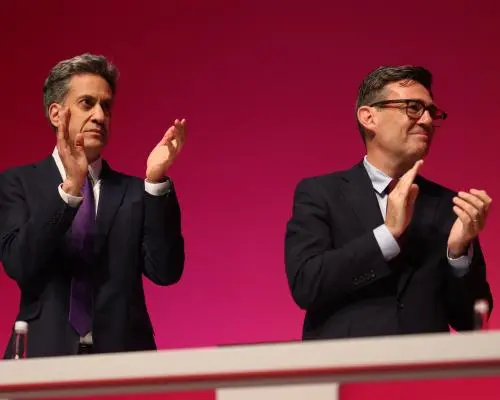
Yet conventional consensus can be profoundly wrong, especially during volatile periods like the present when historical precedent matters less and less. At last year’s Labour conference, Andy Burnham was widely dismissed, viewed as having launched a botched and half-baked leadership coup. Much of the press and Starmer’s cabinet calculated that his chances of ever becoming prime minister had evaporated for good. Yet at this week’s unusually crowded and perhaps overly optimistic gathering, his energetic presence was nearly as dominant as Tony Blair’s during his early years in charge. He served as a constant point of reference, visible in the main hall, around merchandise stands, and at fringe events hosted by the left.
Furthermore, Burnham seems eager to leverage this personal dominance—which might prove shorter than Blair’s given Labour’s more fragile status in a fractured political landscape—to open up major issues that his party has been advised for years to keep locked away. Electoral reform, social care, public intervention in struggling privatized utilities, the triple lock on pensions, and even rejoining the European Union all surfaced in his soft-spoken yet shocking conference speech. „Change will be hard,”he acknowledged, while insisting that „more of the same is not enough.”At an energetic fringe event the previous night, his ally Ed Miliband, the foreign secretary who previously pioneered Labour's unexpected appetite for tackling difficult problems and dangerous interests as energy secretary, summed up the party’s new defiant spirit. „All politics is a risk. Progressive politics is a particular risk,”he remarked with relish.
Unlike the fierce partisan attacks
Burnham may possess charisma and communication skills reminiscent of Blair in the 1990s, but New Labour ministers never dared utter such provocative statements. Defenders of that bygone political culture would argue that avoiding direct confrontation was precisely why Blair won two re-elections. Yet Burnham, who served in the Blair government during his formative years, also harbors a strong reconciliatory impulse, reflected in his frequent desire to cooperate with other parties.
Unlike the fierce partisan attacks of the post-Brexit decade that thrilled journalists while alienating the wider public, Burnham’s speech lacked standard partisan venom. While he might appear amiable, he can be ruthless, neutralizing adversaries and rendering their tactics obsolete, a lesson learned this year by domestic rivals like Morgan McSweeney. The perpetual fury and tribalism of Kemi Badenoch and Nigel Farage suddenly look rigid and unreasonable next to Burnham’s message of hope, national unity, and his disarming admission that politicians must do better because „this country is not where we would want it to be.”Labour’s modest yet persistent poll leads suggest enough voters have grown weary of old politics—characterized by loud arguments and meager results—to keep Labour in power through the next general election and beyond, when ambitious reforms are finally scheduled to take effect.
Naturally, proposing and implementing sweeping changes to the status quo, such as softening the pension triple lock, will inevitably alienate many voters while providing easy targets for Westminster opponents and the hostile press. Yet with the electorate more divided than ever and the threshold for re-election potentially dropping below one percent of the vote, being controversial matters less for a government than maintaining its nerve and satisfying a core base of supporters. Burnham’s broadsides against traditional Labour demons like privatized utilities seem capable of achieving precisely that balance. Meanwhile, his cross-party outreach and support for electoral reform could attract voters and politicians from the Liberal Democrats and the Greens. Just like Pedro Sánchez, Burnham understands how to navigate these turbulent political waters.