Energy markets saw Brent crude drop below
The global economy has proven far more resilient to the conflict involving the US, Israel, and Iran that began in late February than analysts initially anticipated. Several crucial factors helped absorb the shock of supply disruptions in the Persian Gulf. Governments released strategic hydrocarbon reserves, China sharply reduced its energy imports, and markets shifted toward alternative fuels like coal.
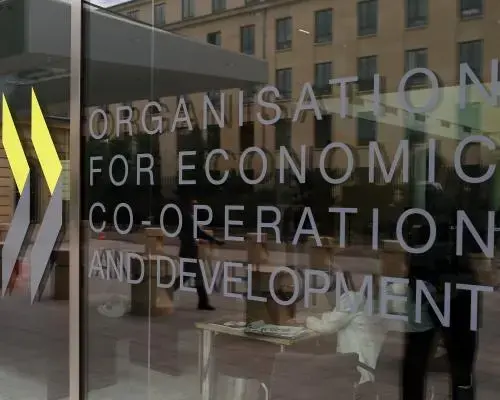
However, experts at the Paris-based Organisation for Economic Co-operation and Development warn of an imminent risk. Oil and gas prices could resume their upward trajectory, sparking fresh inflationary pressures in the coming months.
„The global economic future depends heavily on achieving a lasting resolution to the Middle East conflict,” the organization stated, highlighting ongoing market uncertainty.
In its updated quarterly forecasts, the OECD projects global economic growth at 2.9% for the current year. This represents a slight upward revision of 0.1 percentage points from the June estimate of 2.8%. Meanwhile, next year's growth outlook was adjusted downward from 3.1% to 3.0%.
Emerging Risks and Regional Pressures
Energy markets saw Brent crude drop below the $100 threshold recently, driven by hopes of a potential agreement between Washington and Tehran. Yet, the ongoing diplomatic deadlock between the two sides has caused energy costs to surge dramatically over recent weeks.
OECD analysts warn that while oil shipments are expected to resume as hostilities ease, any persistent disruptions could trigger simultaneous inflation and economic deceleration.
Another major risk identified by the organization is the El Niño weather phenomenon, which is projected to be the strongest in a thousand years. This extreme climatic event poses a severe downside threat to the global economy. It could severely damage agricultural production and drive food prices significantly higher.
Additional vulnerabilities include potential spikes in government bond yields, which have already climbed due to persistent inflation fears. Investors are also losing confidence in valuations within the artificial intelligence sector.
While massive AI investments have helped cushion global economic fragility—particularly in the United States—the American outlook remains mixed. Powerful underlying momentum and expanding AI investments are clashing with shrinking consumer purchasing power, slower labor force growth, and depleted household savings.
While massive AI investments have helped cushion
Regarding the United Kingdom, the OECD significantly lowered its inflation forecast for the current year from 3.7% to 3.1% as price increases softened. British economic growth is now estimated at 1.1% for 2026, up from previous forecasts of 0.9% in June and 0.7% in March. Government support measures have successfully bolstered domestic consumption.
Nonetheless, this growth rate remains below last year's 1.4%, and next year's forecast dips slightly to 1.0%. Treasury Secretary Emma Reynolds noted that despite unprecedented pressures from conflicts in the Middle East and Europe, the British economy shows remarkable resilience. She emphasized that the UK achieved the fastest growth in the G7 during the first half of the year.
Prime Minister Andy Burnham included a reduction in VAT on electricity bills among his very first economic policies after taking office in July. Both Burnham and Chancellor John Healey face rising borrowing costs driven by global bond market turmoil and supply chain disruptions.
At the same time, International Monetary Fund Managing Director Kristalina Georgieva urged advanced economies to tackle public debt. She warned BBC that global economic shocks have pushed debt levels persistently upward while governments failed to curb servicing costs. Georgieva insisted that politicians must summon the political courage needed to pursue urgent financial consolidation.