Why Are Civilian Airports Becoming Targets in the Yemen Conflict?
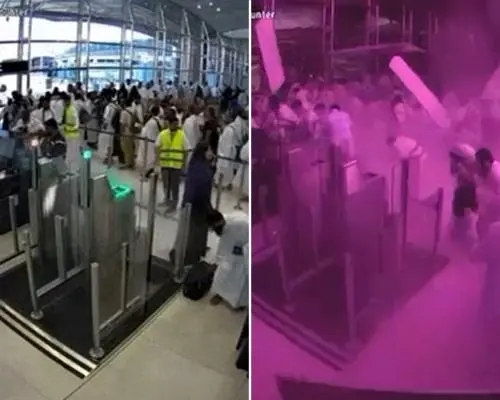
On Saturday, Houthi forces launched a missile strike that hit Riyadh’s international airport, killing 13 people and injuring hundreds. The attack occurred during a broader counteroffensive by Yemen’s government against Houthi positions. A second strike followed on Sunday, resulting in one fatality and nearly a dozen injuries. CCTV footage captured civilians seeking cover as the missile detonated near the airport terminal.
The Houthis, an Iran-backed armed group controlling much of northern Yemen, have intensified cross-border attacks in recent months. These strikes are part of a pattern aimed at pressuring Saudi Arabia, which leads a military coalition opposing the Houthis in Yemen’s civil war. The group claims the airport was a legitimate target due to its use for military logistics, though Saudi officials deny such activity. The weekend attacks mark some of the most damaging Houthi strikes on Saudi infrastructure in over a year.
How Effective Are Saudi Defenses Against Incoming Missiles?
Houthi militants have increasingly focused on Saudi airports and oil facilities as part of their strategy to inflict economic and psychological pressure. By striking high-visibility civilian infrastructure, the group seeks to demonstrate its reach despite being militarily outgunned by the Saudi-led coalition. Experts note that such attacks also aim to disrupt Saudi normalization efforts and draw international attention to Yemen’s humanitarian crisis. The use of ballistic missiles, some allegedly supplied by Iran, allows the Houthis to bypass frontline defenses and strike deep inside Saudi territory.
Saudi Arabia relies on advanced air defense systems, including Patriot and THAAD batteries, to intercept incoming threats. While these systems have successfully destroyed many Houthi projectiles, occasional failures allow missiles to reach populated areas. The Saturday strike on Riyadh’s airport suggests either a lapse in detection or the use of tactics designed to overwhelm defenses, such as salvo launches. Military analysts warn that as Houthi missile technology improves, the risk to civilian zones may increase, prompting calls for upgraded radar and intercept capabilities.
What Are the Risks of Further Escalation?
Continued Houthi attacks on Saudi soil could provoke a stronger military response, potentially widening the conflict beyond Yemen’s borders. Saudi officials have vowed to retaliate against launch sites inside Yemen, raising concerns about renewed large-scale bombing campaigns. Meanwhile, international mediators fear that escalation could derail fragile peace talks aimed at ending Yemen’s war, which has caused one of the world’s worst humanitarian crises. The United Nations has urged restraint and called for renewed negotiations to prevent further civilian harm.
Are the Houthi missile attacks linked to Iran? While the Houthis deny direct Iranian control, experts confirm they receive weapons, training, and financial support from Iran, enabling their missile program.
Frequently Asked Questions
Why target an airport instead of military bases? The Houthis argue that Saudi airports support military operations, making them legitimate targets; Saudi authorities maintain the facilities are purely civilian.
Could these attacks affect air travel to Saudi Arabia? So far, flight operations at Riyadh’s airport have resumed after temporary suspensions, but repeated strikes could lead to longer disruptions and increased insurance costs for airlines.