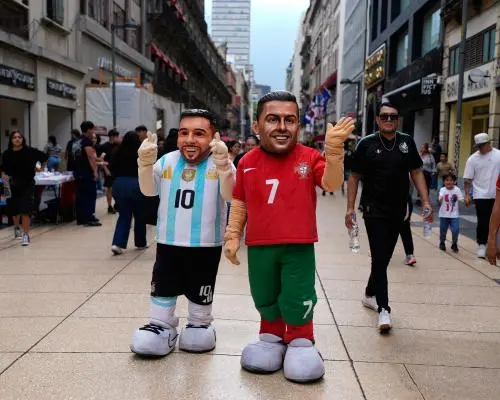
Global Survey Findings on Football Icons
A Singaporean academic study polled over ten thousand people across twenty-six nations. Participants chose between Lionel Messi and Cristiano Ronaldo. Demographics like age, gender, education, and income showed no significant link to the choice. However, more liberal individuals leaned toward Messi compared to the national average. Right-leaning supporters might view Ronaldo as embodying work ethic. Left-leaning fans favor Messi for natural talent or a more delicate physique. This research predates Ronaldo's White House visit last year, ruling out temporal influence.
Geographic Preferences and Authoritarian Views
Indonesia, Turkey, Mexico, and Egypt showed the strongest support for Ronaldo. Portugal, Singapore, and China followed. Messi enjoyed major backing in South Korea and Argentina. Finland, Spain, and the UK were also strong supporters. When asked about governance, particularly the appeal of a „strong leader not concerned with parliament or elections,”those favoring authoritarian regimes preferred Ronaldo. Furthermore, respondents consuming more short video news were significantly more likely to back Ronaldo.
American Political Divides in Sport
In the US, political differences suggest strong influence on sports taste. Sociologist Joshua Woods used Google Trends and 2020 Trump voting data for 53 sports. Classic sports like American football, baseball, and basketball were favored in Trump-leaning regions. Conversely, artistic skating, surfing, Ultimate Frisbee, soccer, and tennis were more popular in liberal areas.
Woods’ theory, detailed in Red sport, blue sport: political ideology and the popularity of sports in the US , suggests conservatives value tradition and conformity. They are less open to new or lower-status sports. Liberals may embrace greater diversity. A surprise was soccer's popularity in liberal areas, despite its growing status. Woods noted a strong negative correlation between Trump votes and soccer interest.
Ideology and Sporting Values
Data in Europe is less extensive. A Belgian study of 650 participants found no clear link between political stance and sport participation. Jelle Muraille noted that right-wing individuals often prefer established brands. Left-wing individuals tend to choose niche or smaller brands. This model did not prove true in Belgium. Soccer in the UK enjoys broad political support due to deep cultural integration.
European Nuances
A personal anecdote showed this trend. An artisan avoiding social media received a Reform Party ad while watching boxing on YouTube. He questioned if boxing was now a right-wing sport. This prompted further investigation into his claim.
A Personal Observation
In conclusion, sport is not a neutral space. It is increasingly shaped by modern ideological dynamics. This ranges from historical conflicts like Joe Louis versus Max Schmeling in 1938 to global issues such as South African apartheid and the recent Ukrainian invasion.