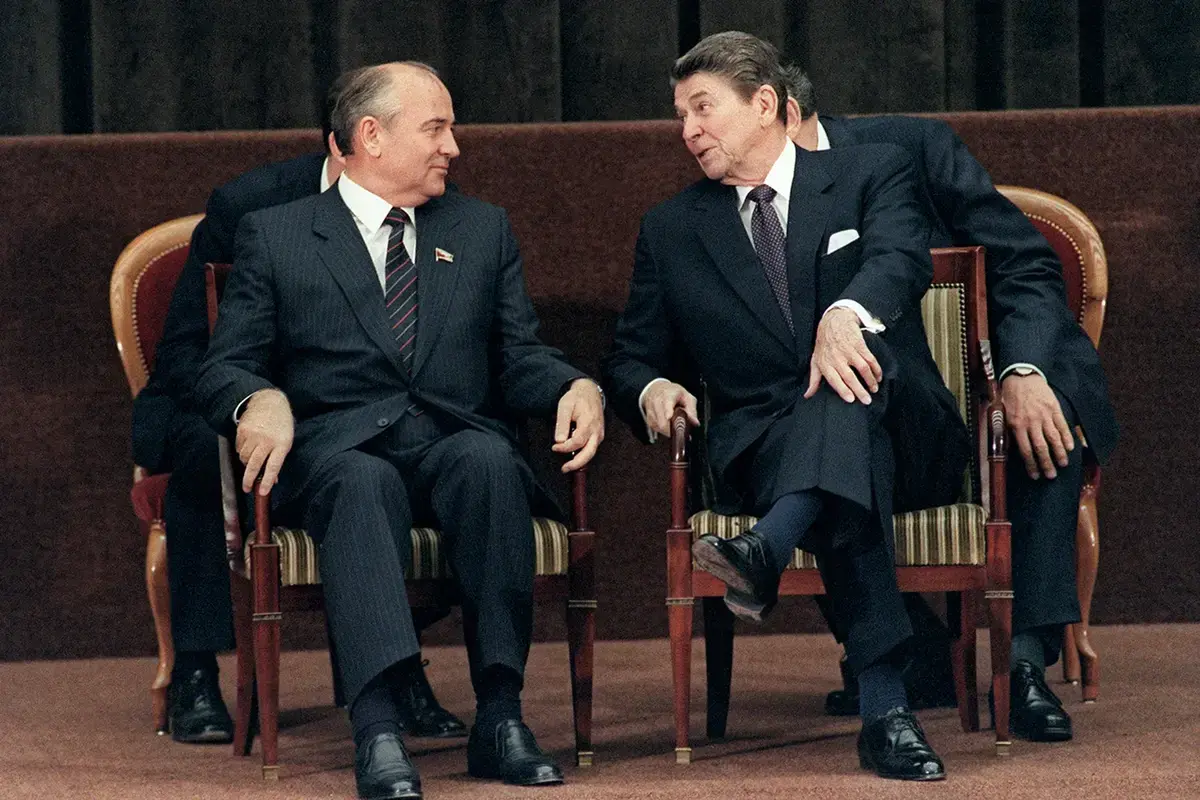
A New Era of Diplomacy
A new film explores how President Ronald Reagan engaged with State Department experts to navigate the complex landscape of Cold War diplomacy. This collaboration was crucial in shaping the strategies that ultimately led to a thaw in U. S.-Soviet relations. Reagan's approach combined a strong anti-communist stance with a willingness to engage in dialogue. His administration recognized that military might alone could not resolve the tensions of the era. By consulting with knowledgeable officials, Reagan crafted a nuanced foreign policy that aimed for peaceful coexistence.
Reagan's presidency marked a significant shift in U. S. foreign policy. Initially perceived as a hardliner, he gradually embraced negotiation as a means to address the global threat posed by the Soviet Union. His meetings with experts were not just routine; they were strategic discussions that informed his decisions on arms control and international diplomacy.
During critical moments, such as the Reykjavik Summit in 1986, Reagan's willingness to compromise played a key role. He proposed significant reductions in nuclear arsenals, which surprised many. His ability to balance tough rhetoric with diplomatic gestures helped build trust with Soviet leader Mikhail Gorbachev. This trust was essential in moving towards the eventual dissolution of the Soviet Union.
What Role Did Personal Relationships Play?
The personal rapport between Reagan and Gorbachev was instrumental in the negotiation process. Their meetings, characterized by candid discussions, allowed both leaders to address their nations' concerns directly. This personal connection fostered an atmosphere conducive to dialogue, which was pivotal in breaking the long-standing deadlock.
Reagan's background as an actor also contributed to his diplomatic style. He understood the importance of narrative and communication. His ability to convey sincerity and optimism helped to soften the image of the United States in the eyes of the Soviet leadership.
The film highlights these dynamics, showcasing how Reagan's diplomacy was not merely about policy but also about personal relationships and the art of negotiation.
Frequently Asked Questions
In the end, the consequences of Reagan's diplomatic efforts were profound. The Cold War's conclusion reshaped global politics, leading to a new world order and the expansion of democratic ideals. Reagan's legacy as a peacemaker was cemented, illustrating that diplomacy can be as powerful as military strength.
How did Reagan's early views influence his later diplomatic strategies? Initially, Reagan was known for his hardline stance against communism. However, as he gained experience, he recognized the need for dialogue to resolve conflicts, leading to a more nuanced approach.
What impact did personal relationships have on Reagan's negotiations? Personal connections, particularly with Gorbachev, were crucial. These relationships fostered trust and openness, facilitating more effective communication and negotiation during critical moments in the Cold War.