At the Senate level, a threshold
The major priorities of the Democratic Party in the House of Representatives, once they gain a majority in the future legislation, focus on two key areas: improving the healthcare system and ending the military conflict with Iran. This strategic direction has been emphasized by the Democratic leaders, who are formulating their immediate plans for the post-initiation period of the new congress, scheduled for January 3.
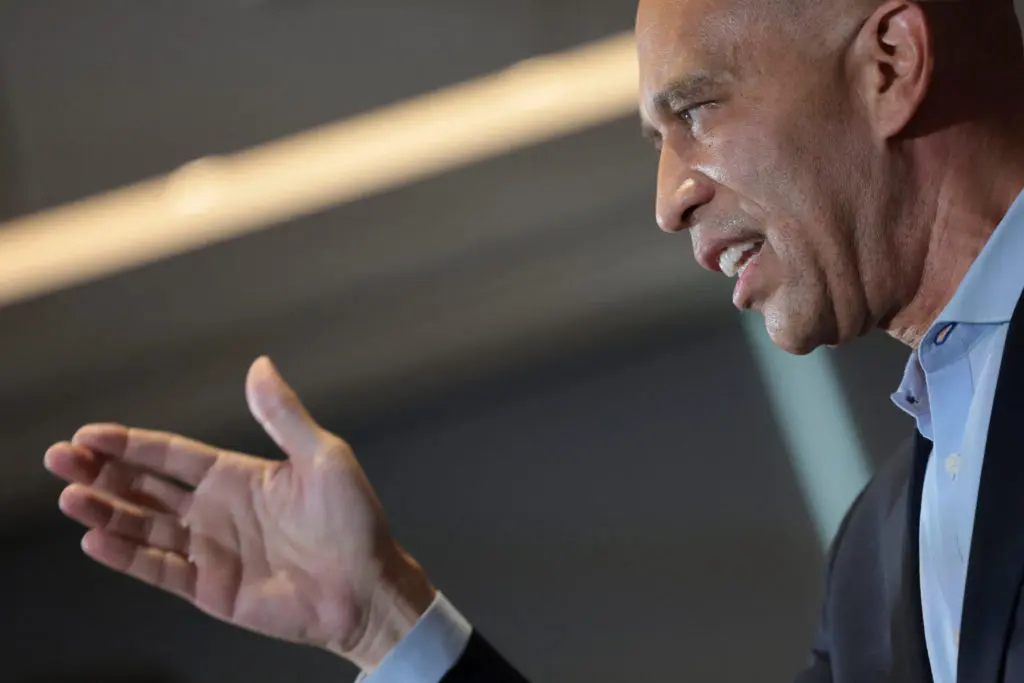
New York's Democrats, in the person of Hakeem Jeffries, who is in position to become the next speaker of the House, have stated that they will act at a remarkable rate. In the context of these objectives, the next year's House primaries are to focus on strengthening Medicaid and restoring an extended tax exemption designed to reduce the cost of health plans under the Insurance Accessibility Act (ACA) for millions of beneficiaries.
In addition to these healthcare reforms, the Democratic parties have pledged rapid legislative interventions aimed at ending hostilities with Iran and lifting certain trade tariffs imposed by President Donald Trump.
This legislative effort has somber implications for Democrats, as it intends to turn the big victories in the midterm elections into concrete achievements, thus fulfilling promises to citizens about improving the cost of living.
Despite these broad goals, the Democratic Party's agenda faces various obstacles. However, given the significant majority they will hold in the House of Representatives, the passage of these laws should not be a major difficulty. The real problem could arise at the signing stage, given the upper obstacles.
At the Senate level, a threshold of 60 votes is needed to pass legislation, along with the risk of a potential veto by the presidency. On election night, Donald Trump posted on his social media platform an image with a red hat and a simple message expressing his intention to use his veto.
Following these initial votes, Hakeem Jeffries noted that five active working groups are developing legislative proposals to reduce costs in vital sectors such as housing, energy, food and personal care.
Representative Ted Lieu of California added that in the medium term, Democrats will address legislation related to artificial intelligence and data centers. He's involved in a group of lawmakers working on a document that will detail the priorities Jeffries needs to consider. Lieu criticized the previous actions of the Republicans in the House of Representatives, saying that letting the AI industry develop without regulation was a political and public policy mistake. He specified two future changes: public meetings on AI will be held and legislation will be approved to establish reasonable protections for AI, especially data centers.
While some of the substantial changes have
Return to previous political efforts
One of the most important changes the Democrats want to overturn is the changes to Medicaid, which are estimated to generate a reduction of over $900 billion a decade. These cuts, approved by Republicans, helped offset some of the costs of Trump's major tax and spending legislation enacted last year. The changes to Medicaid introduced new administrative requirements and eligibility conditions, including work obligations.
While some of the substantial changes have not yet gone into full effect, data from KFF, a health policy research and news organization, shows that Medicaid enrollment has fallen by about 5 million people, which is about 7% from July 2025, the date the law was signed.
The cancellation of these cuts would most likely imply that Trump and the Republicans would give up on the difficult changes they made to cut spending on legal programs, an essential element of their landmark tax law. This seems an unlikely prospect to be realized.
In addition, the effort to extend the improved tax exemptions for certain beneficiaries of the ACA plans was discussed and voted on at the current congress. This measure passed the House of Representatives with partial Republican support, but stalled in the Senate.
On the conflict with Iran, there were multiple votes on military powers, 14 in the Senate and 6 in the House of Representatives respectively.
Prospects for Legislative Blockade