A Direct Rebuttal to Washington’s Rhetoric
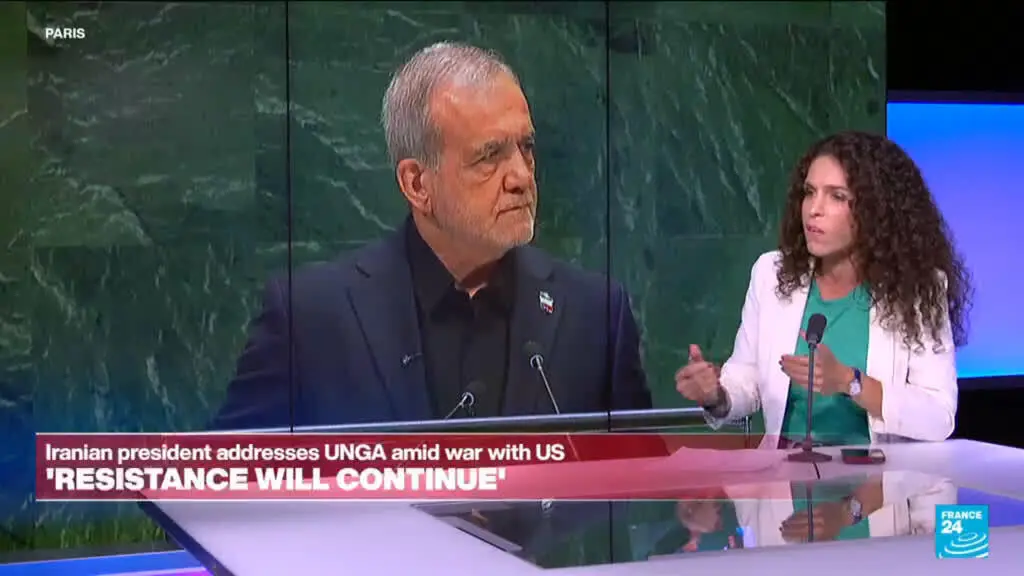
Iranian President Masoud Pezeshkian addressed the United Nations General Assembly in New York. He declared that his nation has become a primary victim of American terrorism. This statement served as a direct rebuttal to remarks made by US President Donald Trump. The confrontation highlights the deepening diplomatic rift between the two powers. Pezeshkian emphasized that Iran’s sovereignty is under constant threat. He argued that Washington’s policies often blur the line between standard statecraft and aggressive force. The speech took place during a high-stakes session of the global body.
Pezeshkian framed his address as a response to recent comments by Donald Trump. The Iranian leader suggested that the United States frequently employs military and economic pressure as tools of terror. He pointed to specific actions taken against Tehran in recent years. These included targeted strikes and heavy sanctions regimes. By labeling these moves as terrorism, Pezeshkian aimed to shift the narrative. He wanted the international community to view Iran as the aggrieved party. This rhetorical strategy seeks to isolate the US diplomatically. It also aims to rally support from other developing nations. The president stressed that Iran remains committed to dialogue. However, he warned that patience has limits when faced with repeated provocations. The tone was firm but measured, avoiding outright declarations of war.
Shifting the Narrative on Regional Stability
The declaration impacts how Iran positions itself within the Middle East. By invoking the term terrorism, Tehran appeals to global norms. Most nations formally define terrorism as non-state violence. Pezeshkian’s usage challenges this conventional definition. He argues that state-backed aggression carries similar weight. This move complicates future negotiations with Western partners. It may also influence voting patterns in UN security councils. Allies of Iran are likely to echo this sentiment. Critics might view the language as provocative. They could argue it sets a precedent for other states. The debate over state versus non-state actors will intensify. Diplomatic channels remain open despite the sharp rhetoric. Both sides continue to engage through backdoor communications.
Frequently Asked Questions
Did Pezeshkian call for immediate military action? No, the president did not explicitly demand a military response. He focused on defining the nature of US actions rather than prescribing a specific counter-move.
How does this affect US-Iran relations? The statement signals a hardening of Iran’s diplomatic stance. It suggests that Tehran expects greater concessions or apologies from Washington in future talks.