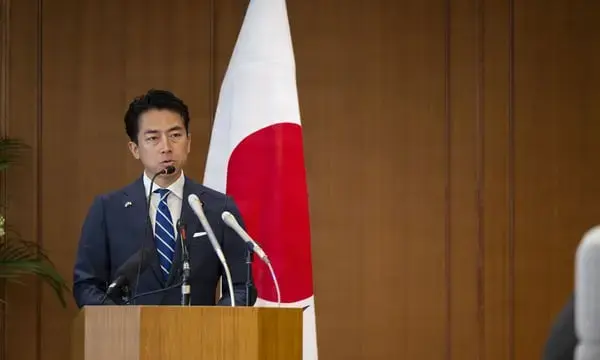
From Backbencher to Defense Chief
Tokyo, Oct. 29 – Shinjiro Koizumi, Japan’s 49‑year‑old defense minister, held a joint press conference with U. S. Secretary of Defense Pete Hegseth at the Ministry of Defense. The event marked his first major diplomatic appearance since taking office in September, signaling a new chapter for the once‑overlooked lawmaker.
Koizumi, the son of former prime minister Junichiro Koizumi, entered politics with a reputation for liberal activism rather than security expertise. His appointment to the defense portfolio was intended as a political balancing act, but it quickly became a platform for reshaping his public image. By championing a stronger alliance with Washington and advocating for increased defense spending, he turned a traditionally low‑profile role into a showcase for his leadership ambitions.
Koizumi’s early career focused on environmental policy and youth engagement. Critics dismissed him as a „political hobbyist” lacking the gravitas for national security. The defense ministry, however, offered him a stage to confront regional challenges head‑on. Within weeks, he announced a 10 % boost in the Self‑Defense Forces budget, citing rising maritime threats near the Senkaku Islands. He also pushed for joint training exercises with U. S. forces, emphasizing interoperability.
Will Koizumi reshape Japan’s security policy?
„The security environment demands decisive action,” Koizumi told reporters, his tone firm yet measured. His remarks resonated with a public increasingly wary of Chinese naval activity. Polls released in early November showed his approval rating climbing from 28 % to 38 % among voters aged 30‑49, a demographic that had previously viewed him skeptically. Analysts attribute the surge to his visible commitment to safeguarding Japan’s territorial waters and his willingness to confront traditional diplomatic taboos.
The question now dominates political discourse: can Koizumi translate his newfound momentum into lasting policy reforms? His agenda includes revising the pacifist constraints of the 1947 constitution, a move that would require parliamentary consensus and public endorsement. While his push for a „dynamic defense posture” aligns with the U. S. strategy in the Indo‑Pacific, domestic opposition remains strong.
Opposition leader Yukio Hatoyama warned that expanding military capabilities could erode Japan’s post‑war identity. Yet Koizumi counters that a modernized defense force is essential for economic stability, as security threats disrupt trade routes. Recent data from the Ministry of Economy shows a 2.3 % dip in export volumes to Southeast Asia during heightened tensions, underscoring the economic stakes.
If Koizumi succeeds, Japan may see a shift toward a more proactive security stance, potentially redefining its role in regional alliances. Failure, however, could reinforce the status quo and limit his political trajectory.
Frequently Asked Questions
What prompted Koizumi’s appointment as defense minister? Prime Minister Fumio Kishida selected Koizumi to inject fresh perspective into the ministry and to balance generational representation within his cabinet.
How does Koizumi’s defense plan differ from his predecessor’s? He emphasizes joint U. S.–Japan drills, a modest budget increase, and a clearer articulation of maritime security priorities, contrasting with the previous focus on administrative reforms.
Will the constitutional revision process be fast‑tracked? No. Any amendment requires a two‑thirds majority in both houses of the Diet and a national referendum, making swift changes unlikely.