Youth Mobilization Sparks New Wave of Political Activism
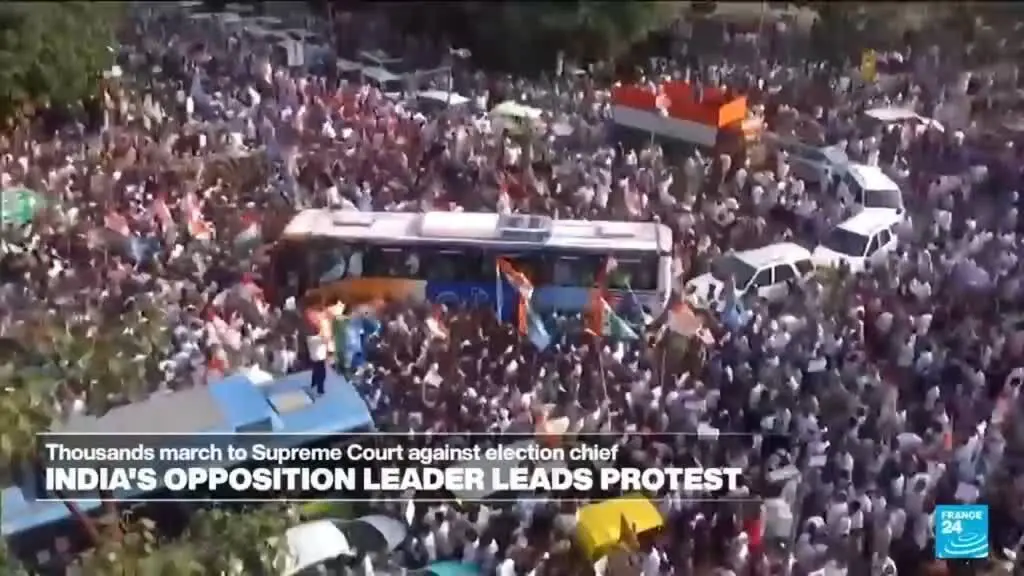
In a large demonstration held yesterday in New Delhi, opposition chief Arvind Kejriwal marched with thousands of supporters to protest against the Election Commission’s handling of the upcoming polls. The rally, organized by several opposition parties and the youth group „Cocoaches,” drew a crowd of at least 10,000 people, according to eyewitness accounts. Participants marched from the Parliament complex to the headquarters of the Election Commission, chanting slogans demanding transparency and reforms.
The protest followed a series of allegations that the Election Commission had favored the ruling party in its administrative decisions. Kejriwal and his allies claim that the Commission’s recent policy changes, including the allocation of media slots and the timing of the voting schedule, have tilted the playing field. They argue that such actions undermine the democratic process and call for an independent review of the Commission’s procedures. The youth movement „Cocoaches,” known for its rapid growth on social media, played a key role in mobilizing volunteers and coordinating the march.
The „Cocoaches” group, founded last year, has rapidly expanded its reach by leveraging online platforms to organize grassroots campaigns. In this march, they deployed a network of volunteers who distributed flyers, set up information booths, and coordinated live streaming of the event. Their strategy focuses on engaging young voters and encouraging them to demand accountability from electoral bodies. The group’s spokesperson, Meera Patel, said, „We want to show that the next generation will not accept a compromised election.” The movement’s rapid growth reflects a broader trend of youth participation in India’s political landscape, where digital tools are increasingly used to amplify dissent.
Is the Election Commission Really Unbiased? – A Critical Question
Critics question whether the Election Commission can remain impartial amid political pressure. Former Commission member Ramesh Gupta, now a commentator, warned that „any appearance of partiality can erode public trust.” He cited recent decisions to extend the voting period in certain regions and the selective allocation of broadcast time for opposition parties as examples of potential bias. The Commission, however, maintains that its actions are guided by legal mandates and logistical considerations. Its spokesperson emphasized that „all parties are treated equally under the law.” The debate highlights the tension between administrative efficiency and perceived fairness in a highly polarized political environment.
The march concluded with Kejriwal addressing the crowd, urging the Commission to adopt clearer guidelines and to conduct an independent audit of its operations. He also called on the government to allow the opposition to participate fully in the electoral process. The event has prompted calls from civil society groups for a comprehensive review of electoral reforms, including the introduction of a transparent digital voting system.
Frequently Asked Questions
What was the main demand of the opposition march? They demanded that the Election Commission conduct an independent audit of its recent decisions and adopt transparent guidelines to ensure fairness in the upcoming elections.
How many people participated in the rally? Eyewitness reports estimate that around 10,000 supporters joined the march in New Delhi.
What role did the youth group „Cocoaches” play? The group organized volunteers, distributed informational material, and used social media to mobilize young voters and coordinate the event’s logistics.