Election Analysis: Final Strategies and Midterm Forecasts
Amna Nawaz opened the discussion by noting that a Democratic takeover of the House of Representatives appears increasingly likely. She questioned whether Republicans could retain the Senate and how significant the Democratic wave might be in the House.
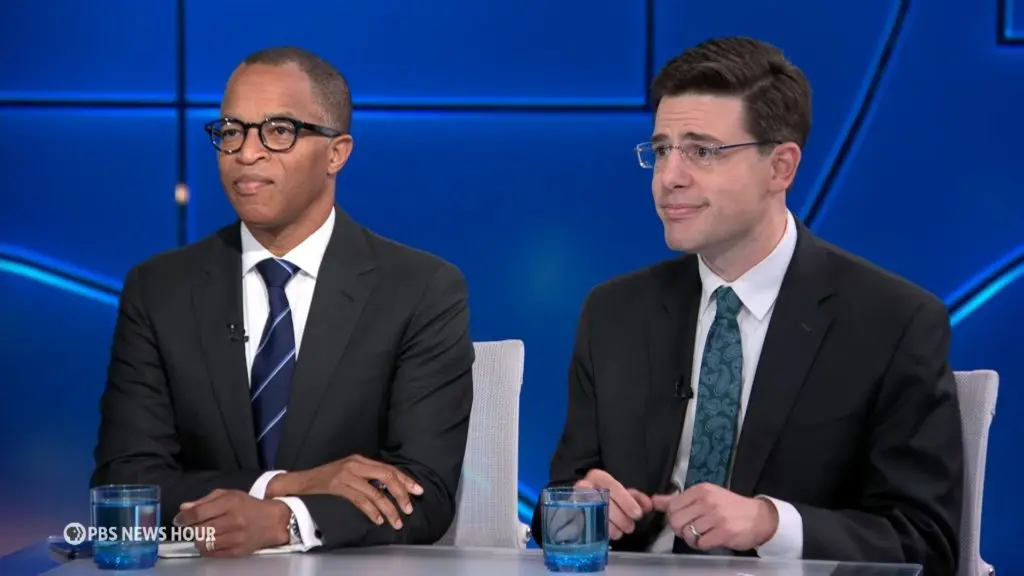
Matthew Continetti predicted a Democratic House majority of 15 to 20 seats. Regarding the Senate, he expects Republicans to hold on by a razor-thin margin. A 50-50 split is a highly probable scenario. In this case, Vice President Vance would spend significant time at the Capitol casting tie-breaking votes rather than campaigning for the 2028 election.
Jonathan Capehart initially avoided making a firm prediction. However, under pressure from Continetti, he noted that even Republican operatives are panicking about losing the House. He acknowledged the 50-50 Senate scenario, suggesting some Democrats might welcome it, as it would relieve them of the pressure to pass major reforms without full control. Capehart remained skeptical about a Democratic Senate majority, citing split-ticket voting trends in Florida, Texas, and Michigan.
Continetti observed that the number of competitive races is rising, mostly on Republican-held territory. According to RealClearPolitics, only two races in Democratic states—Michigan and Minnesota—remain toss-ups. He noted that winning in Minnesota looks increasingly difficult for Democrats. While polling can be inaccurate, Republicans may face a challenging night if current data holds.
Closing Messages and Presidential Rhetoric
The discussion shifted to the final campaign messages. The President is currently touring states he won by large margins in 2024, including Mississippi, South Carolina, Texas, and Ohio, with upcoming stops in Iowa and Kansas.
Critics noted the President’s intensified anti-Muslim rhetoric, specifically targeting the Michigan race and Democratic candidate Abdul El-Sayed. His focus on these divisive topics, rather than the primary issue of affordability, raises questions about the effectiveness of the Republican closing strategy.
Continetti argued that while this rhetoric may not align with the broader Republican establishment, it serves to motivate the President’s core base. He noted that Trump’s most loyal supporters are less enthusiastic about voting when he is not at the top of the ticket. Recent trends indicate that segments of the 2024 Trump coalition, particularly young men, have drifted away from the party.