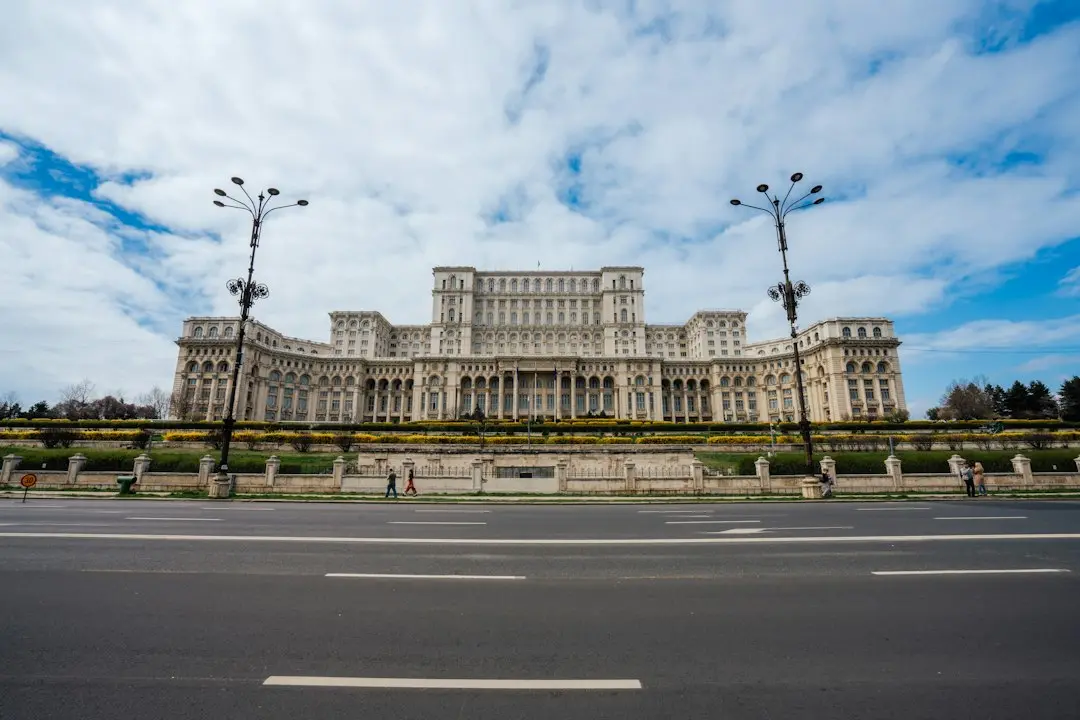
Romania, the sixth largest in terms
Romania: Six months of political stalemate awaiting a lasting agreement
After a long period of institutional blockade, Romania has managed to overcome a critical stage in its democratic life. On 20 October 2026, Parliament voted to appoint Luca Niculescu as Prime Minister. This decision comes after three failed attempts to train a government team. The agreement that made this provisional solution possible has a validity limited to six months, during which time the parties involved have to negotiate a more stable pact.
The fear of early elections, which could favour the accession of the Alliance for the Unification of Romanians (AUR), was an essential catalyst for understanding between the National Liberal Party (PNL) and the Social Democratic Party (PSD). These two groups accepted a government led by Niculescu, an independent figure, former journalist and diplomat, proposed by moderate President Nicușor Dan earlier this month. Although the Social Democrats will integrate the cabinet, the Liberals have chosen to remain in the opposition.
Romania, the sixth largest in terms of population in the European Union, plays a crucial role in NATO's defence in Southeastern Europe, hosting a major military base and a site for the US missile shield. The country has been affected by persistent political instability and a rapidly growing budget deficit, which has fueled support for far-right nationalist policies.
The new agreement that keeps the government functioning expires after six months, and the parties will be forced to renegotiate the pact without yet determining what happens next. During this period, the Social Democrats will try to approve an investment-focused budget for 2027, by the end of November, moving the country in the opposite direction of austerity, party leader Sorin Grindeanu said in an interview with POLITICO.
„Romania needs an economic recovery plan, not austerity”, Grindeanu stressed. Its priorities include protecting purchasing power, supporting business, resuming public investment and improving basic public services. The PSD leader added that he wanted to review the 2026 budget by the end of October and to speed up the implementation of European projects to unlock funds.
The formation of the new government makes
In May, the Social Democrats allied themselves with the AUR to resign the centrist and liberal-led coalition government after unpopular debt-reduction reforms turned the PSD electorate towards the populist right. PNL and USR have refused to govern again with the Social Democrats.
The formation of the new government makes it more difficult to trigger early elections once the six-month agreement expires, as the Romanian Constitution requires two failed attempts to install a government before Parliament can be dissolved. Grindeanu hopes to convince his former coalition partners to reunite after six months, but with a different economic agenda. Fearing an increase in support for the far right, he wants to avoid further cuts.
However, the return from austerity puts it at odds with GNP, which has led to tax cuts. PNL refused to sign a detailed coalition program, Grindeanu explained, forcing the administration to rally support by vote over the next six months.
Grindeanu made a distinction between parliamentary votes and sustainable alliances, stating that he would not seek a pact with the AUR, due to deep divergences over Europe and national security. It noted that it had rejected an offer from AUR to support a €300 million social spending package during the negotiations for the 2026 budget after the far-right group requested PSD support on another undefined issue in return. Instead, he waited to find a compromise with NLP.
„As long as I remain in this position, the PSD will have no agreement with AUR ”, he swore.