Voting Extended in Occupied Territories
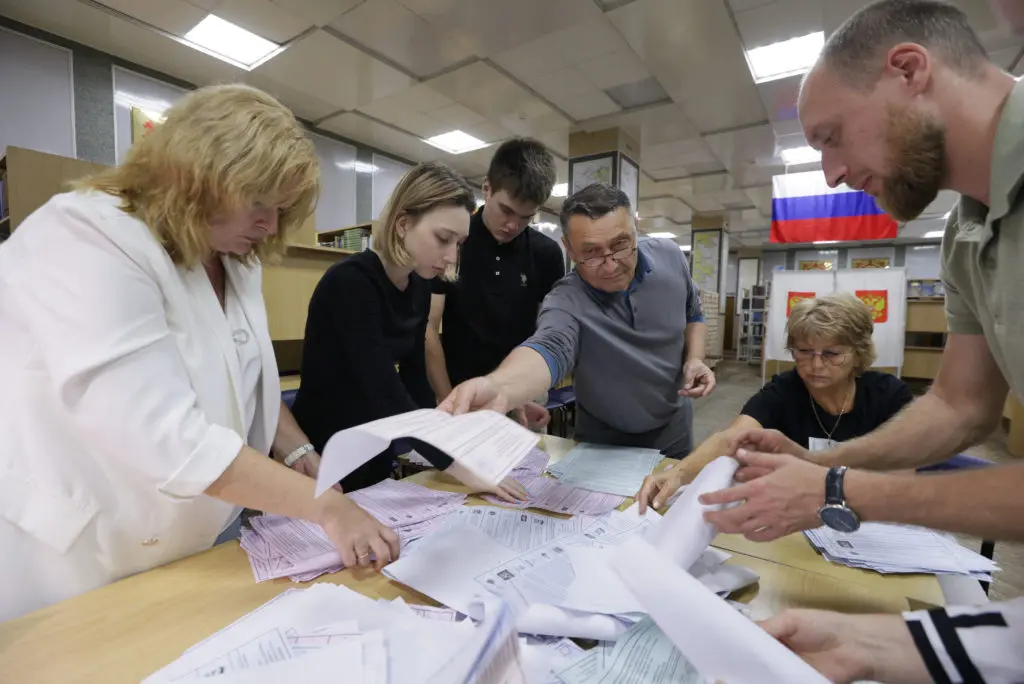
Russia concluded its first wartime parliamentary election on Sunday, with voting ending across the nation and the four annexed Ukrainian regions of Donetsk, Luhansk, Zaporizhzhia and Kherson, amid ongoing conflict, as the Kremlin prepares to cement its control over the legislature.
The vote, conducted under a state of emergency and martial law, allowed polling stations to remain open for an extra 48 hours in the contested territories of Donetsk, Luhansk, Zaporizhzhia and Kherson. Officials reported a 71 percent turnout nationwide, with participation rates in the annexed regions exceeding the national average. Independent monitors highlighted limited access for opposition candidates and sporadic irregularities, while the Kremlin framed the election as a legal affirmation of its war objectives and a demonstration of national unity. A Kremlin spokesperson declared, „The election reflects the will of the Russian people and our historic regions,” emphasizing that the vote consolidates the legal basis for the war.
Will the Election Shift Global Diplomatic Stances?
Officials reported a 71 percent turnout nationwide, with the annexed regions showing higher participation. The vote was held under a state of emergency and martial law. Polling stations stayed open for an extra 48 hours in the contested territories of Donetsk, Luhansk, Zaporizhzhia and Kherson. Independent monitors noted limited access for opposition candidates and sporadic irregularities. The Kremlin framed the election as a legal affirmation of its war objectives and a demonstration of national unity. A Kremlin spokesperson declared, „The election reflects the will of the Russian people and our historic regions,” and said it shows the legal basis for the war.
The result is expected to grant the Kremlin a supermajority, enabling constitutional changes that could extend President Putin’s rule and marginalize dissent. Analysts warn that the vote may further isolate Russia diplomatically while emboldening its domestic narrative of unity.
How were the annexed Ukrainian regions able to participate? The vote was extended in Donetsk, Luhansk, Zaporizhzhia and Kherson under emergency regulations, allowing polling stations to operate for an additional 48 hours despite ongoing shelling.
Frequently Asked Questions
What party is expected to dominate the new State Duma? Kremlin‑backed United Russia is projected to secure a supermajority, giving it control over legislative agenda and constitutional reforms.
Are there any reported irregularities in the voting process? Independent monitors noted limited access for opposition candidates and sporadic reports of ballot tampering, but official figures claim the process was transparent.