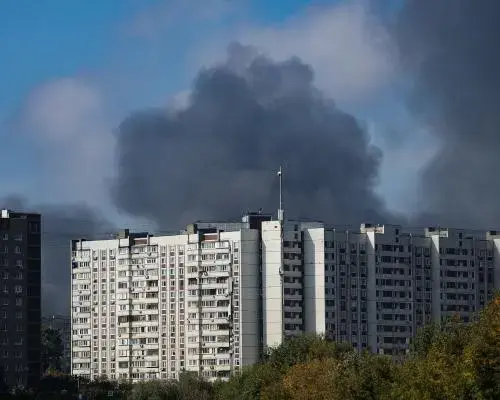
Russia Accuses Ukraine of Election Sabotage
Russia has announced it will increase its offensive operations against Kyiv following a wave of Ukrainian drone attacks on the Moscow region. The attacks, which occurred on the last day of Russia’s presidential election, killed at least two civilians and set a refinery on fire. Moscow claims the strikes were aimed at disrupting its electoral process and has vowed retaliation.
The Kremlin’s statement came after Ukrainian forces launched a series of low‑altitude drones targeting military and civilian sites near Moscow. The Russian Defence Ministry said the drones caused significant damage, including the ignition of a major oil refinery. Two residents were confirmed dead, and several buildings sustained structural harm. Moscow’s security services identified the drones as part of a coordinated effort to interfere with the nation’s political campaign.
In a televised address, President Vladimir Putin called the Ukrainian attacks an attempt to destabilize Russia’s political system. „The Kyiv regime is targeting civilian infrastructure to disrupt our elections,” he declared. The Kremlin also warned that any future attempts would be met with „even stronger” military responses. Russian officials cited intelligence reports suggesting Ukrainian command centers were directing the drone strikes from abroad. The statement was intended to justify a potential escalation in the ongoing conflict and to rally domestic support.
The announcement follows a pattern of increased tensions as both sides accuse each other of provocation. Ukrainian officials denied any involvement in the Moscow attacks and condemned the targeting of civilian areas. They reiterated their commitment to defending national sovereignty against Russian aggression. Meanwhile, Russian media highlighted the refinery fire as evidence of Ukrainian „unlawful aggression.”
Will the Escalation Trigger a New Phase of Fighting?
The possibility of a new escalation raises concerns among international observers. Analysts note that Russia’s threat to intensify attacks on Kyiv could lead to a broader offensive. „If Moscow follows through, we could see a significant shift in the conflict’s intensity,” said a security expert. The international community has urged restraint, warning that further violence could destabilize the region and harm civilians on both sides.
Russia’s claim of election interference is unlikely to alter the domestic political landscape, as the presidential race is already concluded. However, the rhetoric may serve to legitimize continued hostilities and to consolidate support among hardline factions. Ukraine’s leadership, meanwhile, faces pressure to defend its forces while avoiding civilian casualties. The situation remains fluid, with both sides preparing for potential retaliation.
The international reaction has been cautious. Western governments condemned the drone attacks on Moscow and called for a ceasefire. They also expressed concern over the safety of civilians in conflict zones. The United Nations has urged both parties to adhere to international humanitarian law and to protect non‑combatants. The UN’s Secretary‑General has called for an immediate de‑escalation to prevent further loss of life.
Frequently Asked Questions
The future of the conflict depends on diplomatic engagement and the willingness of both sides to negotiate. If Russia follows through on its threat, the likelihood of a prolonged and intensified conflict increases. This could lead to more casualties, infrastructure damage, and humanitarian crises across the region.
What triggered Russia’s threat to intensify attacks on Kyiv? The trigger was a series of Ukrainian drone strikes on the Moscow region, which killed civilians and damaged a refinery. Moscow claims these attacks aimed to disrupt its presidential elections.
How has Ukraine responded to the Russian accusations? Ukraine denies involvement in the Moscow attacks and has condemned the targeting of civilian infrastructure. It maintains it is defending its sovereignty against Russian aggression.
What are the potential consequences of an escalated conflict? An escalation could lead to increased military operations, more civilian casualties, and a broader humanitarian crisis. It may also destabilize the region and complicate diplomatic efforts for a ceasefire.