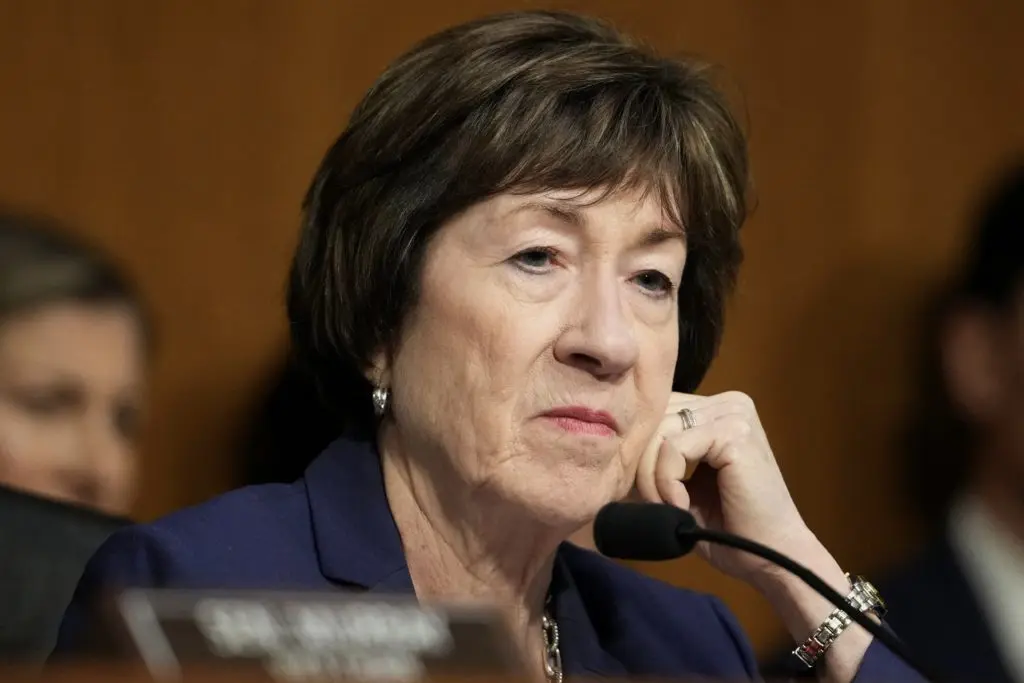
Collins’ Tightrope Walk: Balancing Judicial Deference and Voter Sentiment
Washington — The U. S. Supreme Court’s recent ruling overturning federal abortion protections is set to dominate the political landscape in Maine’s November 3 congressional race, where Republican Senator Susan Collins will appear on the ballot for the first time since the decision. Collins, a longtime swing‑vote senator, faces a crowded field of challengers eager to capitalize on the court’s controversial move, which has reignited debates over reproductive rights across the state.
The high court’s June decision eliminated the constitutional right to abortion, returning authority to individual states. Maine, which already protects abortion access through state law, now finds its political leaders forced to confront the national fallout. Collins, who voted with the court’s conservative bloc in past confirmations, must navigate a constituency sharply divided on the issue. Her campaign emphasizes a moderate record and a pledge to protect Maine’s existing abortion statutes, while opponents accuse her of enabling the court’s „radical” shift.
In the weeks following the ruling, Collins held a town hall in Portland, stressing that the decision „does not change Maine’s laws” and urging lawmakers to safeguard reproductive health services. She cited her voting history, noting she supported the 2022 Women’s Health Protection Act, which aims to preserve access at the state level. Yet, critics point to her 2020 vote confirming Justice Amy Coney Barrett as evidence of alignment with the court’s conservative agenda.
Will the Supreme Court Decision Redefine Maine’s Political Landscape?
Political analysts say the Supreme Court’s move has become the de‑facto referendum on Collins’ judgment. „Voters will ask whether she helped usher in this decision,” said James O’Leary, a professor of political science at the University of Maine. „Her answer will shape not only her Senate seat but also the broader perception of Republican leadership in New England.”
Polls released in early September show Collins trailing her Democratic challenger by a narrow margin, with abortion rights emerging as the top issue for undecided voters. The race has attracted national attention, drawing campaign contributions from both pro‑choice advocacy groups and conservative donors seeking to defend the court’s ruling.
The November election could serve as a bellwether for how New England voters respond to the court’s reversal. If Collins secures re‑election, it may signal that moderate Republicans can survive in states with strong pro‑choice leanings by emphasizing local protections. Conversely, a loss could embolden progressive candidates to challenge entrenched incumbents on the basis of national judicial actions.
State officials have already begun drafting legislation to reinforce abortion access, citing the court’s decision as a catalyst for „protective” measures. Meanwhile, grassroots organizations on both sides of the issue are mobilizing volunteers for door‑to‑door canvassing, phone banking, and voter registration drives. The intensity of the campaign underscores how a single Supreme Court ruling can reshape local politics, turning a judicial opinion into a pivotal election issue.
Frequently Asked Questions
What did the Supreme Court decide that affects this race? The court voted to overturn Roe v. Wade, ending the federal constitutional right to abortion and leaving regulation to individual states.
How is Senator Collins responding to the decision? Collins asserts that Maine’s state laws will continue to protect abortion access and highlights her past support for state‑level safeguards, while acknowledging the political ramifications of the ruling.
Why is the November 3 election considered a test of the court’s impact? Because the race pits a long‑standing moderate Republican against challengers who frame the Supreme Court’s decision as a central issue, making the outcome a measure of voter reaction to the national shift on reproductive rights.