Balancing Power and Politics
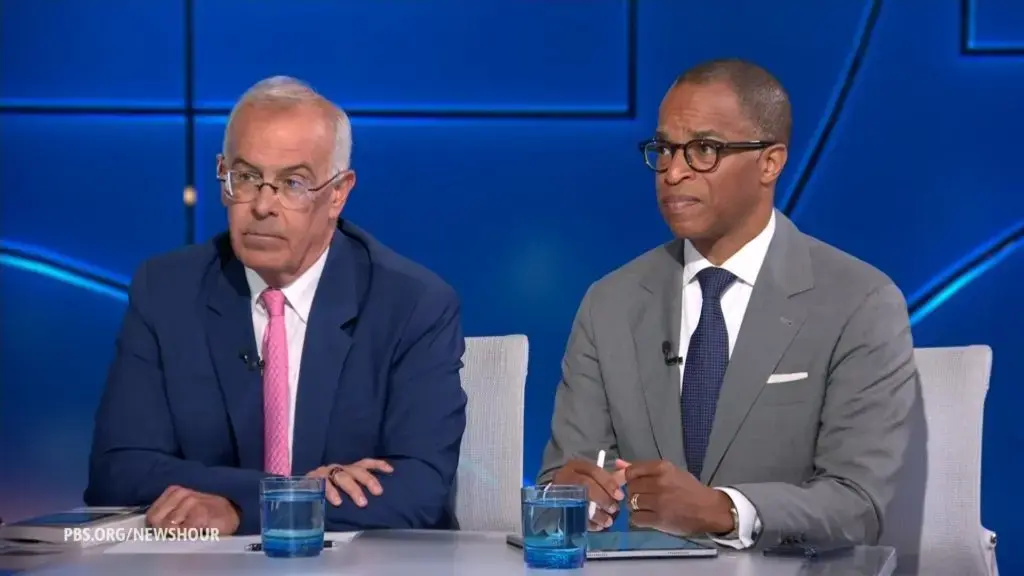
The Supreme Court has delivered several crucial decisions in recent months, sparking debates about whether it has stood up to former President Donald Trump's policies. In a recent discussion, David Brooks of The Atlantic and Jonathan Capehart of MSNBC shared their perspectives on the matter.
The Supreme Court's decisions have been at the center of attention, with some viewing them as a challenge to Trump's authority. The court's ruling on the Biden administration's student loan forgiveness plan, for instance, was seen as a blow to Trump's efforts to limit the president's executive power. However, others argue that the court has not gone far enough in pushing back against Trump's policies, particularly in regards to his handling of the January 6th insurrection.
David Brooks pointed out that the Supreme Court's decisions often reflect a delicate balance between upholding the Constitution and avoiding direct confrontation with the White House. „The court is trying to navigate a treacherous terrain,”he said. „They don't want to be seen as taking sides, but at the same time, they have a responsibility to uphold the law.”Jonathan Capehart countered that the court's decisions have been too cautious, allowing Trump's policies to stand in some cases. „The court has a duty to protect the Constitution and the rule of law,”he said. „If that means pushing back against Trump's agenda, then so be it.” Has the Court Gone Far Enough?
The Supreme Court's decisions on issues like voting rights and election law have also been subject to scrutiny. Some argue that the court has not done enough to address the ongoing threat of voter suppression, particularly in states with a history of restrictive voting laws.
In response to these concerns
In response to these concerns, David Brooks noted that the court's decisions are often influenced by the changing political landscape. „The court is not a static institution,”he said. „It reflects the values and priorities of the society it serves.”Jonathan Capehart, however, remained critical of the court's approach, saying that it has been too hesitant to address the root causes of voter suppression. „The court has a responsibility to protect the fundamental right to vote,”he said. „If that means taking a stronger stance against voter suppression, then I believe they should do so.” Consequences and Outlook
The Supreme Court's stance on Trump's policies has significant implications for the country's future. If the court continues to push back against Trump's agenda, it could set a precedent for future administrations. On the other hand, if the court fails to challenge Trump's policies, it may embolden future presidents to overstep their authority.
Frequently Asked Questions
Q: Has the Supreme Court taken a stance against Trump's policies? A: The court's decisions have been mixed, with some rulings seen as a challenge to Trump's authority and others allowing his policies to stand.