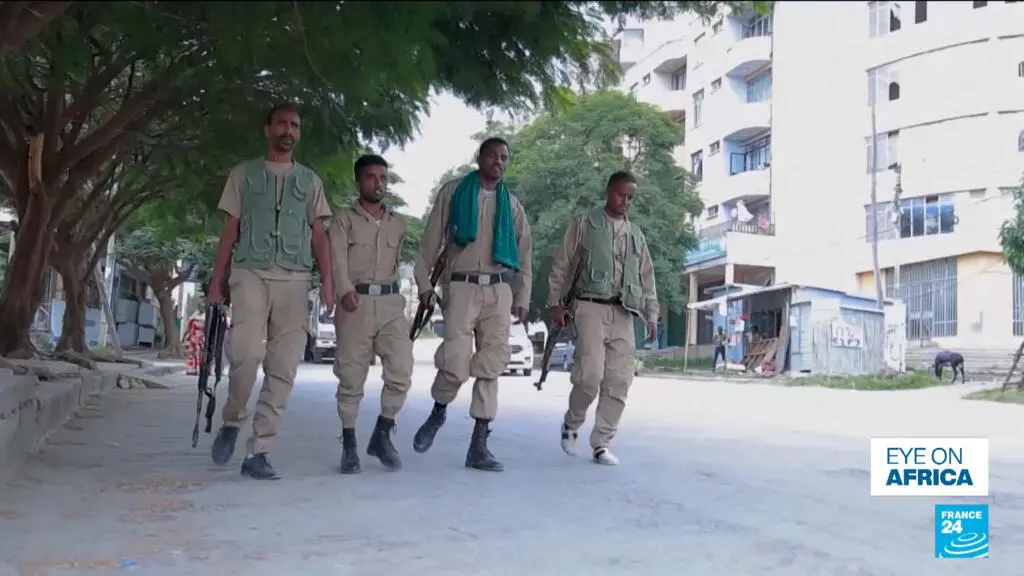
How Are Civilians Coping Amid Rising Fear?
Tigrayan forces have entered a full-blown war with Ethiopia’s federal government, triggering widespread panic buying across northern Ethiopia as civilians rush to stockpile food, water, and essential supplies. The escalation follows months of rising tensions and sporadic clashes, now marking a decisive shift toward open armed conflict in the region. Residents in cities like Mekelle and Adigrat report long lines at markets and pharmacies, driven by fears of prolonged fighting could cut off access to basic goods. Humanitarian organizations warn the situation risks deepening an already dire crisis affecting millions.
The conflict stems from a power struggle between Tigray’s regional leadership and Prime Minister Abiy Ahmed’s government, which launched a military offensive in late 2020 after accusing Tigrayan forces of attacking army bases. Though a ceasefire was signed in 2022, recent months have seen renewed hostilities, with both sides accusing the other of violating agreements. Tigrayan officials claim government troops are blocking aid and preparing for a new invasion, while federal authorities insist they are defending national unity against terrorist elements. Independent monitors note increased troop movements and artillery deployments along the front lines, suggesting both sides are preparing for prolonged fighting.
What Role Is International Pressure Playing?
Families in Tigray are adapting to wartime conditions by reducing meals, sharing resources, and relying on informal networks for survival. Many have withdrawn children from schools and avoided travel due to the risk of checkpoints or aerial strikes. Local traders report hoarding behavior not seen since the peak of the 2021 famine threat, with prices for staples like teff and oil rising sharply in black markets. Despite efforts by international NGOs to deliver aid, access remains inconsistent due to security concerns and bureaucratic delays. Some residents have begun digging trenches or reinforcing homes, anticipating possible bombardment.
Diplomatic envoys from the African Union and United States have urged de-escalation, warning that renewed war could destabilize the Horn of Africa and jeopardize fragile peace efforts in neighboring Somalia and Sudan. However, both the Ethiopian government and Tigrayan leaders have rejected external mediation as interference, insisting the conflict is an internal matter. Sanctions threats have been raised but not implemented, leaving little concrete leverage to compel negotiations. Analysts suggest without credible third-party guarantees, neither side is likely to back down, increasing the risk of a protracted and bloody stalemate.
What triggered the latest escalation in Tigray? Recent clashes erupted after Tigrayan forces accused the government of mobilizing troops near regional borders and restricting humanitarian access, which they viewed as preparation for attack. The government countered that Tigrayan groups were rearming and posing a security threat, leading to a breakdown of trust and the collapse of the 2022 peace agreement.
Frequently Asked Questions
Are aid organizations still able to operate in Tigray? While some humanitarian groups maintain limited operations, frequent roadblocks, communication blackouts, and safety concerns have severely hampered aid delivery. The UN reports that only a fraction of needed supplies are reaching vulnerable populations, with malnutrition rates rising in hard-to-reach areas.
Could this conflict spread beyond Tigray’s borders? There is growing concern that spillover effects could affect neighboring Amhara and Afar regions, where ethnic tensions and armed groups already exist. Refugee flows and cross-border militia activity have increased, raising alarms among regional leaders about broader instability.