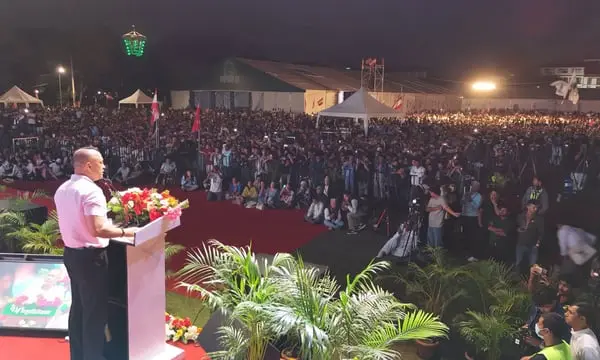
A Party in Crisis
At 50, Gagan Thapa faces a daunting task. His election follows a period of intense instability, ignited by the Gen Z movement in September 2025. This uprising shattered the old political order within days. Communist Prime Minister K. P. Oli fled for his life, while Congress stalwart Sher Bahadur Deuba was severely beaten. With homes of political elites—including Thapa’s—set ablaze, the political landscape changed forever.
In the aftermath, a second-generation cohort led by Thapa seized control from the 79-year-old Deuba. However, many citizens felt this shift was too little, too late. The results of the March 2026 national elections were disastrous for the Congress. The party secured only 38 of 275 seats in the lower house. Conversely, the Rastriya Swatantra Party (RSP), which captured the spirit of the Gen Z movement, dominated with 182 seats, nearly reaching a two-thirds majority.
Old-guard members blamed Thapa for the election loss, citing his ill-timed revoltjust before the vote. Yet, the RSP’s surge was fueled by deep-seated public resentment toward established parties. It is highly probable that the Congress would have fared even worse under its previous leadership. Thapa’s proposed reforms, including primary elections for candidates and a two-term limit for prime ministers, could offer a path toward democratic renewal.
The Struggle for Relevance
Thapa’s vision stands in stark contrast to the centralizing tendencies of Sher Bahadur Deuba. Deuba’s tenure severely tarnished a party once defined by principled leaders like B. P. Koirala and Ganesh Man Singh. Thapa now faces a monumental challenge: the RSP has effectively occupied the political space once held by the Congress. Under the leadership of Rabi Lamichhane and Prime Minister Balendra Shah, the RSP remains immensely popular, poised for further gains in the 2027 local and provincial elections.
The traditional rivalry between the Congress and the communists feels increasingly irrelevant to modern Nepali voters. Thapa must now prove to a skeptical electorate that liberal democratic values still hold practical meaning. His success depends on reconciling with disgruntled veterans still loyal to Deuba. Furthermore, his authority remains fragile; the Supreme Court is currently reviewing a petition challenging the legality of his leadership. If the court recognizes the Deuba faction as the legitimate party, Thapa’s efforts will be effectively neutralized.
While Thapa rose through the ranks steadily, many young Nepalis view his past caution as complicity in the party’s culture of corruption. Some believe his time has already passed. Regardless, for the sake of Nepal’s democratic health, the Congress must find a way to remain a viable, competitive force under his leadership.