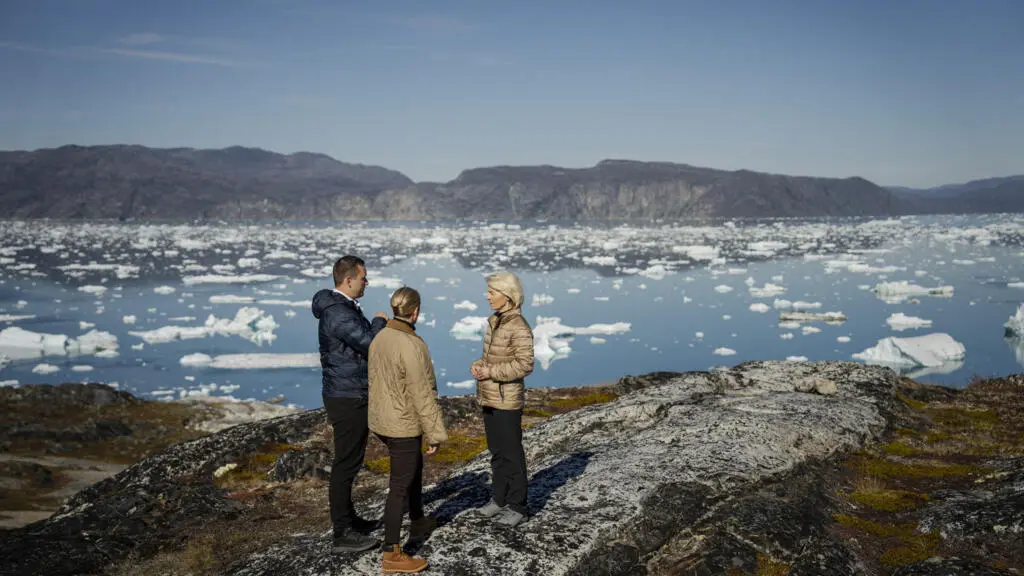
Security Agreement Opens Door for Resource Development
US President Donald Trump declared Wednesday that large-scale oil, gas, and mineral exploration will soon begin in Greenland, following a new security agreement between the United States, Denmark, and Greenland. The announcement comes after Trump repeatedly threatened to take control of the strategically important island.
The exploration initiative follows a trilateral security pact signed last month by the three parties, aimed at strengthening regional stability and resource cooperation. Trump has long expressed interest in Greenland's vast mineral wealth, including rare earth elements critical to defense and technology industries.
The recent security deal, forged under pressure from Trump's public threats, includes commitments from Denmark and Greenland to enhance joint defense capabilities and intelligence sharing. In exchange, the US has pledged increased financial support and infrastructure investment. This framework has cleared the path for American energy companies to pursue exploration projects, particularly in Greenland's northern regions where untapped reserves are believed to be substantial.
Greenland's government has cautiously welcomed foreign investment, emphasizing that any development must respect local communities and environmental standards. Danish officials noted that while they support responsible resource extraction, sovereignty concerns remain paramount. The agreement marks a significant shift in Nordic geopolitics, as climate change makes previously inaccessible Arctic territories more viable for industrial activity.
What Are the Environmental and Political Risks?
Environmental groups have raised alarms about the potential impact of expanded drilling and mining operations on Greenland's fragile ecosystem. Scientists warn that increased industrial activity could accelerate glacial melt and disrupt indigenous Inuit communities who rely on traditional hunting and fishing. Politically, the move deepens tensions within the European Union, which has criticized external powers for exploiting Arctic resources without adequate oversight.
Meanwhile, China has expressed concern over growing US military presence in the region, viewing it as part of a broader strategy to limit Beijing's influence in the Arctic. Russia, which also maintains interests in northern sea routes, has remained largely silent but is closely monitoring developments. The unfolding situation underscores how energy security and territorial disputes are increasingly intertwined in the high north.
The success of these exploration efforts will depend heavily on international cooperation, environmental safeguards, and Greenland's own political trajectory. As climate patterns continue shifting, the island's strategic value is expected to rise, making it a focal point for global powers seeking energy independence and geopolitical advantage.
What resources are believed to exist in Greenland?
Greenland sits atop significant reserves of rare earth minerals, uranium, and potentially large deposits of oil and natural gas beneath its ice sheet and coastal waters.
Frequently Asked Questions
Why did Trump push for a security agreement?
Trump sought to legitimize US involvement in Greenland through formal partnerships, using both diplomatic pressure and public threats to secure access to critical minerals needed for defense technologies.
How might this affect local communities?
Increased industrial activity could bring jobs and infrastructure but also poses risks to traditional lifestyles, wildlife habitats, and long-term environmental health in Greenland.