A Two-Front Diplomatic Strategy
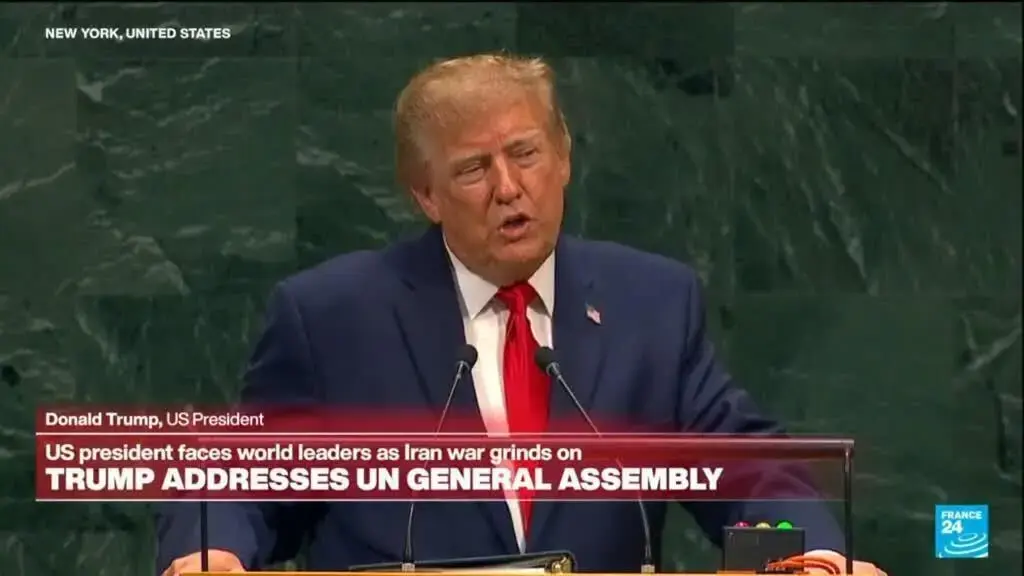
US President Donald Trump addressed the United Nations General Assembly on Tuesday. He firmly defended his administration’s decision to engage in conflict with Iran. During the same speech, he launched a sharp critique against the International Criminal Court. Trump called upon all member nations to take specific actions regarding the ICC. This move signals a significant shift in American diplomatic posture. The address took place during a high-stakes session in New York.
The president argued that military action against Iran was necessary for regional stability. He framed the war as a strategic imperative rather than an optional choice. Simultaneously, Trump targeted the ICC, which he views as an overreaching international body. He urged countries to withdraw their membership or reduce their influence. This stance aligns with previous US efforts to distance itself from global judicial institutions. The dual focus highlights a broader strategy of unilateralism.
Trump’s remarks combined defense of military operations with legal criticism. He positioned the Iran conflict as a success story for US leadership. By defending the war, he aimed to rally support among allies. However, the attack on the ICC created friction with European partners. Many EU nations remain strong advocates for the court’s independence. Trump suggested that the ICC often targets non-member states unfairly. He implied that the court lacks jurisdiction over the United States. This argument has been a cornerstone of US policy for years. The president demanded that nations reconsider their financial contributions to the ICC. He viewed the court as a tool for political leverage.
Can the ICC Survive US Pressure?
The reaction to Trump’s speech was immediate and mixed. Supporters praised his boldness in challenging global institutions. Critics warned that the pressure could weaken international justice. The ICC has faced funding challenges before, but not at this scale. Member states are now debating whether to follow Trump’s lead. Some nations may hesitate to renew their commitments. Others might double down on their support to show solidarity. The tension between US power and multilateral law remains unresolved.
The outcome of this diplomatic standoff will shape future international relations. If major powers follow the US example, the ICC’s reach shrinks. Conversely, a unified response from other nations could strengthen the court. The next few months will reveal which path dominates. For now, the US stands firm in its position. The global legal landscape is shifting under intense scrutiny.
Frequently Asked Questions
Why did Trump defend the war with Iran? Trump argued that military engagement was essential for maintaining peace in the region. He presented the conflict as a decisive step toward long-term stability.
What specific action did Trump request from ICC members? He asked all nations participating in the International Criminal Court to review their involvement. The goal was to reduce the court’s operational capacity and influence.
How did the UN assembly react to the speech? Delegates showed divided reactions, with some applauding the strong stance. Others expressed concern about the potential fragmentation of international law.