How Did World Leaders React to Trump’s Ultimatum?
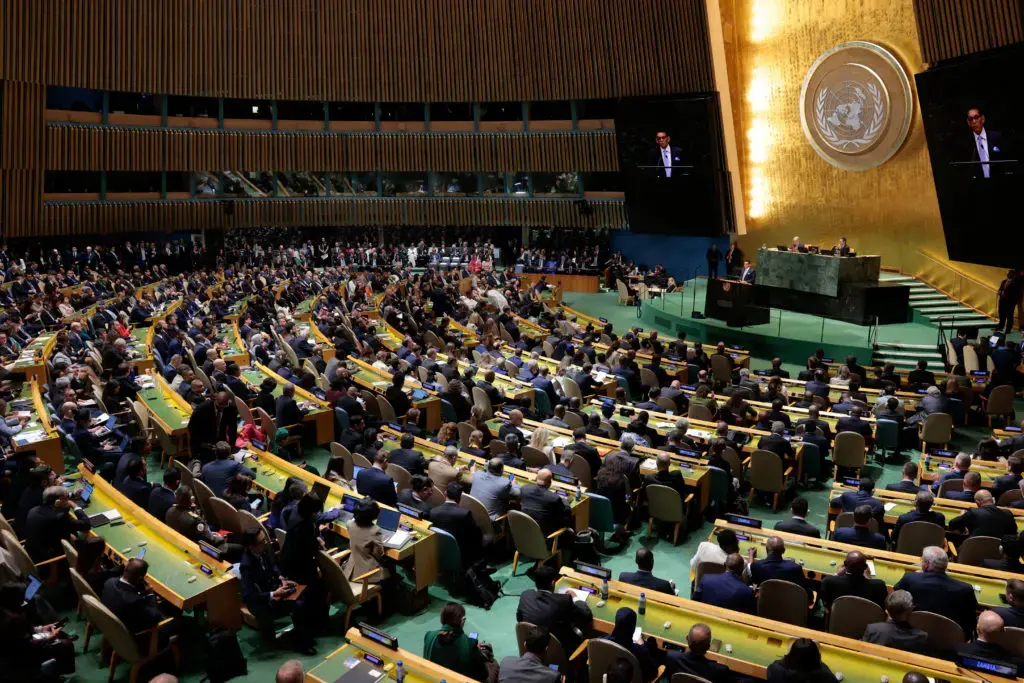
President Donald Trump reiterated his hardline position on Iran during his address to the United Nations General Assembly on September 22, 2026, defending past military actions and issuing a stark warning of total destruction should Tehran continue its nuclear ambitions. Speaking before world leaders, Trump framed his administration’s approach as a necessary defense of American interests and global stability, emphasizing that any further provocation from Iran would be met with overwhelming force. His remarks came amid rising tensions in the Middle East and ongoing international efforts to revive diplomatic engagement with Iran over its nuclear program.
Trump’s speech underscored the continuation of his „America First” foreign policy doctrine, which prioritizes unilateral action and military deterrence over multilateral agreements. He criticized previous administrations for what he described as weak responses to Iranian aggression, claiming his own decisions—including the 2020 strike that killed Qasem Soleimani—had prevented greater conflict. The president asserted that Iran’s pursuit of nuclear weapons posed an existential threat not only to Israel and Gulf allies but to global peace, and warned that any move toward weaponization would trigger a response aimed at the complete annihilation of Iran’s military and nuclear infrastructure. He dismissed critics who urged restraint, arguing that strength, not negotiation, was the only language Tehran understood.
Could This Approach Undermine Future Diplomacy?
Reactions to Trump’s speech were sharply divided along geopolitical lines. Israeli officials praised his resolve, with Prime Minister Benjamin Netanyahu calling the address „a long-overdue declaration of clarity” in confronting Iranian threats. In contrast, European Union foreign policy chief Josep Borrell expressed concern that such rhetoric risked undermining ongoing diplomatic channels and could provoke unintended escalation. Russia and China, both permanent members of the UN Security Council, urged restraint and reiterated their support for reviving the 2015 nuclear deal, warning that threats of annihilation violated the spirit of the UN Charter. Meanwhile, several Gulf states, including Saudi Arabia and the UAE, privately welcomed the message as a deterrent, though they avoided public endorsement to avoid appearing aligned with Washington’s unilateral stance.
Analysts warn that Trump’s rhetoric may complicate future efforts to engage Iran through negotiation, even if his administration seeks to leverage pressure for a new agreement. By framing any nuclear advancement as warranting annihilation, the administration leaves little room for diplomatic off-ramps, potentially locking both sides into a cycle of mistrust. Iranian officials dismissed the speech as „bluster and bullying,” with Foreign Minister Hossein Amir-Abdollahian stating that threats would not deter Tehran’s right to peaceful nuclear development. Still, some experts suggest the hardline posture could create conditions for a future deal if paired with credible incentives, though no such offers were outlined in the UN address.
Did Trump announce new military action against Iran? No, Trump did not announce any immediate military operation. He defended past actions and issued a warning that future nuclear progress by Iran would be met with a destructive response, but no specific troop deployments or strikes were declared.
Frequently Asked Questions
Is the U. S. still part of the Iran nuclear deal? The United States withdrew from the Joint Comprehensive Plan of Action in 2020 under Trump’s first term and has not rejoined. The current administration has not pursued reinstatement, instead focusing on pressure and deterrence.
What does „annihilation” mean in this context? Trump used the term to convey that Iran’s military and nuclear capabilities would be destroyed in response to weaponization efforts, though he did not specify whether this included conventional, nuclear, or cyber means. The remark was widely interpreted as a threat of overwhelming force.