The Growing Trend of Media Exclusion in Democratic Nations
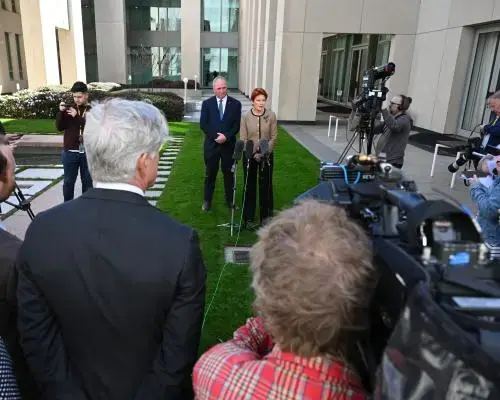
The United States president announced a sweeping ban on journalists inside the White House, a move echoed by Australia’s One Nation party, which has pushed for stricter controls on media access. The decision, revealed on Thursday, sparked immediate backlash from press freedom advocates and raised questions about the balance between governmental authority and a free press. In Australia, right‑wing leader Pauline Hanson warned that the nation cannot afford to be „soft” on media criticism, echoing the authoritarian tone of the U. S. policy.
Trump’s order bars all accredited reporters from the West Wing and press briefing rooms, citing „security concerns” and „unfair coverage.” The White House claims the measure will protect staff and streamline communications, but critics argue it is a direct assault on the Fourth Estate. One Nation, led by Senator Fraser Anning, has introduced legislation to limit foreign journalists’ access to parliamentary sessions, arguing that „biased reporting threatens national unity.” Hanson, a vocal nationalist, added that Australia must adopt a „no‑compromise” stance toward media outlets that she believes „undermine Australian values.”
Across the Pacific, governments are tightening the reins on press freedom under the guise of national security. In the United States, the ban follows a series of confrontations between Trump’s administration and major news networks, including the revocation of press credentials for outlets that questioned the president’s policies. Legal scholars warn that such actions erode the constitutional checks that keep executive power in check.
Will Australia Follow the United States in Curtailing Press Freedom?
In Australia, One Nation’s proposal would require journalists to obtain a „national interest” clearance before covering parliamentary debates. The party argues that foreign media often distort Australian policies to serve external agendas. However, the Australian Press Council has warned that the bill could „chill investigative reporting” and hamper transparency. Hanson’s rhetoric frames the issue as a cultural battle, suggesting that a „tough stance” will protect Australian identity from external influence.
The parallel moves in Washington and Canberra raise concerns about a coordinated shift toward media suppression among right‑leaning governments. Observers note that both Trump’s ban and One Nation’s legislation exploit public distrust of the press, positioning themselves as defenders of national sovereignty.
If Australia adopts similar restrictions, journalists could face legal hurdles that delay reporting on critical issues such as climate policy, Indigenous rights, and foreign investment. Media watchdogs fear that the loss of real‑time coverage would diminish public awareness and weaken democratic accountability. Conversely, supporters argue that tighter controls could prevent misinformation and protect national interests.
The fallout from these policies could reshape the media landscape in both countries. In the United States, the ban may trigger lawsuits alleging violations of the First Amendment, while in Australia, the proposed law could face challenges in the High Court. Both scenarios underscore a growing tension between governmental authority and the press’s role as a watchdog.
Frequently Asked Questions
What exactly does Trump’s ban prohibit? The order bars all accredited journalists from entering the West Wing and attending official briefings, limiting them to designated press areas outside the White House.
How would One Nation’s legislation affect foreign journalists in Australia? It would require foreign reporters to obtain a special clearance, effectively giving the government power to deny access based on perceived „national interest” concerns.
What are the potential legal repercussions of these media restrictions? Both measures could face constitutional challenges—Trump’s ban may be contested under the First Amendment, while Australia’s law could be reviewed for breaching implied freedom of political communication.