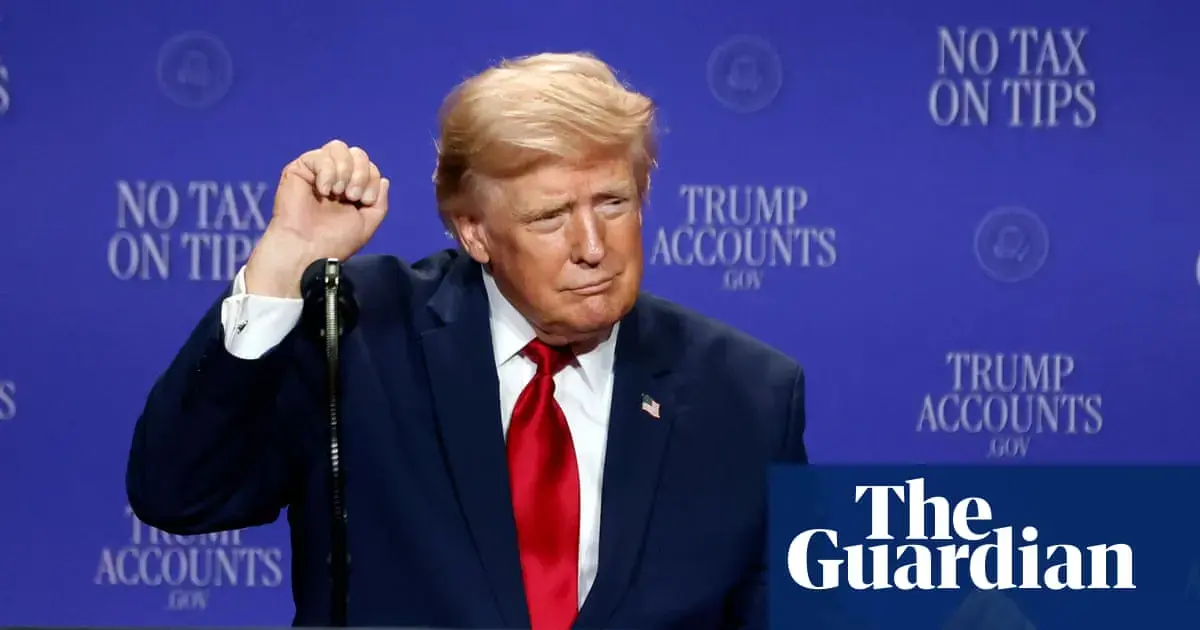
The Rise of an Imperial Presidency
The latest Politics Weekly podcast episode, „Trump Unbound: The Making of an Imperial Presidency,” aired this week and analyzes how Donald Trump’s second term differs dramatically from his first. Former congressional critics have vanished, and legal constraints appear increasingly fragile, according to the hosts.
The discussion draws on Jonathan Freedland’s commentary, Jonathan Swan’s investigative reporting, and Maggie Haberman’s recent book Regime Change . It argues that the president’s unchecked power stems from a combination of loyalist appointments, weakened oversight, and a media environment that often amplifies his narrative. Freedland notes that „the institutional safeguards that once curbed executive excess are now largely symbolic.”
The podcast outlines how the president’s allies have reshaped key agencies to align with his agenda. The Department of Justice, for example, has seen a surge in politically motivated investigations, while the Federal Election Commission’s enforcement actions have stalled. Swan points out that „the erosion of independent oversight is not accidental; it is a calculated strategy to consolidate authority.” Data from the Congressional Research Service shows a 30 % increase in executive orders since the start of the second term, reflecting a broader reliance on unilateral action.
Is the Constitution Ready for This New Reality?
Haberman’s book provides a narrative of how former opponents—once vocal critics in the Senate and House—have either retired or shifted to private sector roles, leaving a political vacuum. This absence, the hosts argue, removes a critical check on presidential ambition. „When the opposition disappears, the president’s room for maneuver expands dramatically,” Freedland adds.
Legal scholars featured in the episode warn that the Constitution was not designed for a president who can bypass traditional constraints. They cite recent court rulings that have narrowed the scope of judicial review in matters of national security. The hosts ask whether existing legal frameworks can adapt quickly enough to curb potential overreach. One expert suggests that „legislative inertia combined with judicial caution may allow the imperial model to persist longer than anticipated.”
The episode concludes that the current trajectory could reshape American governance for decades. If institutional reforms do not materialize, future administrations may inherit a more powerful executive branch, altering the balance of power envisioned by the Founders.
Frequently Asked Questions
What defines an „imperial presidency” in today’s context? It refers to a president who exercises authority beyond traditional limits, often by sidelining Congress and courts, and using executive orders to implement policy.
How have former political opponents influenced Trump’s second term? Many have left public office, reducing organized resistance and allowing the president’s allies to dominate policy discussions without significant pushback.
Can legal checks be restored before the next election cycle? Reinstating robust oversight would require swift congressional action and a willingness of courts to assert their authority, both of which face political obstacles.