Historical Context of U. S. Military Presence
In Okinawa, Japan, a significant number of U. S. military bases exist, totaling 76. This presence stems from a longstanding agreement between the Japanese government and the United States, established under the 1960 Treaty of Mutual Cooperation and Security. Jon Mitchell's recent book sheds light on the historical and political factors contributing to this military footprint.
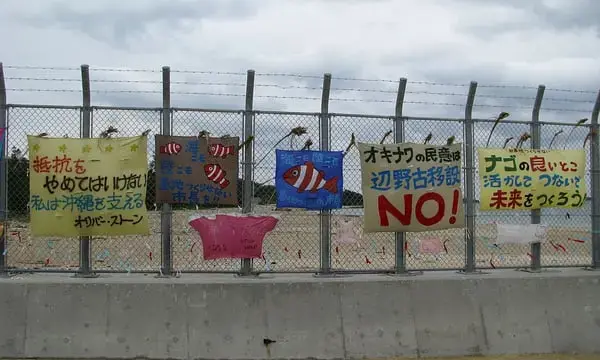
Mitchell explores the complex dynamics that have led to the establishment and expansion of American military installations in Okinawa. The bases were initially set up during the post-World War II occupation and have remained ever since. Despite local opposition, these bases are justified by the U. S. and Japan as essential for regional security and military readiness. Anti-base sentiments are prevalent among Okinawans, who often express their frustrations through protests and signs, particularly near Camp Schwab and Henoko.
The U. S. military's presence in Okinawa is deeply rooted in history. After Japan's defeat in World War II, the U. S. took control of the island, leading to the establishment of bases that were meant to secure American interests in the Pacific. Over the years, these installations have expanded, often at the expense of local communities.
Why Do Okinawans Oppose the Bases?
Mitchell argues that the continuation of this military presence is not merely a matter of defense. It reflects broader geopolitical strategies aimed at countering threats from North Korea and China. The strategic location of Okinawa makes it a vital hub for U. S. operations in Asia, which complicates the discussion around base closures or reductions.
Local opposition to the military bases is fueled by various concerns, including environmental degradation, noise pollution, and safety issues. Many Okinawans feel that their voices are ignored in decisions regarding land use and military operations. The bases have also been associated with incidents that have strained relations between the military and local residents.
Mitchell’s book highlights how these tensions have escalated over time, leading to a growing anti-base movement. Activists argue that the bases compromise their quality of life and call for a reevaluation of the U. S.-Japan security arrangement. The ongoing protests signify a persistent demand for change and respect for Okinawan rights.
Frequently Asked Questions
The future of U. S. military bases in Okinawa remains uncertain. As regional tensions evolve and local opposition grows, the Japanese government may need to reconsider its military agreements. The balance between national security interests and local community needs will be crucial in shaping the next steps in this complex relationship.
Why are there so many U. S. military bases in Okinawa? The bases were established after World War II and remain due to geopolitical strategies that view Okinawa as a critical location for U. S. operations in Asia.
What are the main concerns of Okinawans regarding these bases? Okinawans express concerns about environmental impacts, noise, safety issues, and the feeling of being sidelined in discussions about land use and military presence.