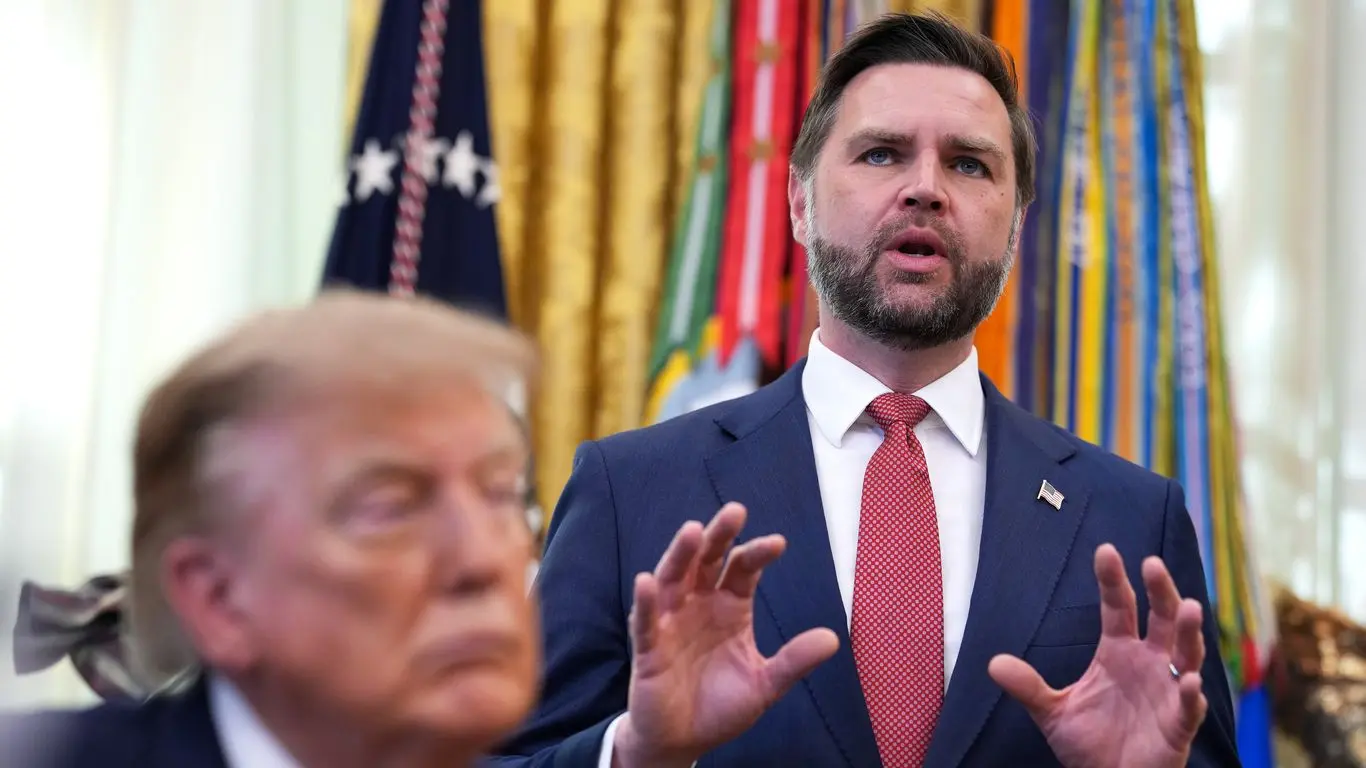
Previous details show that Vance was
Behind the scenes, Vice President Vance is directing efforts to establish a new protocol with Iran. This action comes after two weeks of personal involvement in indirect discussions with the Iranian side aimed at concluding a new armistice and resuming nuclear negotiations, according to information received from two informed sources.
In the broader political context, Vance's intense involvement suggests that he is taking responsibility for pulling the United States out of the conflict that he believes is responsible for the Republican Party's dramatic losses in last week's vote. At the same time, this new cycle of indirect dialogue has raised the level of meetings to the highest hierarchy of the administration.
Previous details show that Vance was a skeptical voice in Trump's inner circle before the war began in late February, instead advocating a diplomatic solution. He led the U. S. negotiating team to an Iranian summit in Islamabad in April. Furthermore, he personally participated in the discussions that culminated in the US-Iran Memorandum of Understanding (MoU) in June. He subsequently led the US delegation to a round of direct meetings with Iran in Switzerland, resulting in a commitment from Iran to allow UN inspectors to visit its nuclear facilities. However, this arrangement quickly collapsed as Iran's Islamic Revolutionary Corps resumed its attacks on the ships.
Two weeks ago, Vance sent a letter to the secretary of Iran's Supreme National Security Council, Mohsen Rezaei, proposing the resumption of direct negotiations. The Iranian officials noted that this communication generated a positive impetus towards the resumption of dialogue. Rezaei is considered one of the closest advisers to the Iranian Supreme Leader, Mojtaba Khamenei.
Regarding Trump's position, U. S. officials and regional
In relation to the current progress, the sources involved in the mediation claim that, although there are advances, they are being made at an extremely slow pace. On Friday morning, President Trump discussed with Qatar's Emir Sheikh Tamim al-Thani about Qatar's efforts to provide a bridge between the US and Iran for an agreement. Sheikh Tamim underlined the imperative to „continue dialogue and pursue diplomatic means to resolve differences, avoiding further escalations in the region, ensuring free maritime navigation and security of energy supply”, according to his official statement.
Regarding Trump's position, U. S. officials and regional sources indicate that for now, he is willing to allow diplomatic efforts to evolve and wants to evaluate the possibility of reaching an agreement. When asked about his message to Iran, Trump told reporters on Friday that he „is in talks with them”. However, if he changes his mind and orders the attacks to resume, US military forces are prepared to launch strikes in a relatively short period of time.
Behind these moves, sources with direct knowledge confirm that Vance communicates almost daily with Qatar's Prime Minister, Sheikh Mohammed bin Abdulrahman Al-Thani, Pakistan's Army Chief of Staff, Field Marshal Asim Munir, and other mediators regarding negotiations with Iran. Also involved in these trials are Steve Witkoff, a representative of the House of Lords, and Jared Kushner, the president's counsel and husband-in-law. These mediators, including Vance, Qatar and Pakistan, discussed the possibility of an operational-level technical meeting between the US and Iran in the coming days, but that meeting has not materialized yet, according to the sources. The Office of the Vice-President declined to comment officially on these events.
In conclusion, Vance, who was a skeptical voice in Trump's inner circle before the conflict began in late February, turned this reluctance into an active peace initiative. This development underscores a shift in U. S. strategy in the face of the regional crisis, pursuing a diplomatic solution to the detriment of direct military action.