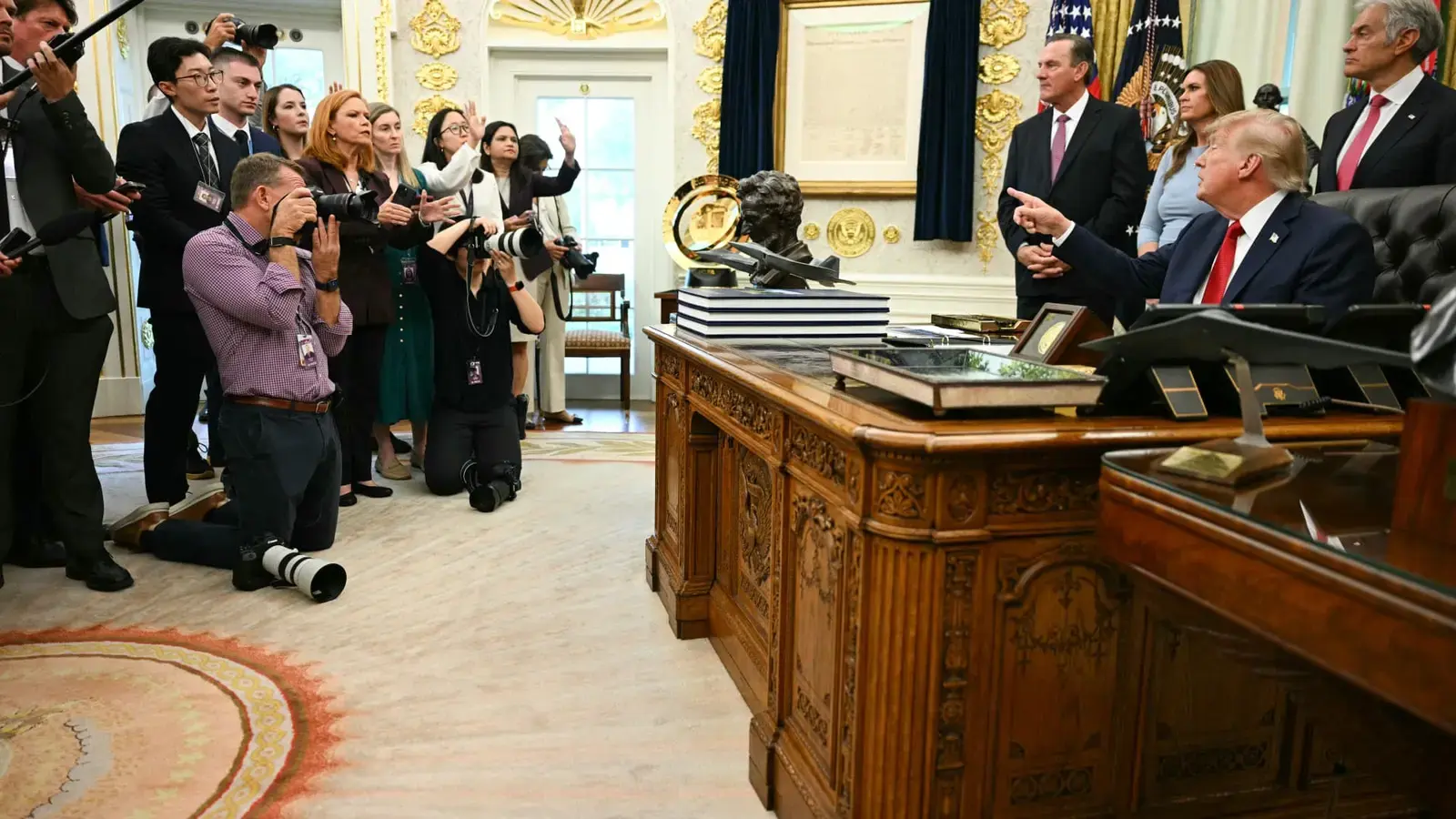
Networks Challenge the Restriction in Court
The White House television press pool has announced it will cease covering President Donald Trump’s public events. This decision follows the administration’s recent ban on pool cameras. The move affects major networks that rotate coverage. It marks a significant shift in how presidential activities are broadcast. The change takes effect immediately across all scheduled appearances.
The ban restricts the use of dedicated pool cameras during official events. These cameras traditionally provide live video feeds to multiple broadcasters simultaneously. Without them, networks must rely on their own individual camera setups. This increases logistical complexity for television stations. The restriction aims to limit media presence in the Oval Office and other key locations. It reflects a broader effort by the administration to control the visual narrative.
Major media outlets are actively contesting the new rules through legal channels. CNN, MSNBC, and Politico have filed lawsuits against the administration. They argue the ban violates established norms of presidential access. The legal challenges seek to overturn the specific directives issued by the White House. These suits aim to restore the traditional pool system. The courts will now determine if the executive branch can unilaterally change these protocols. This legal battle adds another layer of tension between the press and the presidency.
Will Legal Rulings Restore Traditional Coverage?
The pool system operates on a rotational basis among major networks. Each network takes turns providing the primary video feed. Other broadcasters then carry that signal to their audiences. This arrangement saves space and reduces clutter in small rooms. By banning the pool, the White House forces each network to bring its own crew. This results in more equipment and personnel in confined spaces. Critics argue this creates a physical barrier between the president and the public. Supporters claim it allows for better quality control of the footage.
The outcome of the pending lawsuits will shape future coverage. If the courts rule in favor of the networks, the pool returns. If the administration prevails, the new restrictions remain permanent. Legal experts note that such cases often involve complex constitutional arguments. The First Amendment rights of the press are central to these debates. The administration argues it has the right to manage its workspace. The media argues that public access is essential for transparency. The final ruling could set a precedent for future presidencies.
This development highlights the ongoing friction between the executive branch and the press corps. The ban is part of a larger strategy to manage media interactions. It follows previous moves to limit press conferences and briefings. The exit of the TV pool signals a deeper rift in relationships. Viewers may notice changes in broadcast quality and angle. The absence of the pool camera means less standardized viewing experiences. This shift could influence how the public perceives presidential events.
Frequently Asked Questions
Why is the TV pool leaving the White House? The pool is exiting because the administration banned the use of shared pool cameras. This forces networks to use their own individual equipment instead.
Which networks are suing the administration? CNN, MSNBC, and Politico have filed lawsuits to challenge the ban. They argue the restriction unfairly limits their ability to report.
When does the new coverage format begin? The changes take effect immediately for all upcoming presidential events. Networks are already adjusting their logistics for the next scheduled appearance.