Partnership Over Prescription: The Administration’s New AI Strategy
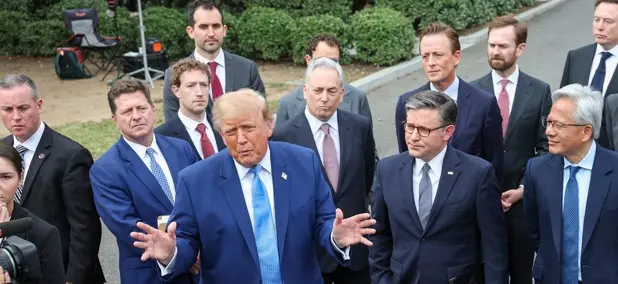
President Donald Trump convened a press briefing on September 29, 2026 outside the West Wing, joined by senior executives from leading artificial‑intelligence firms. Vice President Kamala Harris announced that the administration would prioritize partnership with the private sector over imposing heavy regulation on emerging AI technologies. The gathering marked the rollout of a new executive order aimed at guiding the development of „superintelligence” while securing industry cooperation.
The order, signed by President Trump, establishes a federal framework for the safe advancement of highly autonomous AI systems. It calls for the creation of a cross‑agency task force to assess risks, allocate research funding, and set voluntary standards for transparency and accountability. Harris explained that the government intends to „work hand‑in‑hand with innovators,” arguing that collaboration will accelerate progress while mitigating threats. The move follows months of congressional debate over AI oversight, which stalled amid partisan disagreements. By sidestepping formal regulation, the White House hopes to avoid stifling investment and to keep the United States at the forefront of AI breakthroughs.
The executive order signals a shift from a regulatory‑heavy approach to one that leverages industry expertise. Companies such as OpenAI, DeepMind, and Anthropic pledged to share non‑sensitive research data with the federal task force and to adopt the voluntary safety guidelines. In return, they will receive priority access to federal grants earmarked for AI safety research and fast‑track clearance for pilot projects that meet the new standards.
Analysts note that the partnership model could streamline the deployment of AI in critical areas like defense, healthcare, and infrastructure. However, critics warn that without enforceable regulations, powerful firms may still sidestep accountability, especially in areas like deep‑fakes or autonomous weapons. The administration’s reliance on voluntary compliance raises questions about oversight mechanisms and the ability to enforce penalties if standards are breached.
Will Voluntary Standards Safeguard the Nation’s AI Future?
The decision to favor collaboration over regulation has sparked debate among policymakers and technologists. Proponents argue that the rapid pace of AI development makes rigid rules obsolete, and that industry insiders are best positioned to identify practical safety measures. Detractors contend that self‑regulation lacks teeth and could leave gaps in consumer protection and national security.
A recent study by the Brookings Institution estimates that AI‑related incidents could rise by 40 % over the next five years if oversight remains lax. The White House counters that its task force will monitor compliance through regular audits and public reporting. „Transparency will be our enforcement tool,” Harris emphasized, noting that companies will be required to publish annual safety assessments.
The success of this model will hinge on the willingness of AI firms to adhere to the guidelines without legal compulsion. Early indications suggest enthusiasm, as several CEOs highlighted the benefits of federal funding and the prestige of being recognized as „national partners” in AI safety.
Frequently Asked Questions
The executive order could reshape the U. S. AI landscape, positioning the government as a facilitator rather than a regulator. If the partnership model proves effective, it may become a template for other emerging technologies. Conversely, any high‑profile failure could reignite calls for stricter legislative control. The coming months will test whether collaboration can truly keep pace with the accelerating capabilities of superintelligent systems.
What does the new executive order require of AI companies? It asks firms to share non‑confidential research, adopt voluntary safety standards, and submit yearly transparency reports. In exchange, they receive priority access to federal AI safety grants and expedited project reviews.
How will the government ensure compliance without formal regulations? The White House will run a cross‑agency task force that conducts audits, publishes compliance data, and can withdraw funding or partnership status if companies repeatedly violate the guidelines.
What are the potential risks of relying on voluntary standards? Without enforceable penalties, firms might ignore guidelines, especially in lucrative or sensitive areas. Critics fear gaps could emerge in consumer protection, data privacy, and national security if oversight proves insufficient.