2026, the Year the Sky Burned and the Earth Sank: A Chronicle of Global Climate Disaster
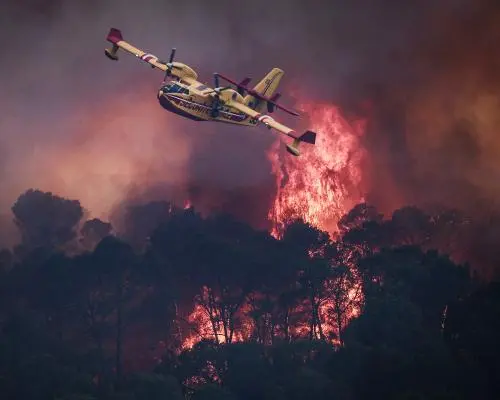
In January, the global average temperature marked the fourth highest on record. Intense heatwaves fueled massive wildfires across Australia. Temperatures soared nearly 20 degrees Celsius above historical averages, driving the Victorian and southern regions to historic extremes. Port Augusta and the opal-mining town of Andamooka both hit 50 degrees Celsius. Melbourne hospitals noted a 25% surge in heat-related illnesses while emergency teams battled raging bushfires. Scientists state that a super-charged climate made this heatwave five times more likely. Heatwaves now cause more fatalities in Australia than all other natural hazards combined.
February continued the grim trend as the fourth warmest on record. In Brazil, torrential rains triggered devastating landslides that killed 72 people. Juiz de Fora in Minas Gerais suffered its wettest month ever, unleashing mudslides that obliterated hundreds of homes in fragile hillside slums. Rio de Janeiro and São Paulo also faced severe disruptions. Over 10,000 residents were evacuated and left homeless.
March ranked as the fourth hottest month recorded, bringing catastrophic floods to multiple continents. In Ethiopia, at least 131 people died from floods and landslides that buried entire villages. Kenya lost 80 lives, while Tanzania reported 18 fatalities. The Arabian Peninsula endured severe gales and torrential downpours. Oman experienced tennis-ball-sized hailstones, and lightning storms submerged urban centers in the United Arab Emirates. Afghanistan recorded at least 30 deaths from rain-induced landslides. Hong Kong received double its usual monthly rainfall. In southern Russia, floodwaters swallowed homes and cut power to over 300,000 people. Vast agricultural tracts remained submerged in Argentina and Chile.
The World Meteorological Organization highlighted an alarming energy buildup within Earth's systems. Over 90% of this excess energy accumulates in the oceans, where warming rates have doubled over the past two decades compared to the prior 45-year average. This escalation fuels extreme weather and endangers human health and food security. UN Secretary-General António Guterres declared that the global climate is in an emergency. He warned that Earth is being pushed beyond its limits and that key climate indicators are flashing red. He urged an immediate global scale-back of fossil fuels to curb future risks, even as atmospheric CO2 levels keep rising.
March ranked as the fourth hottest month
April registered as the second warmest month on record. A super-typhoon swept through Micronesia, Guam, and Saipan. At its peak on April 12, Typhoon Sinlaku sustained winds of 295 km/h, matching the speed of a Shinkansen bullet train and marking the strongest early-season storm ever recorded in the West Pacific basin. It proved to be the deadliest storm in decades, killing 12 people, cutting power for 43,000, forcing mass evacuations, and causing 1.5 billion dollars in damages. It remains one of 2026's most powerful tempests, surpassed only by Super Typhoon Champi in October.
May also stood as the second hottest month ever measured. Hundreds of millions across South Asia endured lethal heat. At least 47 heat-related deaths emerged as temperatures breached 45 degrees Celsius across multiple Indian and Bangladeshi cities, peaking at 52 degrees Celsius in Pakistan's southern Sindh province. Researchers warn that the climate crisis exposes vast populations to longer and deadlier pre-monsoon heatwaves.
In June, the global average temperature ranked second highest on record. Ocean heat entered uncharted territory. Sea surface temperature charts began charting erratic spikes above all previous highs on June 21, establishing a troubling trend for the rest of the year. This alarms researchers because oceans absorb over 90% of excess planetary energy. If the seas begin releasing this stored heat, land and air temperatures will escalate much faster. This phenomenon coincided with the official arrival of a new El Niño phase on June 2.
At both poles, unprecedented warmth prevailed. Instead of traditional winter snow and ice, scientists stationed at Esperanza Base on the Antarctic Peninsula's Trinity Peninsula were shocked to find rain and mud outside their windows following an eight-day heatwave that peaked at a record 15 degrees Celsius on June 6. At the opposite end of the globe, the Arctic experienced similar anomalies.