Battling the Extreme Gobi Climate
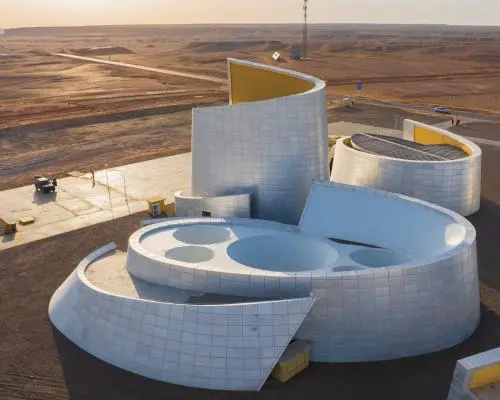
A striking new silver-colored museum recently opened in northwest China's Gobi Desert. The Hami Pterosaur Museum showcases hundreds of ancient flying reptile fossils for tourists and researchers. Architects designed the unique facility to blend into the harsh desert landscape.
Seen from a distance, the striking metal structure resembles a futuristic base from another planet. Aerial views reveal a different architectural inspiration altogether. The building curves and groups together to mimic a clutch of prehistoric dinosaur eggs resting in the sand.
Building a major public attraction in the remote Gobi Desert presented extreme challenges for the design team. Temperatures in the region fluctuate wildly between blistering summer heat and freezing winter conditions. Architects had to engineer a sustainable structure capable of withstanding fierce winds and blowing sand.
Will Tourism Transform the Remote Region?
The resulting design uses advanced materials to protect the delicate fossils housed inside. Natural ventilation and climate control systems help maintain stable indoor conditions without excessive energy use. The museum proves that modern architecture can thrive in some of the planet's most unforgiving environments.
Pterosaurs were remarkable flying reptiles closely related to dinosaurs that ruled prehistoric skies. The Hami region holds some of the world's most significant fossil deposits for these creatures. Officials hope the dramatic new museum will draw global travelers to this isolated desert landscape.
Local authorities expect the facility to boost regional tourism and fund ongoing paleontological research. Scientists believe many more discoveries remain buried beneath the shifting sands of the Gobi. The museum stands as a gateway to understanding a forgotten chapter of prehistoric life.
Frequently Asked Questions
What does the Hami Pterosaur Museum look like from above? From an aerial perspective, the building resembles a cluster of dinosaur eggs nestled in the desert sand.
Where is the new museum located? The attraction sits deep within the Gobi Desert in the northwest region of China.
What type of fossils are displayed inside? The museum showcases hundreds of rare fossils of pterosaurs, which were ancient flying reptiles.